












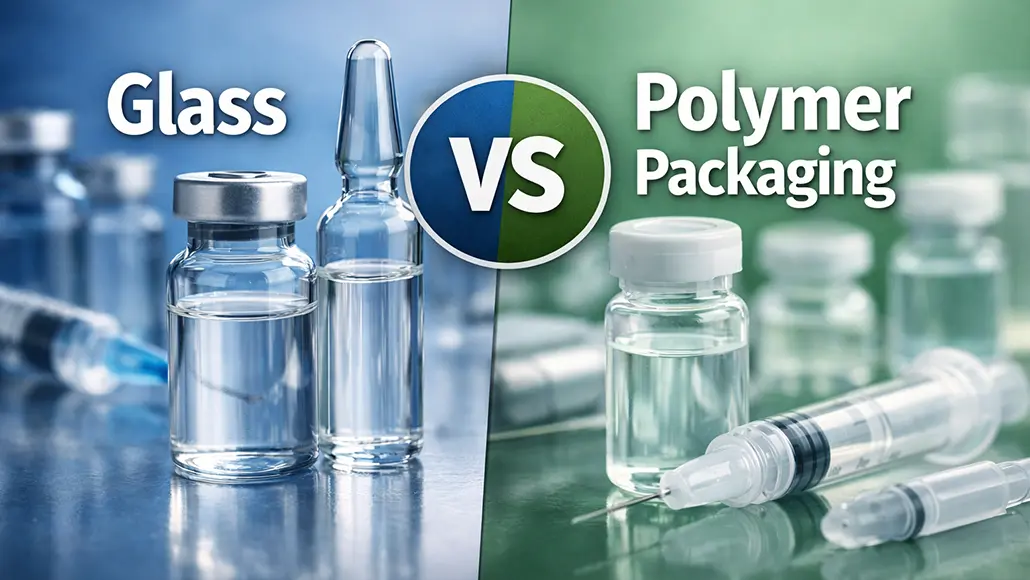
In the pharmaceutical industry, material selection plays a critical role in ensuring the safety, stability, and efficacy of injectable drugs. Parenteral products those administered via injection, infusion, or implantation require highly specialized packaging to maintain sterility and prevent contamination. Among the most widely used materials for this purpose are glass and polymer-based systems. Each offers distinct advantages and limitations, making the choice highly dependent on the specific drug formulation, storage conditions, and regulatory requirements associated with parenteral drug packaging.
The Case for Glass Packaging
Glass has long been the gold standard for parenteral packaging, largely due to its excellent barrier properties and chemical inertness. Type I borosilicate glass, in particular, is widely used for vials, ampoules, and prefilled syringes because it resists thermal shock and minimizes interactions with drug formulations.
One of the primary advantages of glass is its impermeability. It provides a near-perfect barrier against oxygen, moisture, and other environmental contaminants, which is crucial for maintaining drug stability over time. Additionally, glass is highly transparent, allowing for easy visual inspection of the product an important quality control measure in pharmaceutical manufacturing.
However, glass is not without its drawbacks. It is inherently brittle and prone to breakage, posing risks during transportation, handling, and administration. Delamination where thin layers of glass flake off into the solution has also emerged as a concern, particularly with certain formulations. Furthermore, glass containers tend to be heavier, increasing shipping costs and environmental impact.
The Rise of Polymer-Based Solutions
Polymer materials, such as cyclic olefin polymers (COP) and cyclic olefin copolymers (COC), have gained traction as alternatives to glass in recent years. These materials offer enhanced durability, reduced weight, and greater design flexibility, making them particularly attractive for modern drug delivery systems.
One of the key benefits of polymers is their resistance to breakage. Unlike glass, polymer containers are less likely to shatter, improving safety during handling and transport. This makes them especially suitable for prefilled syringes and auto-injectors used in home healthcare settings.
Polymers also allow for more complex and customizable designs. Features such as integrated safety mechanisms, ergonomic shapes, and compatibility with advanced drug delivery devices are easier to achieve with polymer materials. Additionally, manufacturing processes like injection molding enable high-volume production with consistent quality.
Despite these advantages, polymers have limitations that must be carefully considered. They are generally more permeable than glass, which can lead to issues with gas or moisture ingress over time. This can affect the stability of sensitive biologics or oxygen-sensitive drugs. Extractables and leachables chemical compounds that can migrate from the packaging into the drug product are another concern, requiring rigorous testing and validation.
Compatibility and Drug Stability
Choosing between glass and polymer often comes down to compatibility with the drug formulation. Glass is typically preferred for small-molecule drugs that require long-term stability and minimal interaction with the container. On the other hand, polymers are increasingly used for biologics and complex formulations, especially when combined with appropriate barrier coatings or multilayer designs to mitigate permeability concerns.
For instance, siliconization a process used to lubricate glass syringes can sometimes interact with protein-based drugs, leading to aggregation. Polymer syringes, which may not require siliconization, can offer a more stable environment in such cases.
Regulatory and Quality Considerations
Both glass and polymer materials must meet stringent regulatory standards set by agencies such as the FDA and EMA. These include requirements for sterility, biocompatibility, and resistance to chemical interactions. Manufacturers must also conduct extensive testing for extractables and leachables, especially when introducing new materials or formulations.
Glass has a long history of regulatory acceptance, which can simplify the approval process. However, advancements in polymer science and increased regulatory familiarity are narrowing this gap. Today, many polymer-based systems are fully compliant with global standards and are being adopted in commercial applications.
Environmental and Economic Factors
Sustainability is becoming an increasingly important consideration in pharmaceutical packaging. Glass is recyclable and made from abundant natural materials, but its production is energy-intensive and contributes to higher carbon emissions due to its weight. Polymers, while lighter and potentially more energy-efficient to produce, raise concerns about plastic waste and recyclability.
From an economic standpoint, polymers can offer cost advantages in terms of manufacturing and logistics. However, the need for additional testing and validation may offset some of these savings, particularly for new drug products.
In Short
There is no one-size-fits-all solution when it comes to selecting materials for parenteral packaging. Glass remains a trusted and reliable option, particularly for applications requiring high chemical resistance and long-term stability. Meanwhile, polymer-based systems are gaining ground due to their versatility, safety, and compatibility with modern drug delivery technologies.
Ultimately, the choice between glass and polymer should be guided by a thorough evaluation of the drug’s properties, intended use, and regulatory landscape. As innovation continues to shape the pharmaceutical industry, both materials will likely coexist, each serving distinct roles in the evolving field of parenteral drug packaging.