














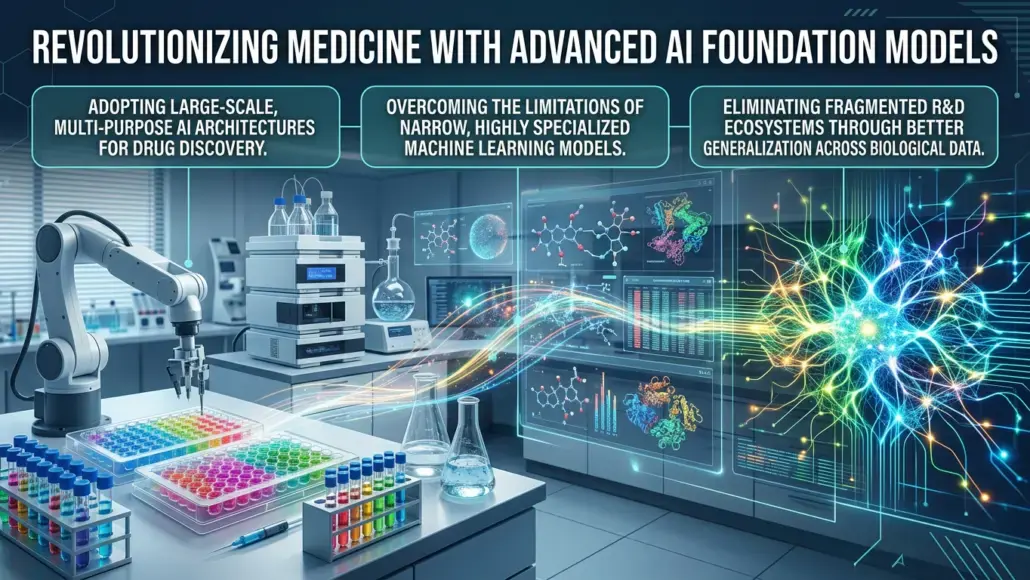
The pharmaceutical industry is entering a new era of computational sophistication defined by the rise of large scale, multi purpose AI architectures. For years, the application of machine learning in drug discovery was characterized by the development of highly specialized, task specific models. While effective for narrow applications, these models often lacked the ability to generalize across different biological contexts or data types, leading to a fragmented and inefficient R&D ecosystem. The introduction of foundation models marks a fundamental shift toward a more holistic approach to biological intelligence. These models are trained on vast, heterogeneous datasets encompassing chemical structures, genomic sequences, protein architectures, and clinical records, allowing them to capture the underlying principles of biology and chemistry with unprecedented depth.
The power of this methodology lies in its ability to learn universal representations that can be applied to a wide variety of downstream tasks. By understanding the common “language” of biological systems, these models provide a unified framework for research, enabling a more integrated and efficient discovery process across the entire organization. The goal is to create a digital foundation that supports every stage of the R&D pipeline, from the earliest phases of target identification to the final stages of clinical trial design. This transition from narrow to generalized AI represents a significant leap forward in our ability to manage the complexity of human disease and to design effective therapeutic interventions for the world’s most challenging conditions.
Furthermore, the adoption of foundation models addresses the challenge of data scarcity in specific therapeutic areas. Because these models are pre-trained on massive global datasets, they can “transfer” their knowledge to tasks where only a limited amount of proprietary data is available. This capability is particularly valuable for rare diseases or for novel biological targets where historical data is lacking. By leveraging a centralized core of biological knowledge, researchers can achieve high performance on specific tasks with a fraction of the data required by traditional machine learning methods. This democratization of high-level AI is a major driver of innovation, allowing for a more diverse and vibrant research ecosystem.
Architectural Foundations and Multi-Modal Data Integration
The technical strength of foundation models is derived from their ability to perform self supervised learning on massive, unlabeled datasets. Unlike traditional models that require laboriously annotated data, these architectures can learn directly from the raw information available in scientific literature, public databases, and electronic health records. By processing billions of parameters, they can identify complex, non-linear relationships that exist between different biological scales — from the atomic level of chemical bonds to the systemic level of clinical symptoms. This multi-modal integration allows the models to bridge the gap between molecular structure and clinical outcome, providing a more comprehensive view of the therapeutic landscape than was ever possible through siloed analysis.
Furthermore, the “transformer” architecture that underlies many of these models is particularly suited for handling sequential and structural data. Whether analyzing a DNA sequence, a protein chain, or a chemical SMILES string, these models can capture long range dependencies and subtle patterns with high precision. This capability is essential for understanding how a small molecular change can ripple through a biological pathway to affect a physiological state. The ability to fine tune these generalized models for specific pharmaceutical applications is a major operational advantage, as it reduces the amount of proprietary data required to achieve high performance. This flexibility makes them an ideal platform for innovation across a diverse range of therapeutic areas, including oncology, immunology, and neurodegeneration.
Modern foundation models are also being designed to incorporate structural information directly into their learning process. By training on 3D molecular and protein structures, these models can understand the spatial and geometric constraints that govern biological interactions. This structural awareness is critical for tasks such as binding affinity prediction and de novo molecule generation. The integration of 3D data with 1D sequence data and 2D chemical graphs creates a “multi-view” understanding of biology that is far more powerful than any single modality. As these models continue to grow in scale and complexity, their ability to simulate the biological environment will become increasingly sophisticated, bringing us closer to the vision of a “digital twin” for human health.
Accelerating Discovery Workflows Through Unified Intelligence
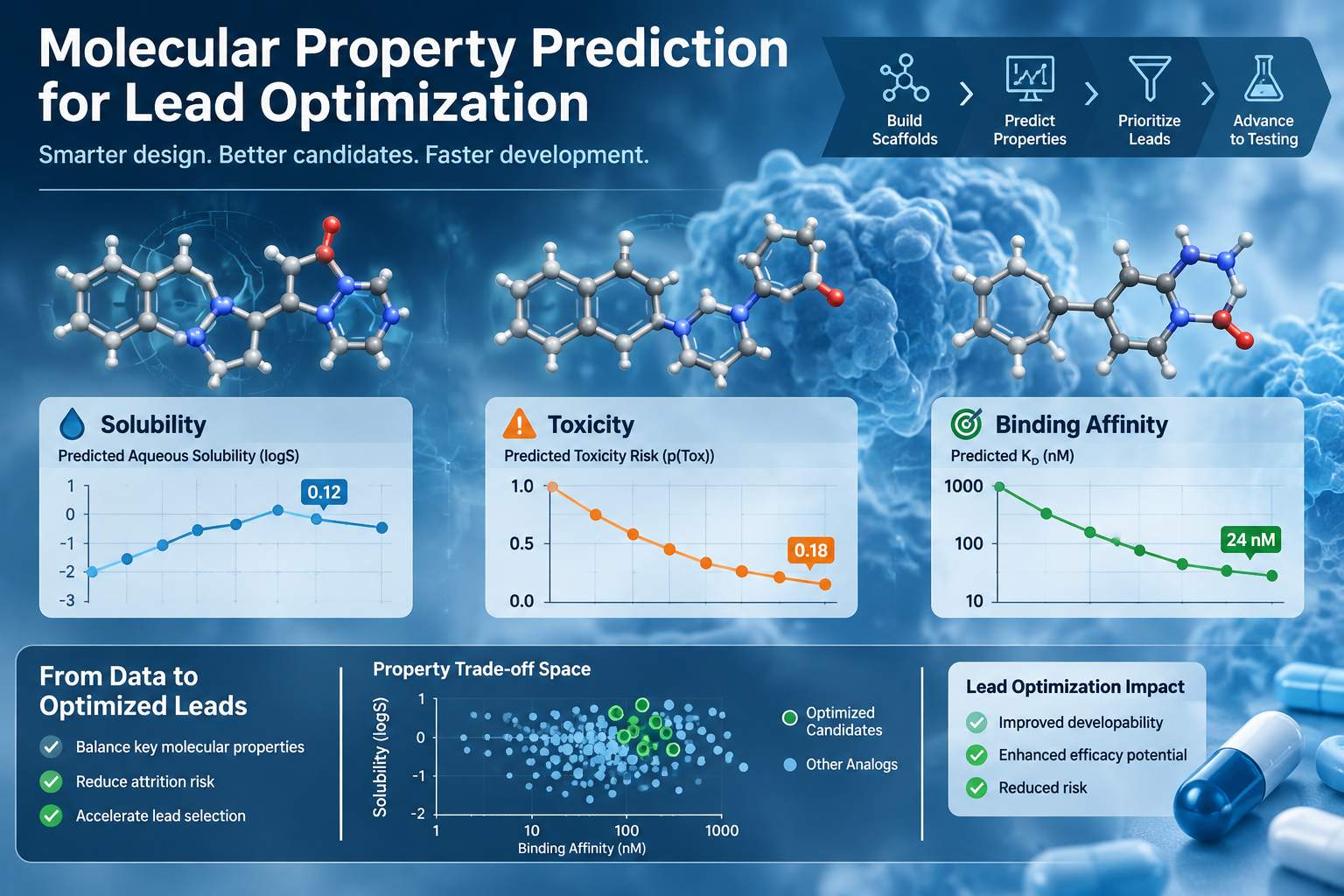
In the context of the pharmaceutical R&D pipeline, the integration of foundation models offers numerous opportunities for efficiency gains and cross-departmental collaboration. By providing a common biological understanding, these models can facilitate communication and data sharing between traditionally siloed departments, such as genomics, medicinal chemistry, and clinical development. A single model can be used to predict protein structures, screen chemical libraries, and assess ADMET properties, creating a seamless and iterative research workflow that reduces the friction of data transfer. This unified approach also lowers the time and cost associated with developing and maintaining multiple specialized systems, allowing organizations to allocate resources more effectively toward the actual pursuit of novel therapies.
The specific impacts on discovery workflows include:
- Rapid identification of novel therapeutic targets through cross-species genomic analysis and the mapping of disease pathways.
- Generation of high-affinity leads for complex targets using zero shot or few shot learning, significantly accelerating the initial discovery phase.
- Improved prediction of clinical trial outcomes by integrating patient genetics, real world evidence, and longitudinal health records into a single predictive model.
- Optimization of drug manufacturing processes through the modeling of complex chemical reactions and the prediction of molecular stability.
- Automated extraction of insights from the vast body of scientific literature using natural language processing.
- Simulation of drug-drug interactions and the prediction of potential safety risks early in the development cycle.
By automating the extraction of insights from complex datasets, these models allow researchers to focus on the creative and strategic aspects of drug discovery. The ability to rapidly test hypotheses in a high-fidelity digital environment significantly increases the pace of innovation and the probability of technical success. This speed is a critical competitive advantage in an environment where the first-to-market advantage can define the commercial success of a new therapy. The move toward a more computationally driven discovery model is also supported by the fact that generative AI models accelerating novel drug molecule design benefit from the broad biological context and the generalized intelligence provided by these large-scale architectures.
Addressing the Strategic Challenges of Enterprise Scale AI
The implementation of foundation models at the enterprise scale presents several significant challenges for pharmaceutical leadership. The computational resources required to train and maintain these architectures are substantial, necessitating significant investments in cloud infrastructure, GPU acceleration, and high performance computing. Additionally, the governance of the underlying data is paramount, as the accuracy and reliability of the models are entirely dependent on the quality and diversity of the information they process. Organizations must implement robust data management and curation protocols to ensure that their digital foundation is built on a solid, secure, and ethical base.
Furthermore, the “black box” nature of large scale AI models continues to be a point of focus for regulatory bodies, internal stakeholders, and the broader scientific community. Ensuring that these models are transparent, explainable, and free from bias is essential for building trust and for securing regulatory approval for AI-derived therapies. This requires a new set of skills within the organization, combining expertise in biology, chemistry, and data science with a deep understanding of AI ethics, risk management, and compliance. The shift toward a more digitized and automated research environment also necessitates a cultural change, where data driven insights are viewed as central to the organization’s mission and success.
Technical teams must also address the challenge of “hallucination,” where large models generate plausible-sounding but biologically incorrect results. To mitigate this risk, pharmaceutical companies are developing specialized validation frameworks that incorporate physics-based constraints and laboratory feedback into the model’s evaluation process. This ensures that the output of the model is always grounded in biological reality. As the industry gains more experience with these systems, the development of best practices for “responsible AI” will become a critical component of any successful discovery program. Success in this new era will belong to those companies that can effectively balance technical innovation with rigorous scientific and strategic oversight.
The Long-Term Impact on Pharmaceutical Innovation and Patient Care
The adoption of foundation models is not merely a technical upgrade: it is a fundamental transformation of the pharmaceutical business model. By providing a more predictable and efficient discovery process, these technologies enable the development of a more diverse and resilient clinical pipeline. This stability allows for better long term planning and a more aggressive approach to addressing unmet medical needs in both large and small patient populations. From a commercial perspective, the reduction in R&D costs and the increase in the probability of technical success provide a significant boost to the overall return on investment for drug discovery programs, ensuring the long-term viability of the organization.
Looking further ahead, the ultimate impact of these models will be felt in the quality of care delivered to patients across the globe. By enabling the discovery of more targeted and effective therapies, foundation models will play a central role in the move toward truly personalized medicine. Patients will have access to treatments that are specifically tailored to their genetic profile, physiological state, and disease history, resulting in significantly better clinical outcomes and a higher quality of life. The ability to rapidly respond to emerging health crises, such as novel pathogens or the sudden emergence of drug resistance, will also be significantly enhanced by the power of generalized biological intelligence.
As the pharmaceutical industry continues to evolve, the integration of these models will remain the primary driver of technical and commercial innovation, defining the future of medicine for generations to come. The organizations that lead in the adoption of these technologies will not only see improved commercial outcomes but will also make the most significant contributions to human health and the treatment of complex diseases. The journey from specialized machine learning to generalized biological intelligence is the defining narrative of the next decade in drug discovery, promising a more efficient, predictable, and successful era of medical breakthroughs.