














In the pharmaceutical industry, products frequently require very specific temperatures to maintain quality and/or specific functions. Shipments are prone to risks as a result of inclement weather, loading time delays, and long transfers. So, it is important to plan and protect them.
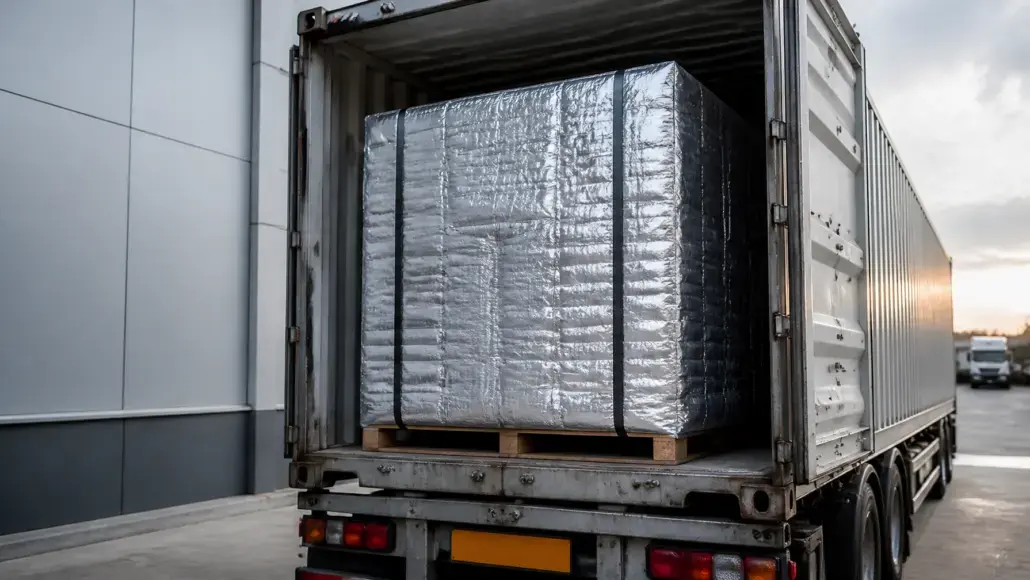
The effect of temperature changes outside the container is decreased by effectively providing an insulation layer around pallets loaded in the container when using the thermal pallet covers designed for that purpose. They provide flexibility with a broader cold-chain plan in loading bays, transfer areas, or other areas where conditions fluctuate. A cover, though, does not constitute a cooling system and does not guarantee safe temperature.
Temperature Protection: Why it Matters
Not all medicines “respond” to heat and cold. There are vaccines and biologics that require special conditions for storage and others with varying recommended storage temperatures. Normal-looking packaging can be affected by exposures outside of a product’s permitted limits.
Pallets can be temporarily stored between vehicles or in customs centers or loading bays. Careful handling is necessary as each handoff opens up a new opportunity for conditions to change. Points are no different from the road—they require the same attention.
How Insulated Covers Protect Pallet Loads
Surround load with insulated cover to impede transfer of heat from the load to the outside air. It may have multiple layers, reflective surfaces, or foam. The performance will be affected by route, starting temp, design, and weather.
Fit matters. There is a loss of insulation and revealed load when there are gaps, loose seams, or damaged panels. Teams will select covers for cabinets or closets that will fit and close the cabinet without obstructing safe handling and covering the label.
Choosing the Right Protection for the Shipment
It will depend on the medicine, its label storage directions, and the route. It may be necessary to have a different setup if a suitcase is to be transported over a short distance on a nice day versus an international shipment that will travel across multiple climatic zones. Transit time, seasonal factors, trans-loading points, vehicle type, and delays are considerations for shippers.
A comparison to the product temperature limits and the expected freight journey and handling is recommended. They should also think about the size of the pallets, their stacking ability, the coolant requirement, and the vehicle type. The assessment also serves to ensure a risk-benefit balance between the protection level and the real operating risk.
Pairing Covers with Temperature Monitoring
Insulation slows changes in temperature from the shipment, while monitoring reveals the temperature’s change in the shipment. Consider the following for a monitoring plan:
- Data loggers that have been calibrated or appropriate indicators to log conditions in transit.
- Ensuring pallet protection as an integral part of a reliable process.
In conclusion, insulated pallet protection is just one element of a controlled distribution system – but certainly a significant one. Properly designed covers, transportation environment, trained handling, and proper temperature control records are all factors contributing to product quality. By fitting packaging to the medicine and their travel, shippers can manage risks and give stable or reliable delivery.