














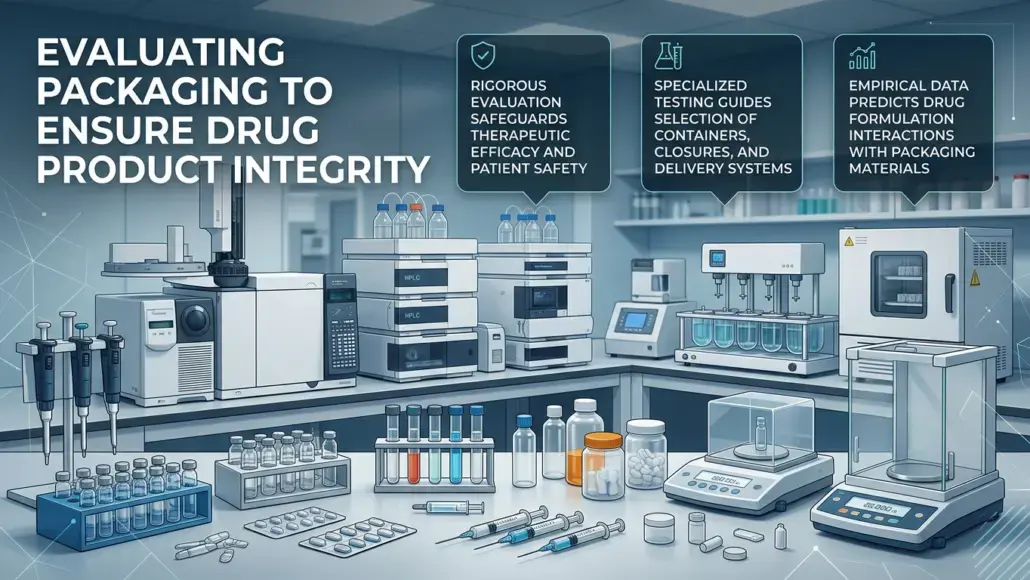
Pharmaceutical manufacturers operate under stringent requirements to ensure that the primary packaging housing drug products does not compromise the therapeutic efficacy or safety of the formulation. The selection of materials for containers, closures, and delivery systems depends heavily on rigorous evaluation protocols. This specialized testing serves as the cornerstone of this selection process, providing the empirical data necessary to predict how a drug formulation will interact with its immediate environment over the course of its shelf life. As formulations become more complex, particularly with the rise of biologics and specialized parenteral drugs, the necessity for sophisticated testing methodologies has increased. These assessments identify potential risks associated with the migration of chemical species from the packaging into the drug product, which could lead to toxicological concerns or degradation of the active pharmaceutical ingredient.
The primary objective of chemical compatibility testing is to characterize the extent of interaction between the drug product and the packaging components. This involves studying both extractables and leachables, which are substances that can migrate under stressed or normal conditions. Extractables are compounds that can be pulled out of a material using aggressive solvents or high temperatures, representing the worst-case scenario of potential contaminants. Leachables, on the other hand, are the substances that actually migrate into the drug formulation under real-world storage and usage conditions. Understanding these interactions is vital for maintaining the stability of sensitive molecules that may react with small concentrations of impurities. By conducting thorough assessments, developers can make informed decisions about whether a specific polymer, elastomer, or glass type is suitable for a particular application.
Foundational Principles of Interaction Studies
Interaction studies between pharmaceutical products and their packaging materials require a deep understanding of the thermodynamic and kinetic factors that drive molecular migration. The process begins with a comprehensive material characterization, where the chemical composition of the polymer or glass is mapped. This includes identifying additives, stabilizers, lubricants, and catalysts used during the manufacturing of the packaging component. Each of these additives has the potential to migrate if the drug product possesses the chemical affinity to draw them out. For instance, plasticizers used in flexible tubing or bags might leachable into lipid-based formulations more readily than into aqueous solutions. Material assessments must therefore be tailored to the specific chemical properties of the drug product, accounting for pH, solvent polarity, and the presence of surfactants.
The kinetic aspect of these studies focuses on the rate at which migration occurs. Temperature plays a significant role in this process, as higher temperatures generally increase the diffusion coefficients of potential leachables. Stability studies often incorporate accelerated aging to simulate long term storage, but these must be carefully correlated with real-time data to ensure accuracy. When developers implement these studies, they are looking for evidence of sorption, where the drug product is absorbed by the packaging material, or adsorption, where the drug molecules stick to the surface. Both phenomena can lead to a reduction in the concentration of the active pharmaceutical ingredient, effectively lowering the dose received by the patient. Such losses are particularly critical for highly potent drugs where even minor fluctuations in concentration can have significant clinical impacts.
Methodologies for Extractables and Leachables Analysis
Modern analytical chemistry provides a suite of tools for conducting material interactions studies with high sensitivity and specificity. Gas chromatography coupled with mass spectrometry (GC-MS) is frequently employed for identifying volatile and semi-volatile organic compounds. This technique allows researchers to separate complex mixtures and identify individual species based on their mass-to-charge ratios. For non-volatile organic compounds, liquid chromatography with mass spectrometry (LC-MS) is the preferred method. These techniques are complemented by inductively coupled plasma mass spectrometry (ICP-MS) for the detection of trace metals and inorganic contaminants that might have originated from catalysts or pigments in the packaging material.

The validation of these analytical methods is a critical step in the regulatory submission process. Each method must be proven to be accurate, precise, and capable of detecting contaminants at or below the safety concern threshold defined by regulatory bodies. Manufacturers often prioritize the use of sterilization-compatible polymers to maintain the structural integrity of the container during high-heat processing phases. During the testing phase, the drug product is often substituted with simulant solvents that mimic the chemical characteristics of the formulation but allow for easier detection of migrated species. These simulants are chosen based on their ability to stress the material and represent the various chemical environments the packaging will encounter throughout its lifecycle.
Regulatory Requirements for Material Validation
Regulatory agencies such as the Food and Drug Administration (FDA) and the European Medicines Agency (EMA) place heavy emphasis on the safety of packaging materials. Guidelines such as USP <661> and <1663> provide the framework for evaluating the suitability of plastic packaging systems. These standards outline the mandatory tests for physical, chemical, and biological properties. This core requirement within these frameworks, as it directly addresses the risk of patient exposure to harmful substances. The documentation provided to regulatory authorities must include a detailed assessment of the potential toxicological impact of any identified leachables. This requires a multidisciplinary approach, combining the expertise of analytical chemists, toxicologists, and material scientists to interpret the data and ensure patient safety.
- Establishing a baseline for material purity through controlled extraction studies.
- Conducting long term migration studies under ambient and stressed storage conditions.
- Evaluating the toxicological profiles of all identified leachables to set safety limits.
- Monitoring the impact of secondary packaging components such as labels and inks on the primary container.
The shift toward risk-based assessments has led to a more proactive approach in the industry. Instead of testing at the final stage of development, many manufacturers now incorporate these protocols during the early selection of materials. This early intervention helps to avoid costly delays that might occur if a material is found to be incompatible with a drug product late in the clinical trial phase. By utilizing high-quality materials and rigorous testing protocols, pharmaceutical companies can ensure that their products remain safe and effective from the time of manufacture to the moment they are administered to the patient.
Risk Mitigation Strategies in Biopharmaceutical Storage
Biopharmaceuticals, including monoclonal antibodies and vaccines, present unique challenges for packaging material selection. These molecules are often highly sensitive to their environment and can be easily denatured or aggregated by trace amounts of leachables. For example, silicone oil used as a lubricant in prefilled syringes has been known to induce protein aggregation in certain sensitive formulations. Consequently, validation for biologics often includes specialized assays to detect protein-leachable interactions. The use of advanced barrier coatings or alternative materials such as cyclic olefin polymers (COP) is often explored to minimize these risks. These materials offer lower protein adsorption and a more inert surface compared to traditional glass or common plastics.
Another aspect of risk mitigation involves the assessment of the physical stability of the packaging itself. Some drug formulations may contain solvents or surfactants that can cause environmental stress cracking or swelling in certain polymers. This physical degradation can lead to a loss of container closure integrity, increasing the risk of microbial contamination. Evaluations must therefore account for the physical changes in the material properties, such as tensile strength and elongation at break, after exposure to the drug product. Ensuring that the packaging remains structurally sound throughout the intended shelf life is just as important as ensuring chemical purity.
Long Term Stability and Barrier Function Assessment
The long term stability of a pharmaceutical product is intrinsically linked to the barrier function of its packaging. While chemical compatibility testing focuses on the internal interactions, the packaging must also protect the drug from external factors such as oxygen and light. Some materials may interact with the drug in a way that compromises their barrier properties over time. For instance, the absorption of certain formulation components by a plastic wall might increase its permeability to oxygen. Testing protocols therefore often combine chemical interaction studies with permeability assessments to provide a holistic view of the packaging performance. This ensures that the drug product is not only free from contaminants but also protected from atmospheric degradation.
Ultimately, the rigorous application of chemical compatibility testing is indispensable for the successful development and commercialization of pharmaceutical products. By providing a detailed understanding of the interactions between drug formulations and their packaging materials, these tests allow for the selection of the most suitable components to ensure patient safety and product efficacy. As the industry continues to innovate with new drug delivery systems and more sensitive formulations, the role of material science and analytical chemistry in packaging validation will only become more critical. The commitment to thorough testing reflects the industry’s dedication to maintaining the highest standards of quality in every aspect of drug production.