
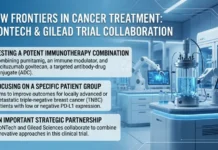











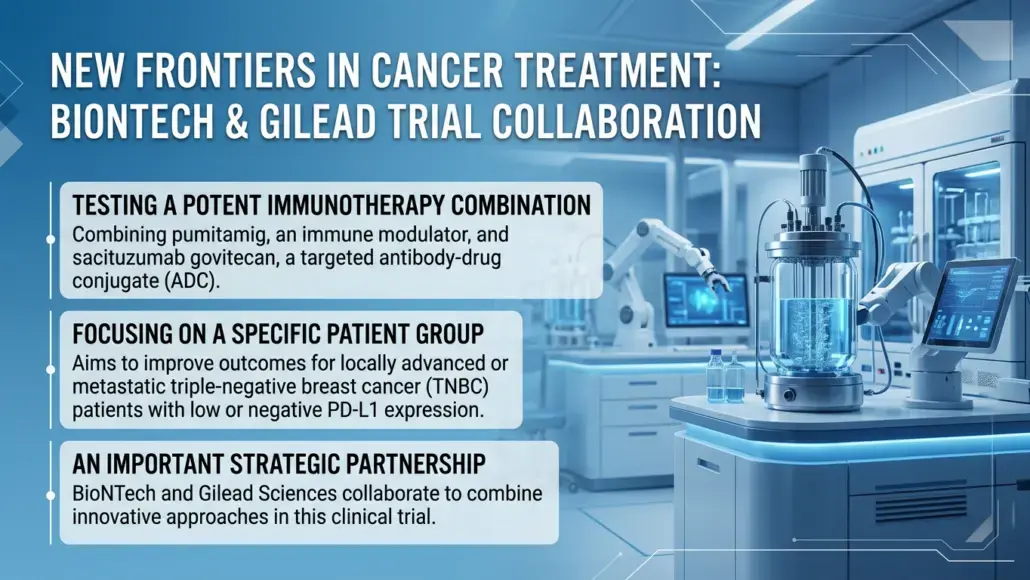
BioNTech SE has officially entered into a clinical trial collaboration and supply agreement with Gilead Sciences Inc. to evaluate the bispecific immunomodulator pumitamig in combination with the TROP2-directed antibody-drug conjugate (ADC) sacituzumab govitecan. Announced on October 22, 2026, this strategic partnership aims to improve therapeutic outcomes for patients diagnosed with locally advanced or metastatic triple-negative breast cancer (TNBC) that is PD-L1 low or negative. The collaboration focuses on the evolution of the global Phase 3 ROSETTA Breast-01 trial, marking a significant shift in the investigation of pumitamig as a first-line treatment option. This move reflects the rapidly changing standard of care in the oncology sector, where advanced antibody-drug conjugates are increasingly displacing traditional chemotherapy as the foundational therapy for metastatic breast cancer.
The ROSETTA Breast-01 trial (NCT07173751) is a global, double-blinded study that was initially designed to evaluate pumitamig in combination with chemotherapy against chemotherapy alone. The decision to adapt the trial protocol replaces the chemotherapy component with sacituzumab govitecan, widely recognized under the brand name Trodelvy®. This adjustment ensures that the pumitamig clinical trial remains aligned with the latest clinical benchmarks and standard-of-care practices. BioNTech, which is jointly developing pumitamig with Bristol Myers Squibb (BMS), will continue to serve as the primary sponsor and lead for the ROSETTA Breast-01 study. Gilead Sciences will facilitate the collaboration by supplying sacituzumab govitecan for the combination arms of the trial, pending the necessary approvals from global regulatory authorities.
Triple-negative breast cancer represents a particularly challenging subset of oncology, characterized by the absence of estrogen receptors, progesterone receptors, and human epidermal growth factor receptor 2 (HER2). Historically, patients with PD-L1 negative TNBC had few options outside of conventional cytotoxic chemotherapy. However, the emergence of TROP2-directed ADCs like sacituzumab govitecan has established a new global standard, demonstrating superior efficacy and survival outcomes compared to traditional treatments. By integrating pumitamig—a bispecific immunomodulator designed to target both PD-L1 and VEGF-A—with a high-potency ADC, the partners intend to explore whether a multi-modal synergistic approach can further amplify the benefits observed in first-line metastatic settings.
This specific pumitamig clinical trial adaptation is significant as it represents the first global Phase 3 evaluation of pumitamig in combination with an antibody-drug conjugate. The trial will specifically target patients with low or negative PD-L1 expression, defined by a Combined Positive Score (CPS) of less than 10. This patient population has been historically underserved by recent advancements in immunotherapy, which often rely on high PD-L1 expression for optimal activity. The combination of a bispecific agent that addresses both immune checkpoints and angiogenesis with a targeted cytotoxic payload could potentially redefine the therapeutic landscape for this difficult-to-treat demographic, providing a more robust alternative to current standard-of-line interventions.
Therapeutic Mechanism and Industry Context
The investigation of pumitamig is central to BioNTech’s broader strategy of developing “backbone” therapies that can be combined with diverse therapeutic modalities. Pumitamig functions as a bispecific immunomodulator that cooperatively binds to Programmed Death-Ligand 1 (PD-L1) and Vascular Endothelial Growth Factor A (VEGF-A). This dual mechanism is designed to simultaneously release the “brakes” on the immune system while inhibiting the blood vessel formation that tumors require to grow and metastasize. By targeting these two pathways with a single molecule, BioNTech and its development partner Bristol Myers Squibb aim to overcome the limitations of monotherapies, particularly in tumors that have historically shown resistance to single-agent immune checkpoint inhibitors.
The decision to combine this bispecific agent with Gilead’s TROP2-directed ADC, sacituzumab govitecan, leverages the complementary strengths of both platforms. Sacituzumab govitecan delivers a cytotoxic payload directly to cancer cells expressing the TROP2 protein, which is highly prevalent in triple-negative breast cancer. When these cells are destroyed, they release antigens that can further stimulate the immune response. By having pumitamig present in the system, the immune system is primed to recognize these released antigens more effectively, potentially creating a “hotter” tumor microenvironment. This synergy is the core hypothesis of the adapted ROSETTA Breast-01 trial, representing a sophisticated evolution in the design of late-stage clinical investigations for metastatic solid tumors.
The pharmaceutical industry has seen a massive shift toward antibody-drug conjugates over the last three years, with multi-billion dollar deals and collaborations becoming the norm as companies seek to replace aging chemotherapy pipelines. For BioNTech and BMS, the pumitamig clinical trial program is a critical component of their competitive positioning against other major oncology players. Pumitamig is currently being investigated in seven ongoing global Phase 3 trials and more than ten Phase 2 trials exploring various novel-novel combinations. The collaboration with Gilead Sciences highlights a trend toward cross-company partnerships where specialized assets are combined to maximize patient benefit and market reach, rather than relying solely on internal pipelines.
Furthermore, the adaptation of the ROSETTA Breast-01 trial illustrates the necessity for agility in clinical development. As sacituzumab govitecan rapidly gained regulatory approvals and became a preferred first-line option, continuing a trial comparing pumitamig to chemotherapy alone would have risked becoming clinically irrelevant by the time the data matured. By pivoting to the current standard of care, BioNTech and Gilead ensure that the trial’s results will directly inform real-world clinical practice and treatment decisions. This approach not only benefits patients by providing access to the most advanced therapies but also safeguards the commercial viability of the data for the sponsoring companies in a highly competitive global market.
Strategic Outlook and Market Implications
The collaboration between BioNTech, Gilead, and Bristol Myers Squibb signals a maturing oncology market where bispecific immunomodulators are being positioned as foundational pillars for next-generation combination therapies. For BioNTech, this move reinforces its commitment to oncology beyond its well-known mRNA vaccine platform, showcasing a diverse pipeline of biologics and targeted therapies. The success of the pumitamig clinical trial program could establish the molecule as a versatile partner for a wide array of ADCs, potentially extending its utility across multiple solid tumor types beyond triple-negative breast cancer. BioNTech and BMS plan to evaluate the full potential of pumitamig in additional Phase 3 novel combination trials in multiple solid tumors, leveraging their broad oncology pipelines and exploring other potential additional collaborations.
From a market perspective, this agreement highlights Gilead’s strategy to expand the reach of Trodelvy® through innovative combinations, defending its market share in the TNBC space against emerging competitors. For investors and industry observers, the ROSETTA Breast-01 trial will be a key milestone to watch, as it represents a high-stakes bet on the synergy between bispecific agents and ADCs. As regulatory authorities review the proposed trial adaptations, the industry continues to monitor how these complex combinations will be priced and integrated into global healthcare systems, emphasizing the ongoing shift toward precision medicine in metastatic oncology.
The therapeutic approach of combining a bispecific backbone with complementary modalities such as ADCs is central to BioNTech’s mission to maximize potential benefits for patients with triple-negative breast cancer. By adapting ROSETTA Breast-01 to reflect the evolving standard of care, the trial is positioned to provide the most relevant data for clinical practice and treatment decisions. This strategic pivot ensures that patients in the trial receive the latest advancements in first-line treatment, aligning clinical development with the rapid pace of medical innovation. The collaboration also underscores the critical role of corporate partnerships in navigating the complexities of modern drug development, where the integration of diverse technologies is necessary to address the most aggressive forms of cancer.
Ultimately, the goal of this partnership is to determine whether the combination of pumitamig and sacituzumab govitecan can further improve outcomes beyond what has been achieved with chemotherapy-based regimens. As the ROSETTA Breast-01 trial progresses, it will provide essential insights into the safety and efficacy of this novel combination. The pharmaceutical industry remains attentive to the results of such trials, as they often set the stage for future regulatory approvals and shifts in treatment guidelines. For BioNTech and Gilead, this collaboration is not just a clinical milestone but a strategic alignment that could define the next decade of therapeutic standards in metastatic breast cancer.
Furthermore, the agreement emphasizes the importance of supply chain and manufacturing coordination in late-stage oncology trials. Gilead’s commitment to supplying sacituzumab govitecan for the ROSETTA Breast-01 trial ensures that the investigation can proceed at a global scale without logistical delays. This operational support is vital for maintaining the momentum of the pumitamig development program, which currently encompasses multiple Phase 3 and Phase 2 trials across various indications. The success of this multi-company effort will likely encourage further collaborations of this nature, as the industry seeks to optimize the deployment of high-value oncology assets in an increasingly crowded and competitive market.
As the oncology landscape continues to evolve, the integration of immunomodulators with targeted cytotoxic agents represents one of the most promising frontiers in cancer research. The BioNTech and Gilead collaboration is a testament to the industry’s ability to adapt and innovate in real-time, prioritizing the most effective treatments for patients. The data generated from the ROSETTA Breast-01 trial will be instrumental in validating the bispecific-ADC combination strategy, potentially paving the way for a new era of personalized, multi-modal cancer therapy that offers renewed hope to those facing a metastatic TNBC diagnosis. Progress in this field remains a top priority for global healthcare stakeholders, who are eager for treatments that can turn the tide against triple-negative breast cancer.