













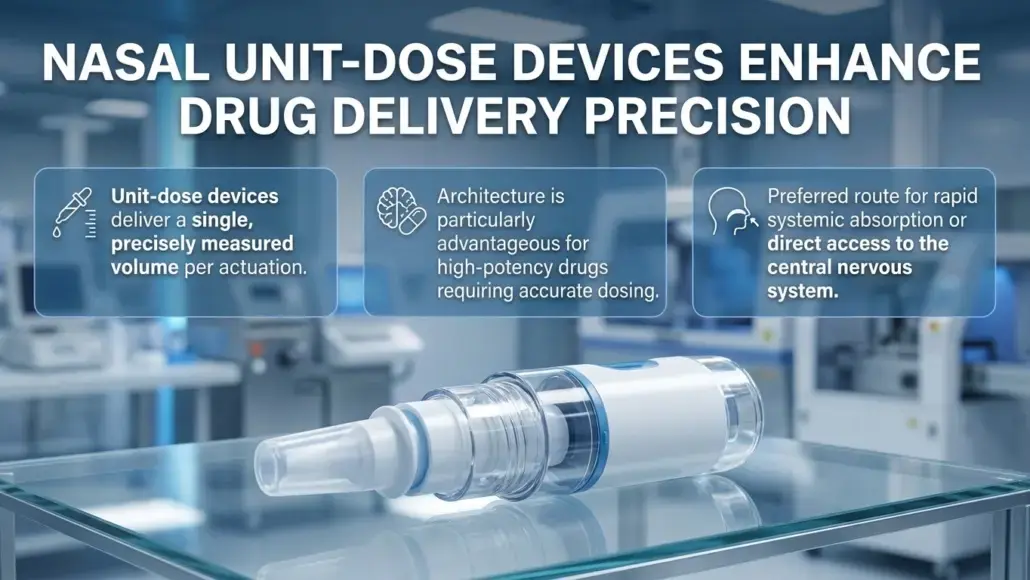
The delivery of medications through the nasal mucosa has emerged as a preferred route for drugs requiring rapid systemic absorption or direct access to the central nervous system. Unlike traditional multi-dose nasal sprays, unit-dose devices are designed to deliver a single, precisely measured volume of formulation in a single actuation. This architecture is particularly advantageous for high-potency drugs where accurate dosing is critical for safety and efficacy. By eliminating the need for preservatives and reducing the risk of contamination, these systems provide a sterile and reliable platform for a wide range of pharmaceutical applications. The precision of intranasal drug delivery is significantly enhanced by the mechanical consistency of these single-use actuators.
Engineering a unit-dose device involves a complex interplay between the formulation, the primary packaging, and the actuator mechanism. The drug is typically stored in a glass or plastic vial that is integrated into the device. When the patient activates the system, a piston or plunger forces the liquid through a specialized nozzle, creating a fine mist. The geometry of this nozzle is a critical design element, as it determines the plume angle and the droplet size distribution of the spray. Manufacturers spend years refining these parameters to ensure that the medication is deposited in the optimal region of the nasal cavity, minimizing runoff and maximizing absorption through the highly vascularized mucosa.
The shift toward unit-dose systems is driven by a need for greater control over the delivery process. Multi-dose sprays often suffer from inconsistent dosing as the bottle empties or if the patient fails to prime the device correctly. Unit-dose devices, by contrast, are factory-primed and designed to deliver the entire contents of the vial in a single motion. This simplicity is essential for emergency medications, such as those used for opioid overdose reversal or the treatment of acute cluster headaches. In these high-stress situations, a device that is easy to use and guaranteed to deliver the correct dose can be the difference between a successful intervention and a tragic outcome.
Optimizing Systemic and Brain-Targeted Delivery Pathways
One of the most compelling aspects of nasal delivery is the potential for bypassing the blood-brain barrier. The olfactory and trigeminal nerves provide a direct pathway from the nasal cavity to the brain, offering a unique opportunity for treating neurological and psychiatric conditions. Achieving effective brain targeting requires a sophisticated understanding of how formulation factors, such as pH and osmolarity, influence the transport of molecules across the epithelial barrier. By optimizing these variables alongside the device performance, pharmaceutical companies can improve the bioavailability of drugs that are otherwise difficult to deliver to the central nervous system. The role of intranasal drug delivery in these advanced therapies is a subject of intense research and development.
Systemic delivery via the nasal route also offers significant advantages for drugs that are subject to heavy first-pass metabolism in the liver. When a drug is absorbed through the nasal mucosa, it enters the systemic circulation directly, avoiding the digestive tract. This can lead to a faster onset of action and a reduction in the required dose, which may in turn decrease the risk of side effects. For biologics and other large molecules, the nasal route provides a non-invasive alternative to injection, improving patient acceptance and adherence. However, the delivery of these complex molecules requires specialized formulations and devices that protect the drug from degradation and ensure efficient transport across the mucosa.
The use of permeation enhancers and other excipients is common in nasal formulations to improve the absorption of poorly soluble or large-molecule drugs. These additives must be carefully selected to ensure that they do not cause irritation or damage to the nasal tissues. Manufacturers perform extensive safety and biocompatibility studies to validate these formulations, ensuring that the treatment is both effective and well-tolerated by patients. By balancing the chemical properties of the drug with the physical performance of the device, the pharmaceutical sector can unlock new possibilities for systemic treatment through the nasal cavity.
Manufacturing Precision and Regulatory Compliance for Unit-Dose Systems
The production of unit-dose nasal devices requires a high level of manufacturing precision and a robust quality management system. The assembly of the device, including the filling of the vial and the integration of the actuator, must be conducted in a sterile or low-bioburden environment. Any variation in the fill volume or the mechanical seal of the vial could lead to inconsistent dosing or product degradation. Advanced automation and real-time monitoring systems are used to verify the integrity of every unit, ensuring that only high-quality products reach the market. This level of oversight is essential for maintaining the safety and efficacy of high-potency medications.
Regulatory agencies, such as the Food and Drug Administration and the European Medicines Agency, have strict requirements for the characterization of nasal spray products. Manufacturers must provide detailed data on the plume geometry, spray pattern, and droplet size distribution of their devices, as well as the results of clinical bioequivalence studies. Compliance with these standards is a complex process that requires a multi-disciplinary approach, involving experts in formulation science, mechanical engineering, and regulatory affairs. The documentation must demonstrate that the device performs consistently under a variety of conditions and that the manufacturing process is fully validated.
The evolution of these standards reflects a growing focus on the human factors associated with nasal delivery. Regulatory bodies increasingly require manufacturers to conduct usability studies with representative patient populations to identify and mitigate potential user errors. For example, if a patient is unable to actuate the device with sufficient force, how will that affect the spray characteristics? Addressing these questions through a proactive design process is essential for securing market approval. By ensuring that their devices are both technically sound and easy to use, pharmaceutical companies can maintain a strong position in the competitive intranasal drug delivery market.
Enhancing Patient Experience and Treatment Adherence
The user-friendliness of unit-dose devices is a major factor in their clinical success. Compared to traditional injections or complex oral regimens, a nasal spray is relatively simple to administer and is generally well-received by patients. This is particularly important for chronic conditions where long-term adherence is vital for preventing disease progression. By providing a convenient and painless delivery option, manufacturers can improve the likelihood that patients will take their medication as prescribed. The portability of unit-dose devices also allows patients to carry their medication with them, enabling timely treatment of symptoms wherever they occur.
Human factors engineering plays a vital role in the design of these devices. Engineers focus on the ergonomics of the actuator, ensuring that it is easy to grip and requires a manageable amount of force to activate. Features such as audible clicks or visual indicators can provide feedback to the user, confirming that the dose has been successfully delivered. These small design details can have a significant impact on the confidence and competence of the patient, ultimately leading to better health outcomes. By prioritizing the needs of the end-user, the pharmaceutical industry can create products that are not only clinically effective but also a positive part of the patient’s daily life.
Furthermore, compared to Soft Mist Inhaler Platforms which focus on pulmonary deposition, these nasal systems are optimized for upper respiratory absorption. While the two technologies share some mechanical principles, the anatomical targets are fundamentally different. A deep understanding of these differences is essential for developing delivery systems that are tailored to the specific needs of the therapy. By selecting the most appropriate platform for each drug, manufacturers can maximize the therapeutic benefit and minimize the risk of off-target effects. This strategic approach to device selection is a hallmark of modern pharmaceutical development.
Future Frontiers in Nasal Drug Delivery Technology
The future of nasal delivery lies in the development of even more sophisticated and targeted systems. Researchers are exploring the use of powder-based nasal formulations, which may offer improved stability and a higher concentration of the drug compared to liquid sprays. These powder systems require specialized actuators that can disperse the medication evenly across the nasal mucosa without causing discomfort to the patient. There is also a growing interest in the use of electronic nasal devices that can provide precise control over the spray duration and volume, potentially enabling even more accurate brain targeting.
Digital integration is another area of active development. Smart nasal devices that track usage and sync data with mobile applications could help patients to manage their conditions more effectively. These tools could also provide valuable insights to researchers and clinicians, enabling the development of more personalized and data-driven treatments. As the field of digital health continues to evolve, the integration of these tools with intranasal drug delivery systems will become increasingly common. The ultimate goal is to create a seamless and integrated treatment experience that empowers patients and improves clinical outcomes globally.
The ongoing commitment to innovation in this field is driven by the clear clinical potential of the nasal route. As our understanding of the nasal anatomy and the mechanisms of drug absorption continues to grow, so too will the sophistication of the devices we use to deliver these therapies. The pharmaceutical sector will continue to invest in the research and development of new technologies that push the boundaries of what is possible in non-invasive drug delivery. By combining the latest scientific insights with a deep understanding of patient needs, the industry can ensure that intranasal drug delivery remains a vital and growing component of the modern therapeutic toolkit.