











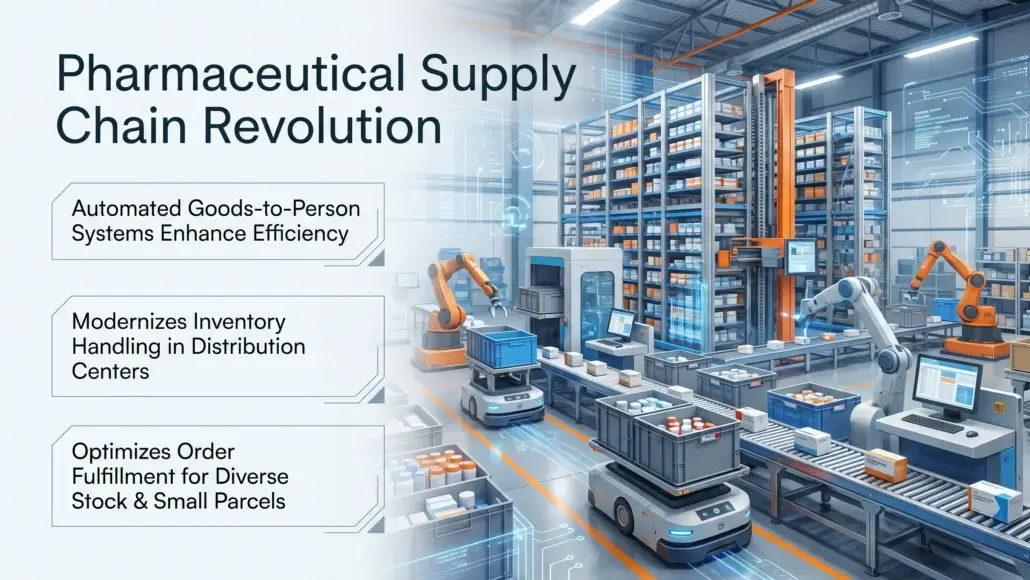
The pharmaceutical supply chain is currently undergoing a fundamental shift in how inventory is handled within the distribution center. Traditional methods of order fulfillment often rely on person-to-goods models, where workers traverse vast warehouse aisles to locate and retrieve specific medications. This approach is increasingly seen as inefficient, particularly given the rising volume of small-parcel orders and the diversity of stock-keeping units. By implementing goods-to-person automation improving pharmaceutical order picking, facilities can significantly reduce the physical demands on their workforce while increasing the speed of operations. In these automated systems, inventory is stored in high-density structures and delivered directly to the picker at a stationary workstation. This eliminates the need for travel time, which can account for more than half of a typical picker’s shift. The result is a dramatic increase in picking rates, allowing pharmaceutical distributors to meet tighter delivery windows without increasing headcount.
The adoption of this technology also brings a high level of precision to the picking process, which is critical for maintaining patient safety and regulatory compliance. When an order is initiated, the system automatically retrieves the correct bin or tray and presents it to the operator. Sophisticated software interfaces, often utilizing light-directed picking or screen-based instructions, guide the picker to select the exact quantity of the correct item. This multi-layered verification process reduces the risk of mispicks, which can be costly and dangerous in a healthcare context. By focusing on goods-to-person automation improving pharmaceutical order picking, companies can ensure that the right medication reaches the right patient every time. Additionally, these systems provide a complete digital record of every transaction, enhancing the traceability of products as they move through the facility. This level of granular detail is essential for meeting the requirements of the Drug Supply Chain Security Act and similar global regulations aimed at preventing the entry of counterfeit products into the legitimate supply chain.
Optimizing Space Utilization and Inventory Security in Pharma Facilities
Space is a premium commodity in pharmaceutical warehouses, especially those requiring temperature-controlled environments such as cold rooms or ambient storage for sensitive compounds. Traditional shelving and racking systems often leave a significant amount of vertical space unused, leading to larger building footprints and higher energy costs. Automated storage and retrieval systems that support goods-to-person workflows are designed to maximize cubic capacity. By utilizing high-density storage modules, facilities can store more inventory in a smaller footprint, which is particularly advantageous for urban distribution centers or sites where physical expansion is not possible. The concentration of inventory also simplifies the task of maintaining environmental controls, as the conditioned air only needs to be circulated within a more compact and better-insulated area. This leads to significant energy savings and a more sustainable operation over the long term.
Inventory security is another area where automated systems offer a clear advantage over manual methods. In a traditional warehouse, high-value or controlled substances must be stored in cages or vaults with restricted access. While effective, this adds complexity to the picking process and can create bottlenecks. Goods-to-person automation improving pharmaceutical order picking integrates security directly into the storage medium. Inventory is stored in enclosed structures that are only accessible via the automated machinery. Access to specific bins can be restricted to authorized personnel based on their login credentials, providing an inherent layer of protection against theft or diversion. Every interaction with the inventory is logged by the system, creating an audit trail that is far more reliable than manual sign-out sheets. This security is vital for the pharmaceutical industry, where the loss of even a small amount of product can lead to significant financial loss and regulatory scrutiny.
Improving Ergonomics and Workforce Productivity in High-Volume Operations
The physical toll of manual warehouse work is a significant factor in employee turnover and workplace injuries. Frequent bending, reaching, and lifting, combined with miles of walking, can lead to musculoskeletal disorders and chronic fatigue. By shifting to a goods-to-person model, pharmaceutical distributors can create a more ergonomic and sustainable working environment. Workstations can be designed to present items at a comfortable height, reducing the need for awkward movements. This focus on ergonomics not only protects the health of the workers but also improves their productivity. A comfortable worker is a more focused and accurate worker, which is essential when handling delicate pharmaceutical packaging or verifying complex dosage forms. The reduction in physical strain also makes the warehouse a more attractive workplace for a broader demographic, helping to alleviate the labor shortages that currently plague the logistics sector.
Training and onboarding of new staff is also streamlined when using automated systems. In a traditional person-to-goods warehouse, it can take several weeks for a new employee to learn the facility layout and become proficient in the picking process. With goods-to-person automation improving pharmaceutical order picking, the learning curve is significantly reduced. The system provides intuitive guidance, and the stationary nature of the work means there is no complex navigation to master. New pickers can often reach full productivity within a matter of days, providing the facility with greater flexibility to scale its workforce in response to seasonal demand or sudden spikes in order volume. This agility is a key competitive advantage in the fast-paced pharmaceutical market, where the ability to respond quickly to new product launches or changes in healthcare needs is paramount. The consistency of the automated workflow also ensures that quality standards are maintained regardless of the experience level of the individual picker.
Integrating Advanced Software for Seamless Warehouse Orchestration
The hardware of a goods-to-person system is only as effective as the software that controls it. Warehouse execution systems and warehouse management systems must work in concert to prioritize orders, manage inventory levels, and optimize the movement of automated components. These software platforms use complex algorithms to ensure that high-velocity items are stored in the most accessible locations and that picking missions are batched for maximum efficiency. For pharmaceutical distributors, this software must also handle complex requirements such as lot control, expiration date management, and first-in-first-out or first-expired-first-out logic. The integration of goods-to-person automation improving pharmaceutical order picking allows these rules to be enforced automatically, reducing the reliance on manual verification and ensuring that inventory is rotated correctly. This prevents the loss of product due to expiration, which is a significant cost center in the pharmaceutical industry.
Real-time data visibility provided by these systems allows for proactive management of the entire fulfillment operation. Managers can monitor picking rates, identify potential bottlenecks before they cause delays, and adjust labor allocation based on the current workload. This level of insight is particularly valuable in a pharmaceutical context, where orders may have different levels of urgency, such as emergency shipments to hospitals or clinics. The system can automatically prioritize these critical orders, ensuring they are picked and packed first. Additionally, the data generated by the system can be used to improve forecasting and inventory planning, helping to ensure that the right products are in stock to meet customer demand. The digital nature of the operation also simplifies the process of communicating with other parts of the supply chain, providing customers with accurate information on the status of their orders and improving overall service levels.
Scaling Operations for Future Pharmaceutical Market Demands
The pharmaceutical industry is characterized by rapid innovation and changing patient needs, which in turn place new demands on the logistics infrastructure. The rise of personalized medicine, for example, is leading to smaller batch sizes and a greater need for specialized handling. Goods-to-person systems are inherently scalable and adaptable, making them well-suited to meet these evolving requirements. Additional storage modules or workstations can be added as the business grows, providing a modular path to increased capacity. The flexibility of the software allows for new processes to be implemented without the need for extensive retraining or facility reconfiguration. This future-proofing is an essential consideration for pharmaceutical companies as they look to build resilient and responsive supply chains.
The financial case for investing in these technologies continues to strengthen as the industry seeks ways to offset rising costs and maintain margins. While the initial capital expenditure can be significant, the long-term benefits in terms of labor savings, increased throughput, and reduced errors provide a clear return on investment. Additionally, the improvements in inventory security and regulatory compliance provide intangible benefits that are equally important in a highly regulated sector. By embracing goods-to-person automation improving pharmaceutical order picking, organizations can position themselves at the forefront of the industry, capable of delivering high-quality healthcare products with a level of efficiency and reliability that was previously unattainable. The transition toward automated fulfillment is not just a technological upgrade; it is a strategic imperative for any pharmaceutical enterprise committed to operational excellence and long-term growth.