







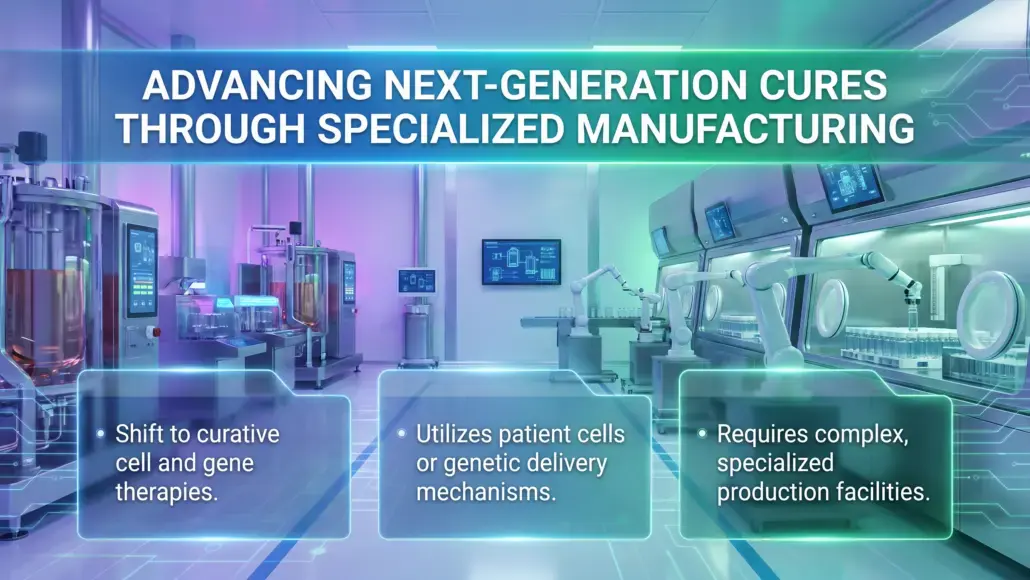

The pharmaceutical sector is entering a new era characterized by the rise of cell and gene therapies, which offer the potential to treat or even cure diseases that were previously managed with lifelong medication. These advanced therapies involve the modification of a patient’s own cells or the delivery of genetic material to target specific disease pathways. However, the production of these therapies is significantly more complex than traditional drug manufacturing, requiring specialized facilities and highly controlled processes. This shift has placed a significant emphasis on advanced therapies manufacturing supporting next-generation drug development to ensure that these life saving treatments can be produced at scale and with consistent quality. The transition from manual, laboratory scale processes to automated, industrial scale production is one of the primary technical challenges facing the industry.
The production of autologous therapies, where each batch is unique to a single patient, introduces significant logistical and operational complexities. Maintaining the chain of custody and chain of identity throughout the manufacturing cycle is essential for patient safety. This requires a highly integrated digital infrastructure that tracks the movement of cells and materials from the point of collection to the point of administration. When advanced therapies manufacturing supporting next-generation drug development is managed effectively, the risk of errors in the production cycle is minimized, and the probability of a successful clinical outcome is increased. The development of standardized platforms for cell processing and viral vector production is a key priority for organizations looking to advance their CGT pipelines.
Standardizing viral vector production for gene therapy scale up
Viral vectors are the primary vehicles for delivering genetic material into target cells, making their production a critical component of gene therapy manufacturing. Currently, the industry relies on transient transfection of mammalian cells to produce these vectors, a process that is difficult to scale and prone to variability. To meet the growing demand for gene therapies, manufacturers are exploring more efficient production platforms, such as stable producer cell lines and baculovirus based systems. These platforms offer the potential for higher yields and more consistent quality profiles, which are essential for commercial success. The purification of viral vectors is also a significant technical hurdle, as the large size and complexity of the particles require specialized chromatography and filtration techniques.
The shift toward suspension based culture systems allows for the use of large scale bioreactors, which can significantly increase the production capacity for viral vectors. By optimizing the media composition and the transfection parameters, researchers can maximize the titer of the final product. Additionally, the implementation of real time monitoring for key process parameters, such as pH, dissolved oxygen, and nutrient levels, ensures that the environment remains optimal for vector expression. When standardizing these production processes across different therapeutic programs, companies can reduce the time and cost associated with process development. This modular approach allows for the rapid deployment of manufacturing capacity for new targets.
The characterization of viral vectors is another critical aspect of the production process, as any impurities or empty capsids can impact the safety and efficacy of the therapy. High resolution analytical techniques, such as mass spectrometry and analytical ultracentrifugation, are used to evaluate the purity and potency of the vector preparation. These methods provide a detailed view of the vector’s quality profile, allowing for the identification of potential issues early in the manufacturing cycle. As the regulatory requirements for gene therapies become more stringent, the demand for comprehensive analytical data continues to increase. A well characterized and standardized production process is the foundation of a successful gene therapy program.
Automating cell processing to reduce contamination risks
The manual processing of cells in open systems is a primary source of contamination and variability in advanced therapy manufacturing. By transitioning to closed, automated systems, manufacturers can significantly reduce these risks and improve the consistency of the final product. Automated platforms can perform all the necessary steps for cell processing, including isolation, activation, transduction, and expansion, in a single, controlled environment. This reduces the need for cleanroom space and minimizes the requirement for highly skilled operators, leading to lower operational costs. The use of automated systems also allows for more precise control over the cellular environment, which can improve the viability and potency of the final therapy.
The integration of sensors and feedback control systems into automated cell processing platforms allows for real time monitoring of cell growth and metabolism. This data can be used to optimize the feeding schedule and the timing of the various processing steps, ensuring that the cells remain in an optimal state throughout the expansion phase. For companies engaged in advanced therapies manufacturing supporting next-generation drug development, these automated systems offer a way to scale their production capacity without a corresponding increase in infrastructure. The ability to process multiple patient samples simultaneously in a decentralized manufacturing model is another advantage of these platforms, as it can reduce the time required to deliver the therapy to the patient.
Despite the benefits, the adoption of automated cell processing requires a significant investment in new technology and the development of specialized protocols. The transition from manual to automated processes must be carefully managed to ensure that the quality attributes of the cells are maintained. This involves rigorous comparability studies to demonstrate that the automated process produces a product that is equivalent to the manual process in terms of safety and efficacy. The long term benefits of reduced variability and improved scalability make automation an essential component of the future of cell therapy manufacturing. The continued development of more flexible and modular automated platforms will further support the growth of the advanced therapy sector.
Managing logistics for autologous therapy distribution
The distribution of autologous therapies requires a highly coordinated logistics network that can maintain the integrity of the product throughout the entire supply chain. Because these therapies are time sensitive and temperature sensitive, any delay or deviation in the shipping environment can render the product unusable. This requires the use of specialized shipping containers and real time tracking systems that monitor the temperature and location of the product at all times. The coordination between the manufacturing site, the logistics provider, and the clinical site is essential for ensuring that the therapy is delivered to the patient in a timely manner.
The development of decentralized manufacturing models, where production occurs closer to the patient, is one way to reduce the logistical challenges associated with autologous therapies. This can involve the use of mobile manufacturing units or the establishment of regional manufacturing hubs. However, maintaining consistent quality across multiple manufacturing sites is a significant technical and regulatory challenge. It requires the implementation of standardized processes and a centralized quality management system that provides oversight of all production activities. When the objective is to optimize the supply chain, the focus remains on the reliability of the delivery mechanism.
The use of digital platforms to manage the chain of custody and chain of identity is another critical component of the logistics network. these platforms provide a transparent record of all the activities associated with a patient’s sample, from the point of collection to the point of administration. This documentation is essential for meeting regulatory requirements and for ensuring patient safety. The integration of the logistics data with the manufacturing and clinical data provides a holistic view of the patient’s journey, allowing for the identification of potential improvements in the delivery process. The continued innovation in logistics and supply chain management is vital for the widespread adoption of advanced therapies.
Implementing real time monitoring in bioreactor environments
Real time monitoring of the bioreactor environment is essential for maintaining the quality and consistency of advanced therapies. Traditional offline sampling methods provide only a snapshot of the process and can introduce contamination risks. By implementing in line and on line sensors, manufacturers can obtain continuous data on the physical and chemical properties of the culture, such as pH, dissolved oxygen, glucose, and lactate levels. This information allows for the immediate adjustment of process parameters to keep the environment within the optimal range for cell growth and product expression. The use of Raman spectroscopy and other advanced analytical tools provides even deeper insights into the cellular metabolism and the quality of the final product.
The data generated by real time monitoring systems can be used to develop predictive models that can identify potential process deviations before they occur. These models allow for a proactive approach to process control, reducing the likelihood of batch failures and improving the overall yield. For organizations focused on advanced therapies manufacturing supporting next-generation drug development, the implementation of these digital technologies is a key component of their quality strategy. By building a deep understanding of the relationship between process parameters and product quality attributes, manufacturers can justify a more flexible regulatory approach, including real time release testing.
The integration of real time monitoring data with the enterprise resource planning and quality management systems provides a comprehensive view of the entire manufacturing operation. this connectivity allows for better coordination between the different functional areas and supports more informed decision making. The use of cloud based platforms for data storage and analysis enables the collaboration between different manufacturing sites and the sharing of best practices. The transition to a more data driven and connected manufacturing environment is a significant step toward the realization of advanced manufacturing principles in the sector. The continued investment in digital technologies will be a primary driver of efficiency and quality in the production of next-generation therapies.
Evaluating regulatory frameworks for personalized medicine production
The unique nature of advanced therapies requires a flexible and science based approach to regulatory oversight. Traditional regulatory frameworks, which were designed for mass produced drugs, are often not suitable for personalized medicines. Regulatory agencies, such as the FDA and EMA, have introduced new guidelines and expedited pathways to support the development and approval of cell and gene therapies. These pathways provide opportunities for more frequent communication with regulators and allow for a more iterative approach to clinical development. For companies involved in these programs, staying abreast of the changing regulatory environment is essential for ensuring compliance and market access.
One of the primary regulatory challenges in the advanced therapy sector is the requirement for comparability studies when changes are made to the manufacturing process. Because the production of these therapies is so complex, even minor changes can have a significant impact on the product’s quality profile. Providing sufficient data to demonstrate comparability is a labor intensive and costly process, which can slow down the implementation of process improvements. The development of more standardized analytical methods and the use of prior knowledge can help to streamline the comparability assessment. Additionally, the implementation of a post approval change management protocol can provide a more predictable pathway for implementing manufacturing changes after the initial approval.
The global harmonization of regulatory requirements for advanced therapies is another key priority for the industry. Differences in the expectations of various health authorities can complicate the development of global clinical programs and increase the cost of regulatory compliance. The participation in international forums and the adoption of common standards can help to reduce these barriers and facilitate the global distribution of these life saving treatments. A proactive and collaborative relationship with regulatory agencies is the most effective way to address the technical and ethical challenges associated with personalized medicine. The continued evolution of the regulatory framework will be essential for the long term success of the advanced therapy sector.