












Opinion by Darren Bromley-Davenport, Technical Manager at Orbia Fluor & Energy Materials
The transition to low-global warming potential (GWP) pressurised metered-dose inhalers (pMDIs) is now well underway.
In recent years, significant progress has been made in identifying alternative propellants capable of reducing the environmental impact of pMDIs while maintaining the performance patients rely on. Among the potential options, HFA offering around a 90% reduction in GWP compared to HFA-134a.
As EU medical quota under F-gas regulations continue to phase down towards 2030 and beyond, manufacturers face a shrinking window to develop, validate and commercialise low-GWP pMDIs.
While significant progress has been made in identifying and commercialising viable propellants that will enable a lower-carbon future for respiratory care, such as HFA-152a, the next challenge is execution within a strained timeline.
Speed to market is being determined by a company’s ability to navigate formulation development, compatibility testing, clinical manufacture and regulatory compliance efficiently and effectively not just access to the propellant itself.
Lessons from the last major transition
This is not the first time the pharmaceutical industry has faced a large-scale propellant transition.
During the move from chlorofluorocarbon (CFC) propellants to hydrofluoroalkanes (HFAs) back in the 1990s, many anticipated a relatively straightforward substitution.
Instead, significant differences in physical and chemical properties introduced unforeseen formulation challenges, delayed development timelines and, in some cases, contributed to product shortages.
The industry learned that differences in propellant chemistry can affect every part of the inhaler system, from formulation stability to component compatibility and device performance.
Today’s transition presents a similar challenge. Next generation propellant HFA-152a
It is a smaller, more polar molecule, absorbs water more readily and can interact differently with elastomers and valve components within the inhaler system. In some formulations, suspension stability may also differ.
Formulation expertise is essential
As development timelines tighten, access to ongoing, expert formulation science will be vital in understanding how a new propellant behaves within a formulation and ensuring product performance, stability and patient outcomes remain unchanged.
Manufacturers must assess factors such as API compatibility, suspension behaviour, solubility, moisture sensitivity and long-term stability. But generating this data takes time, specialist expertise and access to appropriate infrastructure.
Companies that can quickly identify potential formulation risks, optimise prototypes and generate robust development data are likely to progress more rapidly through development than those attempting to build these capabilities independently.
This kind of ongoing formulation expertise gives pharma companies a strategic advantage.
The role of compatibility and performance testing
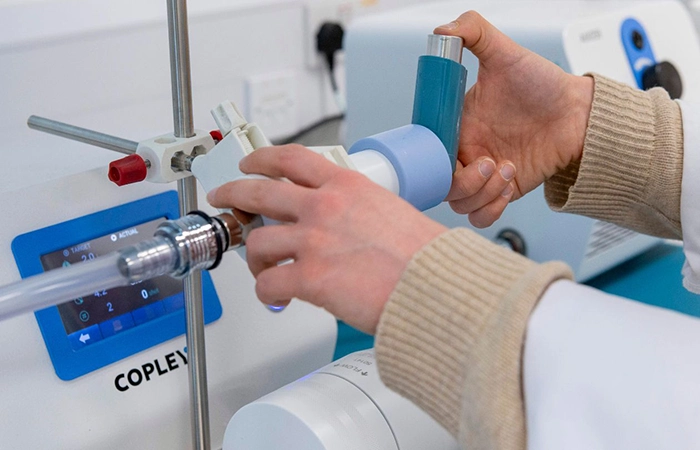
Alongside formulation development, compatibility testing reduces risk and avoids costly delays later in the development process.
The transition to a new propellant requires confidence that inhaler components will continue to perform as intended throughout the product lifecycle. This includes evaluating interactions between the propellant and elastomers, valves, canisters and other device materials.
Manufacturers must also demonstrate that reformulated products deliver equivalency through assessments such as aerodynamic particle size distribution (APSD), spray pattern analysis, plume geometry studies and stability testing.
Compatibility testing is often viewed as an additional step. In reality, it is one of the most effective ways to avoid costly redevelopment later when able to be agnostic about componentry for your formulation to optimise component configuration for performance and compatibility.
Identifying potential issues during early-stage development is significantly less disruptive than discovering them during later-stage studies, scale-up activities or regulatory review.
The manufacturers that move fastest will be those able to generate high-quality performance data early and confidently, before supply and cost become a significant barrier to progress.
Infrastructure matters more than ever
GMP clinical manufacturing capacity is essential, and access to specialist pMDI development infrastructure is still limited.
For many developers, particularly smaller pharmaceutical and generic manufacturers, building these capabilities internally is neither practical nor cost-effective. As a result, access to experienced development and manufacturing partners is becoming increasingly important.
The ability to move seamlessly from laboratory formulation work through to pilot-scale manufacture and clinical supply can significantly reduce development timelines while lowering project risk.
Compliance can no longer be an afterthought
Another factor shaping development planning is the progress of the F-gas regulation timelines.
Under the EU F-gas framework, manufacturers must consider quota coverage, authorisation requirements and long-term compliance strategies alongside technical development activities. Changes to quota allocation and associated costs are also influencing decision-making around future propellant choices.
As charges associated with increase and EU quota availability phases down in line with F-Gas regulations, manufacturers must consider compliance, supply security and long-term product economics alongside formulation development.
For organisations developing next-generation inhalers, regulatory compliance and commercial planning are now an interconnected part of their product development strategy.
Partnering with an experienced supplier that holds and manages quota ensures a smooth, supported journey through the transition, ensuring supply as well as compliance.
Building the fastest path to market
With 2030 approaching rapidly, development activity needs to accelerate.
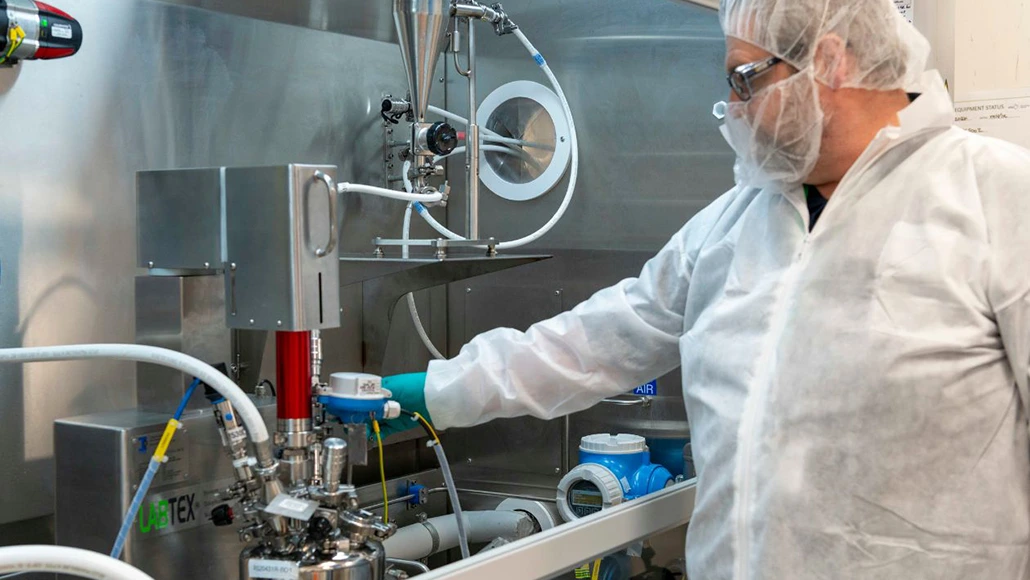
Working with experienced specialist partners that can support both technical development and regulatory readiness from assessing reformulation equivalency needs and establishing a low-GWP development strategy to compatibility testing, formulation evaluation and development, GMP clinical batch manufacturing, and securing F-gas compliance pathways can help accelerate product development while reducing transition risk.
The companies that transition quickly and successfully will be those that take a holistic view of the transition, outsourcing essential expertise from the outset.
For companies to keep their life-saving therapies on the market long term, the time to act is now.