










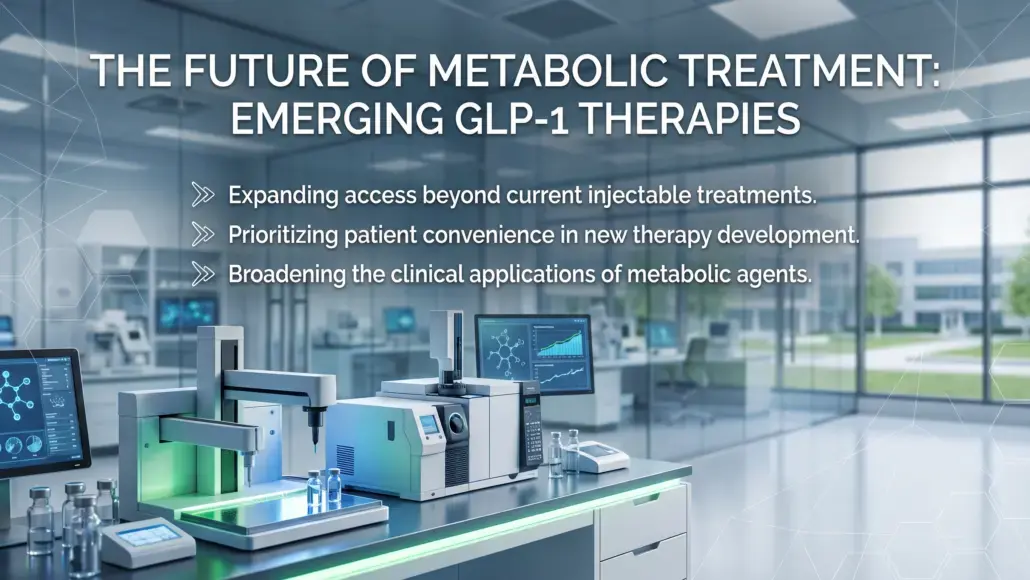
The pharmaceutical sector is currently undergoing a fundamental shift as new classes of metabolic agents move through the clinical pipeline. While injectable glucagon-like peptide 1 receptor agonists have set a high bar for efficacy in weight loss and glycemic control, the industry is now focused on expanding the reach of these treatments. The development of emerging GLP-1 therapies redefining metabolic treatment is centered on improving patient convenience and broadening the scope of clinical application. This evolution is driven by the recognition that while current therapies are highly effective, their injectable nature and high cost can be barriers to wider adoption. Consequently, researchers are exploring novel delivery mechanisms and molecular structures that can provide the same metabolic benefits in a more accessible format. This strategic focus is not just about incremental improvement but about a fundamental reimagining of how metabolic chronic diseases are managed on a global scale. The goal is to provide patients with a range of options that fit their lifestyles while maintaining the rigorous safety and efficacy standards that define modern medicine. The successful development of these next-generation therapies will be a significant milestone in the history of metabolic care.
Oral Glp-1 Formulations Overcoming Bioavailability Barriers
One of the most significant challenges in peptide-based medicine is the inherent difficulty of oral delivery. Peptides are naturally degraded by the acidic environment of the stomach and the various enzymes in the digestive tract, leading to very low bioavailability. However, the development of emerging GLP-1 therapies redefining metabolic treatment is successfully overcoming these barriers through innovative formulation science. By utilizing absorption enhancers and specialized coatings, pharmaceutical companies are now able to deliver therapeutically relevant levels of GLP-1 agonists via an oral tablet. This achievement represents a major technical breakthrough, as it requires a precise understanding of the biological hurdles that prevent peptide absorption. The ability to provide an oral alternative to injections is expected to significantly increase patient acceptance and adherence, particularly for those who are hesitant to start injectable therapies.
The clinical data emerging from trials of oral GLP-1 formulations suggests that they can achieve similar levels of glucose control and weight loss to their injectable counterparts. This parity in efficacy is a key requirement for market success, as patients and clinicians are unlikely to switch to an oral option if it means sacrificing clinical benefits. The role of emerging GLP-1 therapies redefining metabolic treatment in this context is to provide a more flexible and user-friendly treatment pathway. The pharmaceutical industry is investing heavily in the manufacturing infrastructure required to produce these oral formulations at scale, recognizing the massive potential market for a non-injectable metabolic therapy. As more oral candidates progress through the final stages of clinical testing, the competition in the metabolic sector is expected to intensify, driving further innovation and potentially lowering the cost of treatment for patients. The successful transition to oral delivery is a testament to the power of formulation science in overcoming long-standing biological challenges.
Investigational Non-Peptide Small Molecules Targeting Metabolic Receptors
Beyond oral peptides, the pharmaceutical sector is also exploring the potential of non-peptide small molecules that can target the GLP-1 receptor. These molecules offer several advantages over peptides, including naturally higher bioavailability and more straightforward manufacturing processes. The emergence of emerging GLP-1 therapies redefining metabolic treatment in the form of small molecule agonists is a significant area of research for many leading drug developers. These compounds are designed to fit into the same receptor binding pockets as the natural hormone, triggering the same metabolic signals but with a different chemical structure. This approach allows for the creation of once-daily oral therapies that do not require the complex absorption enhancers needed for peptides. The development of these small molecules is supported by advanced computational modeling and high-throughput screening, which allow researchers to identify and optimize candidates with high precision.
The use of small molecule agonists also opens up the possibility of developing new combinations with other oral metabolic agents. This could lead to the creation of highly effective, all-oral treatment regimens for complex metabolic conditions. The role of emerging GLP-1 therapies redefining metabolic treatment is to push the boundaries of what is possible in metabolic medicine, exploring new chemical spaces that were previously considered unreachable. While these small molecule candidates are still in the earlier stages of clinical development compared to oral peptides, the initial data is promising, showing significant improvements in glycemic markers and body weight. The pharmaceutical industry is closely monitoring the progress of these programs, as a successful small molecule GLP-1 agonist would be a major commercial asset. The ability to produce these therapies using standard pharmaceutical manufacturing processes would also help in scaling production to meet global demand more efficiently. The ongoing innovation in small molecule discovery is a clear reflection of the industry’s commitment to finding the most effective and accessible solutions for metabolic health.
Clinical Data Assessing Long-Term Efficacy In Diverse Patient Populations
As new metabolic therapies move toward regulatory approval, the focus on generating high-quality clinical data has never been higher. Researchers are conducting large-scale, long-term studies to assess the durability of the effects provided by emerging GLP-1 therapies redefining metabolic treatment. These trials are designed to evaluate not only weight loss and glucose control but also the impact on cardiovascular and renal outcomes over several years. Understanding the long-term safety and efficacy profile of these therapies is essential for establishing them as standard-of-care treatments. The clinical community is particularly interested in how these new oral and small molecule options perform in diverse patient populations, including different ethnic groups and individuals with various comorbidities. This broad focus ensures that the resulting data is relevant to the real-world challenges faced by clinicians and patients alike.
The collection of this data is also critical for securing favorable reimbursement and market access decisions. Payers and health systems require strong evidence of the long-term value of a therapy before agreeing to cover its cost. The role of emerging GLP-1 therapies redefining metabolic treatment is to provide the clinical evidence needed to support a shift toward more proactive and integrated metabolic care. By demonstrating that these therapies can reduce the incidence of major adverse cardiovascular events and slow the progression of chronic kidney disease, pharmaceutical companies can build a compelling case for their widespread use. The ongoing investment in these large-scale clinical programs reflects the industry’s belief in the fundamental value of these new metabolic treatments. As the results of these studies are published, they will provide a roadmap for the future of metabolic medicine, helping to refine clinical guidelines and improve patient outcomes on a global scale. The commitment to rigorous clinical validation is a hallmark of the modern pharmaceutical industry, ensuring that every new therapy is backed by a comprehensive body of evidence.
Regulatory Trends Shaping The Approval Of Novel Metabolic Indications
The regulatory environment for metabolic therapies is also evolving in response to the rapid pace of innovation. Health authorities such as the FDA and EMA are increasingly looking for evidence of clinical benefit beyond simple weight loss or glucose reduction. This shift in regulatory focus is influencing the design of clinical trials for emerging GLP-1 therapies redefining metabolic treatment, as companies seek to demonstrate improvements in specific comorbidities like obstructive sleep apnea or cardiovascular risk. The ability to secure approvals for these broader indications is a key driver of market growth, as it allows for the use of these therapies in a wider range of clinical settings. Regulatory agencies are also providing more guidance on the development of oral and small molecule metabolic agents, helping to clear the path for these novel therapies to reach the market.
Alongside these trends, there is a growing emphasis on real-world evidence and patient-reported outcomes in the regulatory process. Authorities are interested in how these therapies perform in everyday clinical practice and how they impact the quality of life for patients. The role of emerging GLP-1 therapies redefining metabolic treatment is to meet these evolving regulatory expectations by providing a comprehensive picture of the drug’s impact on patient health and well-being. This requires a multi-faceted approach to clinical research, combining traditional randomized controlled trials with observational studies and digital health data. The collaboration between pharmaceutical companies and regulatory bodies is essential for ensuring that new treatments are both safe and effective, while also being brought to market as quickly as possible. As the understanding of metabolic disease continues to deepen, the regulatory frameworks that govern the approval of these therapies will likely become even more sophisticated, reflecting the complex and systemic nature of metabolic health. The ability to address these regulatory challenges is a critical competency for any organization looking to lead in the metabolic sector.
Impact Of Oral Bioavailability On Patient Access And Chronic Disease Management
The successful development of oral metabolic therapies has the potential to significantly improve patient access and change the way chronic diseases are managed. For many patients, the requirement for regular injections is a major deterrent to starting and maintaining a GLP-1 regimen. By providing an oral alternative, emerging GLP-1 therapies redefining metabolic treatment can help to overcome this barrier, allowing more people to benefit from these highly effective treatments. This increased access is particularly important for patients in regions where the infrastructure for storing and administering injectable medications may be limited. The ease of distribution and storage for oral tablets makes them a more practical option for global health initiatives aimed at addressing the growing metabolic crisis.
The move toward oral therapies also allows for earlier intervention in the disease process. Clinicians may be more willing to prescribe an oral metabolic agent at an earlier stage of type 2 diabetes or obesity, before significant complications have developed. This shift toward earlier treatment is supported by evidence that proactive metabolic management can lead to better long-term outcomes and a lower overall cost of care. The role of emerging GLP-1 therapies redefining metabolic treatment is to provide the tools needed to implement this earlier intervention strategy. As the metabolic sector continues to evolve, the focus on patient-centric delivery and accessible care will remain a central theme. The ongoing innovation in oral delivery systems and small molecule discovery is a clear indication that the pharmaceutical industry is listening to the needs of patients and clinicians. By providing more choices and fewer barriers to treatment, the industry is helping to pave the way for a healthier and more sustainable future for metabolic care. The successful integration of these new therapies into clinical practice will be a major step forward in the fight against metabolic disease.