









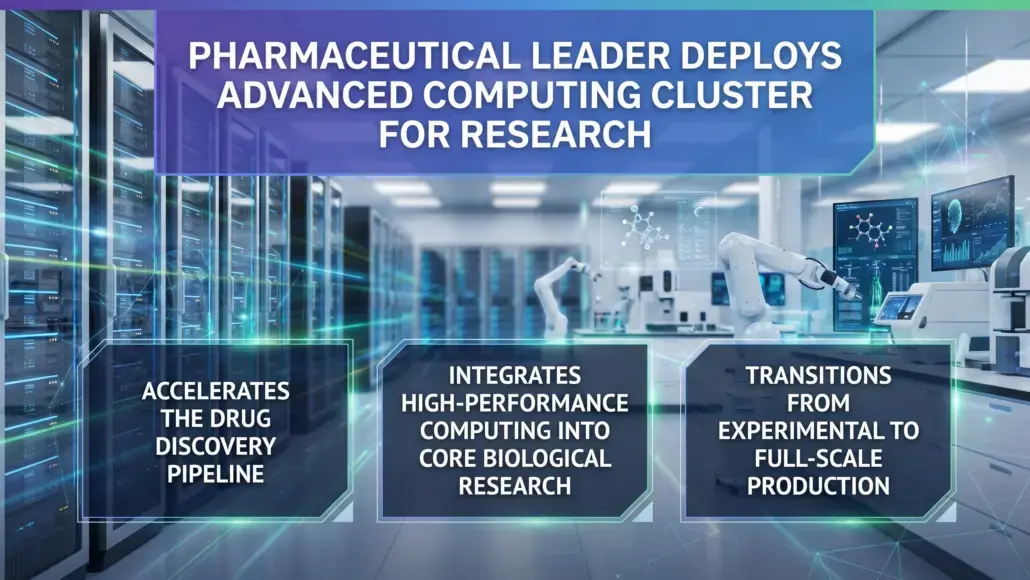
Pharmaceutical giant Bristol Myers Squibb has announced the deployment of its second NVIDIA DGX SuperPOD, an advanced computing cluster designed to accelerate the drug discovery pipeline. This new infrastructure, which utilizes the Vera Rubin architecture, represents a significant commitment to integrating high-performance computing into the core of biological research. The company is positioning this move as a transition from experimental technology use to full-scale production in the realm of pharmaceutical AI.
The internal team, led by Erin Davis, has referred to the new system as the “SuperDuperPOD.” This moniker reflects the scale of the deployment and the success of the company’s initial AI drug discovery infrastructure, which has already provided measurable results in processing complex biological data. The addition of this second DGX SuperPOD is expected to provide the computational overhead necessary to manage increasingly complex workloads.
Next-Generation Architecture for Molecular Research
The shift to the Vera Rubin architecture marks a technical advancement for the organization. This specific platform is optimized for the massive parallel processing tasks required for modern molecular simulations. By utilizing this AI drug discovery infrastructure, the company can screen millions of molecular compounds simultaneously, a task that would be prohibitively time-consuming using traditional methods. The system is also designed to train custom models that predict how various drug interactions might occur within the human body.
The timing of this deployment is notable as the industry sees a growing race to secure high-end computing power. While other major players have discussed their ambitions, this double-down on dedicated infrastructure suggests a strategy focused on building an internal “factory” for pharmaceutical AI. This approach allows the company to maintain strict control over its proprietary data and research insights, which are vital for maintaining a competitive edge in the market.
Efficiency in the Drug Discovery Pipeline
The economic drivers behind such a large-scale investment are clear. Traditional methods of developing new treatments are often characterized by high costs and long timelines. By utilizing molecular simulations and advanced analytics, the company aims to identify viable candidates earlier in the process. This capability is intended to reduce the frequency of late-stage failures, which are among the most significant financial burdens in the industry.
Furthermore, the deployment of the Vera Rubin architecture signals a broader industry trend where traditional firms are building internal capabilities to match the speed of technology-native startups. As the drug discovery pipeline becomes increasingly digitized, the ability to process vast amounts of clinical and biological data on-premise becomes a strategic necessity. This infrastructure upgrade suggests that the transition of computational power from a support function to a primary research tool is now well underway.