












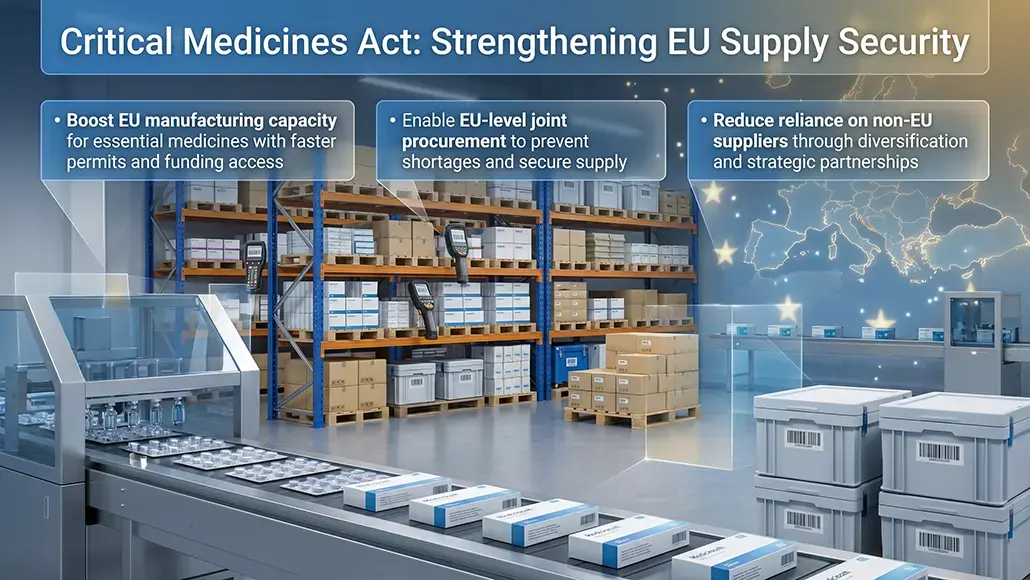
The European Union has moved closer to implementing new measures aimed at protecting the availability of essential medicines and reducing exposure to external supply risks, as lawmakers advanced the Critical Medicines Act framework first introduced in March 2025. The initiative is designed to reinforce the resilience of pharmaceutical supply chains across Europe while addressing concerns over shortages of key treatments. The proposed regulation focuses on expanding manufacturing capacity for critical medicines, reducing vulnerabilities linked to supply chain disruptions, promoting joint procurement mechanisms, and encouraging supply diversification through strategic international partnerships. The Critical Medicines Act is also intended to strengthen Europe’s pharmaceutical production ecosystem amid mounting geopolitical and trade-related pressures.
According to the European Parliament, the proposed legislation which still requires formal adoption is expected to reduce reliance on non-EU countries while improving the competitiveness of the bloc’s pharmaceutical sector. Data from 2025 showed imports of medicinal and pharmaceutical products into the EU rose by 21%, while exports increased by 16%, with the United States remaining the region’s largest import partner. Medicines covered under the framework include antibiotics, vaccines, insulin, paracetamol, immunosuppressants, and antibacterial products. Around 300 medicines are currently listed on the Union’s 2026 critical medicines register, identifying products considered essential for safeguarding public health across member states.
European Parliament member Tomislav Sokol, who presented the agreement, said: “By introducing collaborative procurement at EU level, we are taking concrete action to address shortages and ensure security of supply.
“At the same time, we are sending a clear signal that Europe is committed to strengthening its pharmaceutical manufacturing base. Companies that produce medicines in Europe will be favoured in procurement procedures. Strategic projects will benefit from access to national and EU funding and from faster and more efficient permitting procedures.”
The European Medicines Agency also welcomed the provisional agreement, noting that the Covid-19 pandemic and geopolitical tensions had exposed weaknesses in pharmaceutical supply networks. The agency additionally pointed to disruptions linked to instability in the Middle East, where commercial activity through the Strait of Hormuz remains significantly below pre-war levels. EMA Executive Director Emer Cooke said: “At a time of increasing global disruptions, resilient and secure supply chains for critical medicines are essential to protect public health across the EU.
“Today’s provisional agreement on the Critical Medicines Act marks a significant milestone towards strengthening Europe’s capacity to improve the availability, supply and production of critical medicines.”