










Close
Novotech
Jabsco PureFlo 21 Single Use

Sygnature Discovery invests in high-throughput screening capability

Note* - All images used are for editorial and illustrative purposes only and may not originate from the original news provider or associated company.

Subscribe

- Never miss a story with notifications

- Gain full access to our premium content

- Browse free from any location or device.

Media Packs

Expand Your Reach With Our Customized Solutions Empowering Your Campaigns To Maximize Your Reach & Drive Real Results!

– Access the Media Pack Now

– Book a Conference Call

Leave Message for Us to Get Back

Related stories

Designing Biotech Financial Models for Series B Success

Building a compelling Series B case in biopharma goes well beyond efficacy data and market size projections. Sophisticated investors are increasingly focused on CMC risk, licensing obligations, and the defensibility of your manufacturing timeline. This article breaks down what the financial model behind a strong Series B actually looks like and what quietly kills deals that should have worked.

CMC Bottleneck in Drug Development and IND Delays

Ask any experienced biopharma program manager what derails an IND filing most often, and the answer is rarely surprising: it is CMC. Not insufficient efficacy data, not toxicology surprises CMC. This article examines why Chemistry, Manufacturing, and Controls continues to be the most underestimated risk in early drug development, and what program leaders can do about it.

The Hidden Cost of Licensing in Biologic Drug Development

Royalties, milestone payments, and license fees are often treated as the cost of doing business in biopharma. But for early-stage biotech companies building toward an IND, these obligations can quietly reshape financial models, complicate investor conversations, and create downstream deal terms that are difficult to unwind. Here is what founders need to know.
- Advertisement -

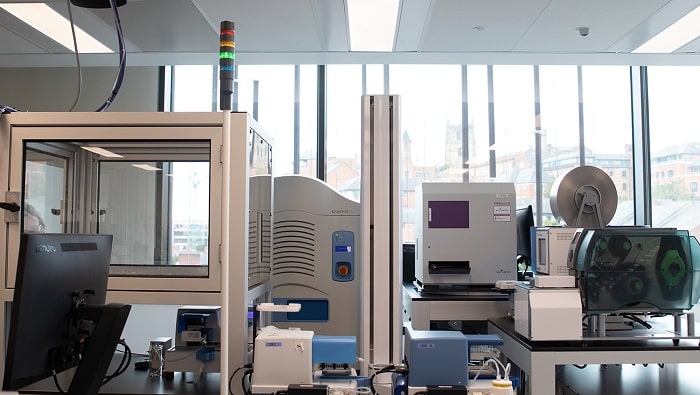
Sygnature Discovery has added in-house high-throughput screening (HTS) to its range of drug discovery services. This is backed up by its new Leadfinder compound library.

HTS allows many thousands of molecules to be tested for activity in a short period of time, providing a rapid way of identifying starting points for drug discovery programmes.

Sygnature’s new HTS system combines Titian Mosaic sample management technology with an automation platform from HiRes Biosolutions. Data analysis is facilitated using Genedata software. This is the first time these three leading vendors have worked together on the same system in order to create a high level of data fidelity during the screening operations.

The screening capability is underpinned by the Leadfinder library of 150,000 molecules. These were carefully selected by Sygnature’s team of experienced computational and medicinal chemists. A further 100,000 compounds will be designed and synthesised over the next five years.

‘The molecules were all selected to have lead-like molecular properties, and contain no undesirable functional groups,’ says John Unitt, Director of Bioscience at Sygnature Discovery. ‘Many commercial chemical libraries contain some molecules with features we would not want to incorporate into a drug lead. We have designed our Leadfinder library to avoid these problems.’

The library compounds are kept under dry, cool conditions and in an atmosphere of nitrogen to reduce the likelihood that they will oxidise or decompose on storage.

‘We decided to build our own HTS capability after feedback from our clients, especially around compound quality in many historical screening libraries’ says Colin Sambrook Smith, Sygnature’s Director of Computational Sciences & Informatics. ‘Having the capability housed within our Nottingham labs, where it can be integrated with our other hit-finding functions, will bring an enormous amount of additional value to our clients and their drug discovery projects.’

About Sygnature Discovery
Sygnature Discovery is a leading independent integrated drug discovery and pre-clinical services company. Private equity-backed since 2017, they operate fully enabled research facilities in Nottingham and Alderley Park, UK, housing more than 250 research scientists (over 80% of whom hold a PhD) and have an office presence in Cambridge, Massachusetts, US. Their experienced drug-hunters possess all the professional skills and know-how required to undertake the most demanding of research programmes, and drive them from target validation through hit identification, hit-to-lead and lead optimisation to pre-clinical development candidate. Since 2011, 30 compounds discovered by Sygnature for clients have entered pre-clinical development and so far 14 of these have progressed to clinical trials (Phases I, II and III). In 2017, Sygnature Discovery received the prestigious Queen’s Award for Enterprise for International Trade.

Latest stories

Related stories

Designing Biotech Financial Models for Series B Success

Building a compelling Series B case in biopharma goes well beyond efficacy data and market size projections. Sophisticated investors are increasingly focused on CMC risk, licensing obligations, and the defensibility of your manufacturing timeline. This article breaks down what the financial model behind a strong Series B actually looks like and what quietly kills deals that should have worked.

CMC Bottleneck in Drug Development and IND Delays

Ask any experienced biopharma program manager what derails an IND filing most often, and the answer is rarely surprising: it is CMC. Not insufficient efficacy data, not toxicology surprises CMC. This article examines why Chemistry, Manufacturing, and Controls continues to be the most underestimated risk in early drug development, and what program leaders can do about it.

The Hidden Cost of Licensing in Biologic Drug Development

Royalties, milestone payments, and license fees are often treated as the cost of doing business in biopharma. But for early-stage biotech companies building toward an IND, these obligations can quietly reshape financial models, complicate investor conversations, and create downstream deal terms that are difficult to unwind. Here is what founders need to know.

Early Phase Decisions Drive Faster Drug Development

Strategic early-stage planning and rigorous regulatory readiness serve as the foundation for accelerating pharmaceutical timelines and optimizing long-term R&D efficiency.

Subscribe

- Never miss a story with notifications

- Gain full access to our premium content

- Browse free from any location or device.

Media Packs

Expand Your Reach With Our Customized Solutions Empowering Your Campaigns To Maximize Your Reach & Drive Real Results!

– Access theMedia Pack Now

– Book a Conference Call

Leave Message for Us to Get Back

Translate »