










Close
CDMO Safety Testing 2026
Novotech

Novel silica delivery system Nuvec (R) enters final pre-clinical development stage

Note* - All images used are for editorial and illustrative purposes only and may not originate from the original news provider or associated company.

Subscribe

- Never miss a story with notifications

- Gain full access to our premium content

- Browse free from any location or device.

Media Packs

Expand Your Reach With Our Customized Solutions Empowering Your Campaigns To Maximize Your Reach & Drive Real Results!

– Access the Media Pack Now

– Book a Conference Call

Leave Message for Us to Get Back

Related stories

Made Smarter Advances AI in Manufacturing with New Toolkit

A new initiative from Made Smarter is aiming to...

Quantum Machine Learning in Pharma Research Growth

The convergence of artificial intelligence and quantum processing is opening new avenues for rapid discovery and innovation within the life sciences. By utilizing advanced mathematical models that operate across multi-dimensional datasets, researchers can now identify complex biological patterns and predict molecular behaviors with a speed that surpasses traditional computational methods. This transformation is accelerating the development of novel therapies and providing deeper insights into disease mechanisms, fundamentally altering the trajectory of pharmaceutical research and development.

Quantum Sensors Enabling Advanced Drug Diagnostics

The landscape of medical diagnostics is being reshaped by the introduction of sensing technologies that operate with atomic-level sensitivity. By providing high-fidelity measurements and real-time data, these tools allow for the detection of subtle biological changes and chemical markers that were previously invisible to conventional equipment. This advancement is enhancing the precision of drug testing and clinical monitoring, leading to earlier disease detection and more effective therapeutic interventions across the global healthcare spectrum.
- Advertisement -

N4 Pharma Plc (AIM: N4P), a specialist pharmaceutical company, has announced results fromthe company’s latest research study into its novel silica nanoparticle for cancer treatments and vaccines, Nuvec®. The work, which repeated and expanded on a previouspDNA OVA study, has demonstrated that Nuvec® is capable of working in vivo when using multiple injections at specific doses.

Together with previously acquired data, these results also confirm that Nuvec®, under the appropriate conditions, can promote transfection using both DNA and RNA. N4 Pharma will now focus its final pre-clinical development programmes on optimising the Nuvec® loading process in order to increase the consistency of the in vivo performance. Once successful, this will allow the company to move from exploratory collaborations to engage in full licensing discussions.

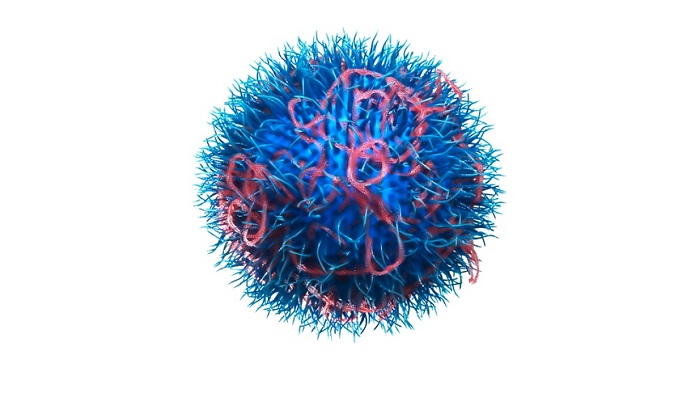
Nuvec® silica nanoparticles have a unique irregular (spiky) surface structure, coupled with polyethyleneimine (PEI), that simply and effectively traps and protects nucleic acid (such as mRNA / pDNA) as it travels to the cells. Once inside the cell, the nucleic acid is released to activate the immune system. Nuvec® is also a natural adjuvant so it attracts large numbers of antigen presenting cells which, in turn, leads to a strong activation of T-cells, increasing the level of immune response against the target cancer cells.

Studies so far have shown that Nuvec® is well tolerated, even at high doses, with no major toxicology findings across rat/mouse in vivo and PBMC/spleen in vitro studies.

Nigel Theobald, CEO of N4 Pharma commented: “The objective of this repeat non-clinical study was to reconfirm that Nuvec® is capable of generating an effective pDNA OVA antibody response and we are pleased to have shown that it is. The work also enabled us to learn a lot abouthow the particle behaves and we have identified that improving dispersion should result in greater in vivo consistency. We will now focus on improving the Nuvec® loading process to increase the consistency of the in vivo results. We will be in a much stronger position to advancelicencing discussions once this work has been successfully concluded.”

Dr Allan Hey, Head of Nuvec® CMC Program Development added: “Analysis of the recent pDNA OVA findings has again demonstrated that, after three injections, Nuvec® produces an immune response capable of delivering a very clear increase in the number of antibodies specific for OVA in the 1:20 and 1:30 doses, where all test cases (6/6) responded. However, there was only a small response at the 1:10 ratio in 50 per cent. (3/6) of the cases tested.Analysis after a single injection at a ratio of 1:30 showed a negligible response where only one case responded (1/6). This is in line with previous studies, where inconsistent results had been observed when the CRO had only used one injection in its study.

These results clearly demonstrate that, under the appropriate conditions and with multiple injections, Nuvec® can promote transfection by plasmid DNA and lead to the production of the relevant circulating antibody.”

A program of CMC and pre-clinical studies has been identified which will culminate in further in vivo testing of the more monodispersedNuvec®formulations with OVA pDNA in antibody and oncology efficacy models. It is anticipated that this program of work will extend over the next 12 months.

In other developments, the company has recently appointed Dr John Chiplin as non-executive Chairman and Dr Chris Britten as non-executive Director. Previous Chairman, David Templeton, has moved into an executive role as Technology Director.These changes bring considerable experience and expertise to the Board as the Company takes Nuvec®forward.


Latest stories

Related stories

Made Smarter Advances AI in Manufacturing with New Toolkit

A new initiative from Made Smarter is aiming to...

Quantum Machine Learning in Pharma Research Growth

The convergence of artificial intelligence and quantum processing is opening new avenues for rapid discovery and innovation within the life sciences. By utilizing advanced mathematical models that operate across multi-dimensional datasets, researchers can now identify complex biological patterns and predict molecular behaviors with a speed that surpasses traditional computational methods. This transformation is accelerating the development of novel therapies and providing deeper insights into disease mechanisms, fundamentally altering the trajectory of pharmaceutical research and development.

Quantum Sensors Enabling Advanced Drug Diagnostics

The landscape of medical diagnostics is being reshaped by the introduction of sensing technologies that operate with atomic-level sensitivity. By providing high-fidelity measurements and real-time data, these tools allow for the detection of subtle biological changes and chemical markers that were previously invisible to conventional equipment. This advancement is enhancing the precision of drug testing and clinical monitoring, leading to earlier disease detection and more effective therapeutic interventions across the global healthcare spectrum.

Quantum Computing Optimizing Pharma Supply Chains

The global distribution of pharmaceutical products is facing unprecedented challenges that demand a new level of logistical precision and resilience. By utilizing advanced analytical models, companies can now navigate complex international networks with greater efficiency, ensuring that temperature-sensitive medicines and life-saving therapies reach their destinations without delay. This evolution toward a more intelligent and responsive supply chain is critical for maintaining public health and responding effectively to emerging medical needs on a global scale.

Subscribe

- Never miss a story with notifications

- Gain full access to our premium content

- Browse free from any location or device.

Media Packs

Expand Your Reach With Our Customized Solutions Empowering Your Campaigns To Maximize Your Reach & Drive Real Results!

– Access theMedia Pack Now

– Book a Conference Call

Leave Message for Us to Get Back

Translate »