











Close

Liquid relief for dental care

Note* - All images used are for editorial and illustrative purposes only and may not originate from the original news provider or associated company.

Related stories

Managing Quality and Regulatory Risks in Pharmaceutical Technology Transfer

Technology transfer moves more than manufacturing instructions. It moves process knowledge, supplier dependencies, labeling requirements, packaging specifications, and the evidence needed to demonstrate control. For medical device manufacturers, including those supporting drug-device combination products, these interfaces can become recurring sources of compliance gaps during site transitions, acquisitions, and remediation. The central problem is often not a missing procedure. It is a quality system that allows connected activities to change independently. A label revision may be approved while packaging artwork, supplier instructions, or production-system data still reflect an obsolete version. Staying inspection-ready requires manufacturers to manage these dependencies as one controlled system. Why Compliance Gaps Keep Recurring Findings are treated as documentation defects Revising a procedure can resolve an immediate discrepancy without changing the behavior that caused it. If unclear decision rights, weak escalation, or ineffective training remain, the same failure may surface elsewhere. Corrective and preventive action should distinguish the observed finding from its underlying cause and establish how effectiveness will be demonstrated. Ownership is divided across connected functions Quality, Regulatory Affairs, labeling, packaging engineering, operations, suppliers, and digital-system owners often maintain separate workflows. Each team may complete its assigned task while an interface remains uncontrolled. For example, changing an instruction for use can affect packaging configuration, translations, technical documentation, inventory disposition, and release controls. Transitions expose unresolved weaknesses Acquisitions and site transfers can introduce conflicting procedures, incomplete knowledge transfer, or different assumptions about validated processes. Regulatory changes add further demands. When these events coincide with CAPA or change-control backlogs, teams may prioritize administrative closure over risk reduction. Without a coordinated impact assessment, local fixes can create new gaps downstream. Establish the Regulatory Baseline Inspection readiness starts with knowing which requirements apply to the product, activity, and market. Pharmaceutical, device, and combination-product obligations are not interchangeable; transfer planning should identify the applicable requirements rather than assume one quality framework covers every operation. According to FDA’s Quality Management System Regulation overview and FAQs, the QMSR became effective on February 2, 2026, incorporates ISO 13485:2016 by reference, and introduced the updated device inspection process under Compliance Program 7382.850. ISO 13485 certification does not exempt a manufacturer from FDA inspection or guarantee compliance with FDA requirements. For devices marketed in the European Union, Regulation (EU) 2017/745, Annex I, Section 23, provides the primary requirements for information supplied with devices, including labels and instructions for use. Teams should assess the applicable provisions alongside relevant language, product-specific, and market requirements. A labeling review should therefore evaluate required content and consistency with the device’s intended purpose and supporting documentation—not merely artwork accuracy. How to Identify the Real Gaps Begin with a cross-functional assessment that follows actual product and information flows. Select representative transfers, label changes, supplier changes, and CAPAs, then trace each from initiation through implementation and effectiveness review. Map dependencies: Identify affected specifications, suppliers, packaging components, systems, validation activities, and training. Compare records with practice: Check whether approved procedures match what operators and reviewers actually do. Test traceability: Follow a requirement through technical documentation, labeling, production instructions, and release evidence. Examine recurrence: Look for repeated deviations, reopened actions, overdue changes, and findings shared across sites. Assess capacity: Determine whether qualified owners have enough time and authority to complete corrective work. Prioritize gaps by potential patient or user harm, regulatory impact, likelihood of recurrence, and detectability. Document the rationale; an old overdue item is not automatically more important than a newly identified high-risk weakness. Align Quality, Labeling, Packaging, and Change Control Create a coordinated remediation plan with one accountable owner for each action, named contributors, acceptance criteria, and required evidence. Separate immediate containment from systemic correction. Containment might prevent obsolete labels from being issued; correction might redesign approval and implementation controls so obsolete versions cannot return. Use change control as the integration point. Before approval, evaluate effects on regulatory submissions or notifications, technical documentation, supplier controls, packaging performance, validation, electronic master data, inventory, and training. Record both identified impacts and justified decisions that particular activities are unaffected. During technology transfer, define readiness gates before production or release responsibilities move. These should address the transfer of process knowledge, acceptance criteria, receiving-site capability, required qualification or validation, approved documents, and personnel competence. The appropriate evidence depends on the product and process; a generic checklist cannot replace a documented assessment. Finally, verify implementation where the work happens. Confirm that current instructions are available, suppliers received approved requirements, systems contain correct versions, and affected personnel can perform their tasks. A signed approval is not evidence that every downstream change took effect. Mistakes That Undermine Inspection Readiness Closing CAPAs on task completion alone: Effectiveness checks should test whether the underlying failure has been controlled. Updating labels in isolation: Assess packaging, supplier, system, documentation, and inventory consequences. Counting closures instead of evidence: Dashboards need defensible records behind their status indicators. ...

State of API & Peptide CDMO Capacity

Pharmaceutical companies planning peptide or complex small-molecule launches are...

What Goes Into Synthetic Urine? The Chemistry Behind Replicating a Biological Fluid

Synthetic urine sounds simple until you look closely at...
- Advertisement -

Huons Global expands anesthetics production with reliable cartridge filling technology from Syntegon.

Nobody really likes to feel numb until they go see a dentist. Tooth extraction or drilling becomes a little less scary when topical anesthetics are used. One of the most common choices is lidocaine, a potent injectable narcotic. In such high-pressure scenarios, it might come as no surprise that the product itself is slightly sensitive: since it is usually administered via syringes, utmost care is required during siliconization, filling and closing of lidocaine cartridges. As a leading lidocaine manufacturer, Korean pharmaceutical company Huons Global left nothing to chance when it came to expanding its filling operations, relying on equipment from its long-standing partner Syntegon.

For many patients around the globe, lidocaine offers welcome relief during visits to the dentist. For Huons Global, it is much more. The drug laid the basis for the company’s pharmaceutical success in the 1980s. To balance the lack of domestically produced local anesthetics, including lidocaine, the company started producing the latter in Korea instead of importing it – for the sake of fellow citizens’ health.

Besides probiotics, functional cosmetics and eyecare products, the liquid anesthetic has been a major pillar of Huons’ export activities ever since: lidocaine, originally intended for the national Korean market, today is shipped to countries all over the world, including Japan, Vietnam, Thailand and Pakistan. And there is still room for growth: the US is another major market the company wants to serve – but not without having ramped up operations first.

Complex interplay of components

As a liquid drug, lidocaine is marketed in cartridges for direct injection into the respective tissue, e. g. via syringes into the gums or oral mucous membranes. Once it has entered the bloodstream, it quickly produces an effect that can last for several hours – taking the pain out of dental treatment. The filling of the drug requires the smooth interplay of several elements, including the cartridge itself, its silicone layer and stopper.

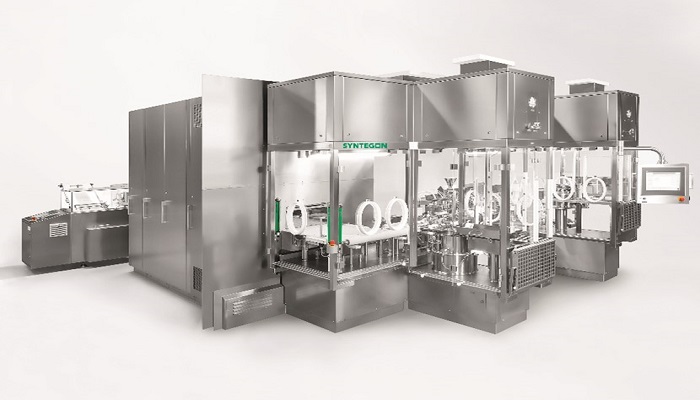
At Huons Global, state-of-the-art filling equipment from Syntegon ensures all components interact smoothly for optimum delivery: a line with an RRU washer for cartridge cleaning, an HQL sterilization tunnel for drying, decontamination and silicone fixation, and an MLD 3081 filling machine had been used to process 1.8 ml lidocaine cartridges for decades.

The company required a second line. But what sounded perfectly sensible at first turned out to be a daunting challenge for more than one reason: not only did Huons’ facility layout require a space-saving line set-up; the COVID-19 pandemic also moved the company to rely on remote consultation and planning to get its second line up and running. “We knew from the start this was going to be a tough nut to crack,” says Jong Dae Lee, engineering manager at Huons Global. “But we already had an idea who to contact – and were happy to entrust Syntegon again with this special task.”

After all, the filling and capping experts from Syntegon had several points in their favor: not only had they worked with Huons Global before, which put them in a unique position to know the company’s cartridge filling requirements. They were also willing to build a second line that would fit in the limited space of a class A cleanroom, requiring an L-shaped set-up instead of the customary straight line. But especially in COVID-19 times, one aspect tipped the scales for Syntegon in the summer of 2020: a well-balanced approach combining fully virtual kick-off meetings and factory acceptance tests (FATs) with the strong support of local sales agent Hakoplan during installation. “Syntegon offered an unmatched level of flexibility, which led us to tackle this project with the company, too,” Lee emphasizes.

A remote look at things
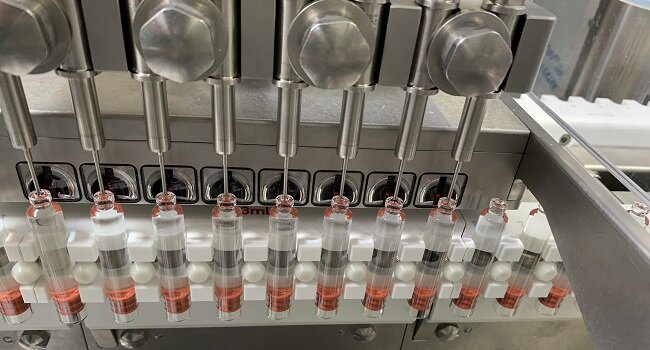
Planning took place remotely via computer screens, but with a great level of passion for even the most challenging aspects, such as precise siliconization, filling and cartridge handling. The thin silicone layer inside the cartridges greatly influences the speed of the stopper inside – and thus the pressure of the administered lidocaine: on inner walls with too much silicone, stoppers slide too fast, leading to excessive pressure in the patients’ tissue. In contrast, too little silicone can cause the stopper to advance too slowly, leading to poor drug delivery. Preventing this from happening calls for reliable sterilizers that are used to fixate the cartridges’ silicone layer at the right speed, without evaporating the crucial material.

The HQL tunnel from Syntegon, which the cartridges enter after cleaning in the RRU, optimally fixates the silicone. Steady heat and sterilization speed lay the basis for this process, which Syntegon has been constantly refining since the launch of the tunnel. “Equipment from Syntegon always reflects the state-of-art in pharmaceutical technology, which was another major reason for Huons to consider the same line set-up. We know what to expect, which greatly facilitates maintenance and hence stable processes,” Lee points out.

Moreover, the cartridge filling itself has to be as precise as possible given the small opening of the 1.8 ml cartridges. Just like the first line, the second includes an MLD 3081 with a time-pressure filling system, featuring 24 filling heads that are distributed among three stations. Once the cartridges’ stoppers have been inserted via a plunger rod and tested for their correct position using a sensor, the containers enter pre-filling, which occurs at two separate stations. Subsequent sensor filling helps achieve the optimum filling level and avoid any air bubbles inside the liquid, reducing costly rejects. The efficient time-pressure system can process up to 400 cartridges per minute. But that wasn’t the only reason why Huons considered it to be the perfect match: the compact filling system also met the company’s space-saving goals in the cleanroom. “We were happy to have this filling option, which helped us to meet both our goals in terms of precision and compact line design,” Lee says.

Delicate containers
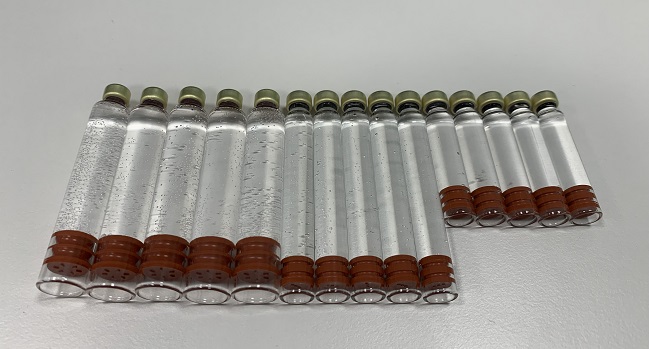
However, cartridge filling wouldn’t be complete without a system for gently handling the delicate containers. Unlike vials, cartridges do not stand as firmly on conveyor belts and are prone to glass breakage on the rim. As a result, manufacturers must avoid container collisions or jarring motions during transport at all costs. Syntegon met these challenges with a scroll-based system for gentle singularization at the line’s infeed, and special carrier systems that hold the cartridges via a customized click system during stopper insertion, filling and capping. In this way, Syntegon makes sure the cartridges remain intact throughout the entire process, contributing to maximum product safety. An integrated inspection system ensures container integrity, as it thoroughly checks each cartridge for defects after filling and closing.

Hands-on support

Once Huons and Syntegon had worked out these details, nothing stood in the way of installation – which was possible on-site thanks not only to special COVID regulations, but Hakoplan’s Korean presence as well. Following the still-virtual FAT in June 2021, Huons’ long-standing partner and engineering experts from Germany worked closely together to make the second MLD line a reality. Throughout the summer and fall, they successfully tackled the installation and subsequent qualification, which they completed by the end of the year. “The line has met our expectations to the fullest,” Lee states.

To date, the latest MLD line has helped Huons to effectively fill 600-liter batches of lidocaine at a rate of one batch per day and five days a week. “In this way, we can significantly increase our throughput while operating a line with a particularly small footprint.” The company, as it seems, has now made the right move to tap additional markets – and take the stress out of dentist’s appointments for many more patients to come.

Company: Syntegon Technology GmbH


Syntegon is a leading global technology company and strategic life cycle partner to the pharmaceutical, biotech, and food industries. With a strategic focus on the growing pharmaceutical and biotech sectors, the company plays a vital role in global healthcare, providing in-depth process expertise and mission-critical technologies for the safe, efficient, and compliant production of essential medicines. In the food sector, Syntegon is recognized for high-speed, high-precision packaging solutions, drawing on unique engineering excellence to help manufacturers improve performance and product quality. Its global service business supports more than 70,000 installed systems with a comprehensive lifecycle offering, ensuring uptime, efficiency, and long-term value.

In fiscal year 2025, Syntegon generated 1.75 billion euros in sales. Headquartered in Stuttgart, Germany, the company employs 7,300 people at 49 locations in more than 20 countries. With over 160 years of industry expertis... Read more »

Send Enquiry for this story

By submitting this form you agree to allow www.worldpharmatoday.com to contact you regarding your enquiry.
See our Privacy Policy to learn more.

Never miss a pharmaceutical headline

The pharmaceutical industry moves fast – stay on top of it with our must - read briefings.

  • The top pharma and life sciences stories, straight to your inbox
  • The biggest news, features, interviews, and analysis
  • Dedicated coverage of the key developments driving the global pharmaceutical sector

Subscribe

- Never miss a story with notifications

- Gain full access to our premium content

- Browse free from any location or device.

Media Packs

Expand Your Reach With Our Customized Solutions Empowering Your Campaigns To Maximize Your Reach & Drive Real Results!

– Access the Media Pack Now

– Book a Conference Call

– Leave Message for Us to Get Back

Latest stories

Related stories

Managing Quality and Regulatory Risks in Pharmaceutical Technology Transfer

Technology transfer moves more than manufacturing instructions. It moves process knowledge, supplier dependencies, labeling requirements, packaging specifications, and the evidence needed to demonstrate control. For medical device manufacturers, including those supporting drug-device combination products, these interfaces can become recurring sources of compliance gaps during site transitions, acquisitions, and remediation. The central problem is often not a missing procedure. It is a quality system that allows connected activities to change independently. A label revision may be approved while packaging artwork, supplier instructions, or production-system data still reflect an obsolete version. Staying inspection-ready requires manufacturers to manage these dependencies as one controlled system. Why Compliance Gaps Keep Recurring Findings are treated as documentation defects Revising a procedure can resolve an immediate discrepancy without changing the behavior that caused it. If unclear decision rights, weak escalation, or ineffective training remain, the same failure may surface elsewhere. Corrective and preventive action should distinguish the observed finding from its underlying cause and establish how effectiveness will be demonstrated. Ownership is divided across connected functions Quality, Regulatory Affairs, labeling, packaging engineering, operations, suppliers, and digital-system owners often maintain separate workflows. Each team may complete its assigned task while an interface remains uncontrolled. For example, changing an instruction for use can affect packaging configuration, translations, technical documentation, inventory disposition, and release controls. Transitions expose unresolved weaknesses Acquisitions and site transfers can introduce conflicting procedures, incomplete knowledge transfer, or different assumptions about validated processes. Regulatory changes add further demands. When these events coincide with CAPA or change-control backlogs, teams may prioritize administrative closure over risk reduction. Without a coordinated impact assessment, local fixes can create new gaps downstream. Establish the Regulatory Baseline Inspection readiness starts with knowing which requirements apply to the product, activity, and market. Pharmaceutical, device, and combination-product obligations are not interchangeable; transfer planning should identify the applicable requirements rather than assume one quality framework covers every operation. According to FDA’s Quality Management System Regulation overview and FAQs, the QMSR became effective on February 2, 2026, incorporates ISO 13485:2016 by reference, and introduced the updated device inspection process under Compliance Program 7382.850. ISO 13485 certification does not exempt a manufacturer from FDA inspection or guarantee compliance with FDA requirements. For devices marketed in the European Union, Regulation (EU) 2017/745, Annex I, Section 23, provides the primary requirements for information supplied with devices, including labels and instructions for use. Teams should assess the applicable provisions alongside relevant language, product-specific, and market requirements. A labeling review should therefore evaluate required content and consistency with the device’s intended purpose and supporting documentation—not merely artwork accuracy. How to Identify the Real Gaps Begin with a cross-functional assessment that follows actual product and information flows. Select representative transfers, label changes, supplier changes, and CAPAs, then trace each from initiation through implementation and effectiveness review. Map dependencies: Identify affected specifications, suppliers, packaging components, systems, validation activities, and training. Compare records with practice: Check whether approved procedures match what operators and reviewers actually do. Test traceability: Follow a requirement through technical documentation, labeling, production instructions, and release evidence. Examine recurrence: Look for repeated deviations, reopened actions, overdue changes, and findings shared across sites. Assess capacity: Determine whether qualified owners have enough time and authority to complete corrective work. Prioritize gaps by potential patient or user harm, regulatory impact, likelihood of recurrence, and detectability. Document the rationale; an old overdue item is not automatically more important than a newly identified high-risk weakness. Align Quality, Labeling, Packaging, and Change Control Create a coordinated remediation plan with one accountable owner for each action, named contributors, acceptance criteria, and required evidence. Separate immediate containment from systemic correction. Containment might prevent obsolete labels from being issued; correction might redesign approval and implementation controls so obsolete versions cannot return. Use change control as the integration point. Before approval, evaluate effects on regulatory submissions or notifications, technical documentation, supplier controls, packaging performance, validation, electronic master data, inventory, and training. Record both identified impacts and justified decisions that particular activities are unaffected. During technology transfer, define readiness gates before production or release responsibilities move. These should address the transfer of process knowledge, acceptance criteria, receiving-site capability, required qualification or validation, approved documents, and personnel competence. The appropriate evidence depends on the product and process; a generic checklist cannot replace a documented assessment. Finally, verify implementation where the work happens. Confirm that current instructions are available, suppliers received approved requirements, systems contain correct versions, and affected personnel can perform their tasks. A signed approval is not evidence that every downstream change took effect. Mistakes That Undermine Inspection Readiness Closing CAPAs on task completion alone: Effectiveness checks should test whether the underlying failure has been controlled. Updating labels in isolation: Assess packaging, supplier, system, documentation, and inventory consequences. Counting closures instead of evidence: Dashboards need defensible records behind their status indicators. ...

State of API & Peptide CDMO Capacity

Pharmaceutical companies planning peptide or complex small-molecule launches are...

What Goes Into Synthetic Urine? The Chemistry Behind Replicating a Biological Fluid

Synthetic urine sounds simple until you look closely at...

Danaher Prepares to Introduce Advanced AI-Powered Laboratory

In a significant step for pharmaceutical research, Danaher has...

Subscribe

- Never miss a story with notifications

- Gain full access to our premium content

- Browse free from any location or device.

Media Packs

Expand Your Reach With Our Customized Solutions Empowering Your Campaigns To Maximize Your Reach & Drive Real Results!

– Access theMedia Pack Now

– Book a Conference Call

– Leave Message for Us to Get Back

Translate »