











Close
Smartlab Europe
Inizio Ignite

Phesi Big Data Analysis of Over 200,000 Hepatitis B and C Patients Identifies Typical Patient to Help Drive Forward Disease Elimination Goals

Note* - All images used are for editorial and illustrative purposes only and may not originate from the original news provider or associated company.

Subscribe

- Never miss a story with notifications

- Gain full access to our premium content

- Browse free from any location or device.

Media Packs

Expand Your Reach With Our Customized Solutions Empowering Your Campaigns To Maximize Your Reach & Drive Real Results!

– Access the Media Pack Now

– Book a Conference Call

Leave Message for Us to Get Back

Related stories

Predictive Analytics in Labs: Driving Smarter Decisions in Pharma

The application of statistical algorithms and machine learning techniques to historical research data is enabling scientists to anticipate experimental outcomes and identify emerging patterns with unprecedented accuracy. By moving from a retrospective view of data to a forward-looking perspective, research facilities can optimize their strategies and focus their resources on the most promising therapeutic avenues.

IoT Applications Enhancing Laboratory Operational Efficiency

The integration of internet-connected sensors and smart devices is fundamentally reshaping how research facilities monitor their environment and manage their instrumentation. By providing a constant stream of real-time data, these technological advancements allow for a more granular level of control over laboratory operations, ensuring that the delicate conditions required for high-stakes pharmaceutical research are maintained with absolute precision.

Optimizing Pharma Workflows with Integrated Lab Software Solutions

The modern laboratory environment requires a unified approach to data management and process control to remain competitive. By bridging the gap between disparate instruments and legacy databases, research facilities can eliminate operational silos and create a high-speed environment where innovation is no longer hindered by fragmented digital infrastructure.
- Advertisement -

Phesi Inc., a data-driven provider of AI-powered clinical development analytics products and solutions, has analyzed data from 209,860 hepatitis B (HBV) and C (HCV) patients, from 940 trial arms/cohorts to build a picture of the “typical” patient and identify patient demographics. Hepatitis is an ongoing, major public health crisis and represents 14% of all deaths from infectious and parasitic diseases: 296 million people worldwide are living with HBV and 58 million worldwide are living with HCV. For the last 18 months, infectious disease research has been rightfully focused on COVID-19, which has shown how quickly trials can be conducted and reviewed. The industry now needs to apply these learnings to other pandemics and epidemics impacting patients around the world and utilize the extensive data available to solve these.

“The World Health Organization (WHO) has outlined its goal and roadmap to eliminate hepatitis by 2030. Nine years is not long and for us to achieve this globally it will be critical to apply accurate patient data,” commented Dr Gen Li, Founder and President at Phesi. “Sponsors must also ensure the patient population of trials to research new therapies and potential cures is truly representative of the patients this disease impacts across the world.”

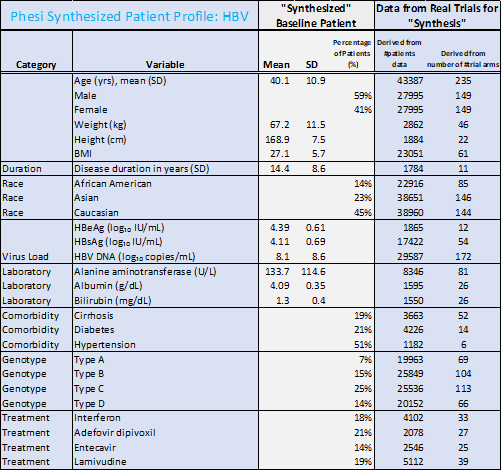
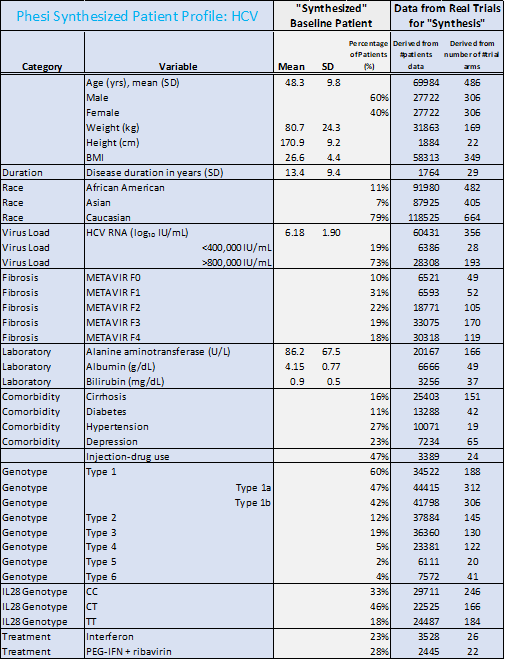
The racial profiles between data on HBV and HCV patients in the analysis differ significantly. There were 45% Caucasian and 23% Asian among HBV patients. HCV patients were predominantly Caucasian (79%). However, many more trials have been conducted in North America and Europe, rather than in the WHO regions of the Western Pacific, Africa, the Eastern Mediterranean and South-East Asia, where the burden of HBV is currently highest. This must change; in order for treatments to be developed efficiently and effectively, the clinical trials testing these new therapies must be accurately representative of the true patient population.

The patient profile also highlights further core differences between HBV and HCV patients, including (additional analysis is shown in table 1 and 2):

  • While hypertension and diabetes are the most common comorbidities, there is a significantly larger portion of HBV patients with diabetes (21%) and hypertension (51%), compared to HCV (11% and 27% respectively).
  • In HBV patients, the prevalence of hypertension may reflect the possible association with metabolic syndrome, particularly in older patients.
  • The average age of an HBV patient is significantly lower than the HCV patient (40 years compared to 48 years respectively).
  • Although there is no cure at the present time for HBV, most infected adults will fully recover. For HCV, there have been revolutionary advances in treatment with Direct-Acting Antivirals such as sofosbuvir; sofosbuvir-based regimens have shown cure rates of over 90%. This will drastically shift the patient demographics and reduce the length of the disease in this rapidly changing treatment environment.
“We need to act now to find further affordable cures and therapeutics for other infectious diseases like hepatitis that affect many millions. This can only be done through a data-led approach and by applying the lessons of COVID-19 R&D,” commented Dr Paul Chew, Chief Medical Officer at Phesi. “Our analysis illustrates a number of comorbidities associated with hepatitis and outlines the typical patient for each of these diseases. The industry needs to draw on this data and take advantage of it to make treatments available and accessible for all in need across the globe.”


Latest stories

Related stories

Predictive Analytics in Labs: Driving Smarter Decisions in Pharma

The application of statistical algorithms and machine learning techniques to historical research data is enabling scientists to anticipate experimental outcomes and identify emerging patterns with unprecedented accuracy. By moving from a retrospective view of data to a forward-looking perspective, research facilities can optimize their strategies and focus their resources on the most promising therapeutic avenues.

IoT Applications Enhancing Laboratory Operational Efficiency

The integration of internet-connected sensors and smart devices is fundamentally reshaping how research facilities monitor their environment and manage their instrumentation. By providing a constant stream of real-time data, these technological advancements allow for a more granular level of control over laboratory operations, ensuring that the delicate conditions required for high-stakes pharmaceutical research are maintained with absolute precision.

Optimizing Pharma Workflows with Integrated Lab Software Solutions

The modern laboratory environment requires a unified approach to data management and process control to remain competitive. By bridging the gap between disparate instruments and legacy databases, research facilities can eliminate operational silos and create a high-speed environment where innovation is no longer hindered by fragmented digital infrastructure.

Advanced Robotics Driving Pharmaceutical Lab Efficiency

The implementation of high-speed robotic systems and automated handling technologies is fundamentally altering the productivity of modern research facilities. By taking over repetitive physical tasks and operating with sub-millimeter precision, these mechanical innovators are allowing scientific staff to redirect their cognitive energy toward complex analysis and the development of breakthrough therapies.

Subscribe

- Never miss a story with notifications

- Gain full access to our premium content

- Browse free from any location or device.

Media Packs

Expand Your Reach With Our Customized Solutions Empowering Your Campaigns To Maximize Your Reach & Drive Real Results!

– Access theMedia Pack Now

– Book a Conference Call

Leave Message for Us to Get Back

Translate »