










Close
Novotech
Jabsco PureFlo 21 Single Use

DEA’s 10th National Drug Take-Back Day Set For September 26th

Note* - All images used are for editorial and illustrative purposes only and may not originate from the original news provider or associated company.

Subscribe

- Never miss a story with notifications

- Gain full access to our premium content

- Browse free from any location or device.

Media Packs

Expand Your Reach With Our Customized Solutions Empowering Your Campaigns To Maximize Your Reach & Drive Real Results!

– Access the Media Pack Now

– Book a Conference Call

Leave Message for Us to Get Back

Related stories

Designing Biotech Financial Models for Series B Success

Building a compelling Series B case in biopharma goes well beyond efficacy data and market size projections. Sophisticated investors are increasingly focused on CMC risk, licensing obligations, and the defensibility of your manufacturing timeline. This article breaks down what the financial model behind a strong Series B actually looks like and what quietly kills deals that should have worked.

CMC Bottleneck in Drug Development and IND Delays

Ask any experienced biopharma program manager what derails an IND filing most often, and the answer is rarely surprising: it is CMC. Not insufficient efficacy data, not toxicology surprises CMC. This article examines why Chemistry, Manufacturing, and Controls continues to be the most underestimated risk in early drug development, and what program leaders can do about it.

Gene Expression Systems Explained for Biotech Founders

Choosing a gene expression system is one of the earliest and most consequential manufacturing decisions a biotech founder will make yet it is often made without fully understanding what is at stake. This article breaks down the key expression platforms used in biologic drug development, what differentiates them technically and commercially, and why the choice you make now will follow your program all the way to the clinic and beyond.
- Advertisement -

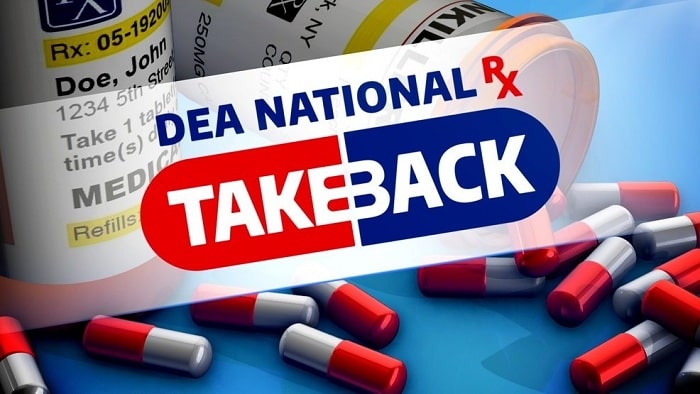
DEA began hosting National Prescription Drug Take-Back events in 2010. At the previous nine Take-Back Day events, 4,823,251 pounds (2,411 tons) of unwanted, unneeded or expired medications were surrendered for safe and proper disposal. The disposal service is free and anonymous for consumers, with no questions asked. Collection sites and information for every local community can be found by going to www.dea.gov. This site will be continuously updated with new take-back locations.

Prescription medications play an important role in the health of millions of Americans. However, expired medications or unused drugs often stay in the back of cabinets for months or even years. These expired drugs can pose significant health hazards to toddlers, teens and even family pets who may inadvertently consume medications. Some medications are so potent that even one dose could be fatal if accidentally ingested. Throwing away certain medications in trash cans or flushing them down the toilet can be a safety and health hazard, too.

There are other important safety issues, as well: misuse of prescription drugs is second only to marijuana use as the nation’s most commonly used illicit drug. A U.S. government report shows that more than 70 percent of people who first misuse prescription drugs get them from their friends, relatives or simply take them without asking. According to the 2013 National Survey on Drug Use and Health (NSDUH), 4.2 percent of Americans aged 12 or older engaged in nonmedical use of prescription pain relievers in the past year. Nonmedical use is defined as the use of prescription-type drugs not prescribed for the user by a physician or used only for the experience or feeling they cause.

While the number of Americans who currently abuse prescription drugs dropped from 6.8 million in 2012 to 6.5 million in 2013, that is still more than double the number of those using illicit drugs of abuse like heroin, cocaine, and LSD combined. According to the 2013 Monitoring the Future Survey, over 28 percent of 12th graders had abused prescription medications in the past 12 months. These statistics magnify the need for proper disposal of unused or expired prescription medications.

The DEA’s “Take-Back” initiative is one of four strategies under the Secure and Responsible Drug Disposal Act of 2010 to reduce prescription drug abuse and diversion in the United States. Additional strategies include education of health care providers, patients, parents and youth; establishing prescription drug monitoring programs in all 50 states; and increased enforcement to address illicit methods of prescription drug diversion.

Consumers may also continue to utilize the guidelines for the disposal of controlled substances listed by the Food and Drug Administration if they are not able to attend the scheduled Take-Back Day.
Latest stories

Related stories

Designing Biotech Financial Models for Series B Success

Building a compelling Series B case in biopharma goes well beyond efficacy data and market size projections. Sophisticated investors are increasingly focused on CMC risk, licensing obligations, and the defensibility of your manufacturing timeline. This article breaks down what the financial model behind a strong Series B actually looks like and what quietly kills deals that should have worked.

CMC Bottleneck in Drug Development and IND Delays

Ask any experienced biopharma program manager what derails an IND filing most often, and the answer is rarely surprising: it is CMC. Not insufficient efficacy data, not toxicology surprises CMC. This article examines why Chemistry, Manufacturing, and Controls continues to be the most underestimated risk in early drug development, and what program leaders can do about it.

Gene Expression Systems Explained for Biotech Founders

Choosing a gene expression system is one of the earliest and most consequential manufacturing decisions a biotech founder will make yet it is often made without fully understanding what is at stake. This article breaks down the key expression platforms used in biologic drug development, what differentiates them technically and commercially, and why the choice you make now will follow your program all the way to the clinic and beyond.

AbbVie to Invest $1.4B in North Carolina Manufacturing Plant

AbbVie has outlined plans to build a major new...

Subscribe

- Never miss a story with notifications

- Gain full access to our premium content

- Browse free from any location or device.

Media Packs

Expand Your Reach With Our Customized Solutions Empowering Your Campaigns To Maximize Your Reach & Drive Real Results!

– Access theMedia Pack Now

– Book a Conference Call

Leave Message for Us to Get Back

Translate »