


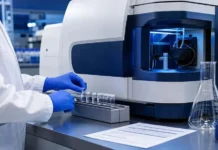





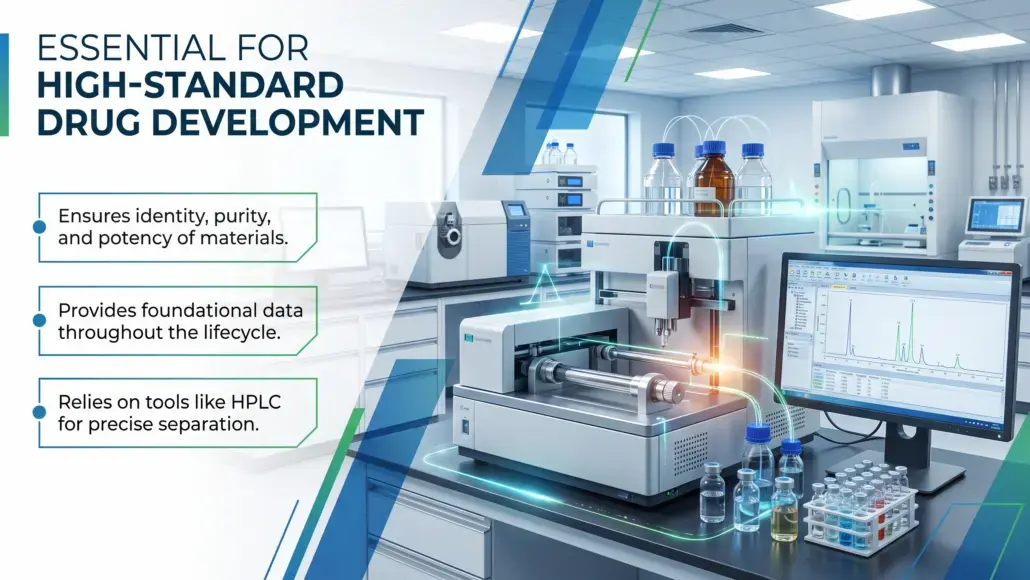
The maintenance of high standards in the pharmaceutical sector is intrinsically linked to the rigor of analytical procedures used throughout the drug development lifecycle. Effective pharmaceutical analytical testing provides the foundational data necessary to verify the identity, purity, and potency of both raw materials and final drug products. High-performance liquid chromatography remains the primary tool for the separation and quantification of active pharmaceutical ingredients and their related substances. The evolution of this technology into ultra-high-performance systems has allowed for faster analysis times and higher resolution, enabling the detection of trace-level impurities that were previously difficult to identify.
Complementary to chromatography, spectroscopic methods such as mass spectrometry have become indispensable for the structural elucidation of unknown impurities and degradation products. The integration of liquid chromatography with mass spectrometry provides a powerful platform for characterization, allowing researchers to obtain precise mass measurements and fragmentation patterns. This level of detail is essential for meeting the stringent requirements of regulatory agencies, which demand a thorough understanding of the impurity profile of any new drug. Beyond these common methods, nuclear magnetic resonance spectroscopy continues to play a vital role in confirming the three-dimensional structure of complex molecules, ensuring that the correct isomer is produced during the manufacturing process.
The application of these advanced techniques extends beyond simple identification. Quantitative analysis is required to ensure that the drug product contains the correct amount of the active ingredient and that any impurities remain below the safety limits defined by international guidelines. As drug molecules become more complex, the methods used for their analysis must also adapt. The development of specialized stationary phases and detection systems has enabled the analysis of highly polar or large biomolecules that were once considered challenging. By investing in the latest analytical technologies, pharmaceutical companies can improve their ability to monitor product quality and ensure patient safety across their entire portfolio.
Process Analytical Technology and Real Time Monitoring
A significant shift in the industry has been the move from traditional end-product testing to the implementation of process analytical technology. This approach involves the use of sensors and analytical instruments to monitor the manufacturing process in real time, rather than relying solely on testing a small sample from the final batch. The goal is to gain a deeper understanding of the relationship between process parameters and product quality attributes. By integrating pharmaceutical analytical testing directly into the production line, manufacturers can identify deviations early and make immediate adjustments, reducing the risk of batch failure and improving overall process efficiency.
Near-infrared and Raman spectroscopy are among the most common tools used for in-line and at-line monitoring. These techniques are non-destructive and require no sample preparation, making them ideal for continuous tracking of parameters such as moisture content, blend uniformity, and drug concentration. The data generated by these sensors is processed by sophisticated software models that can predict the final quality of the product based on the current state of the process. This level of control is a key component of the quality by design framework, which emphasizes building quality into the product through a thorough understanding of the manufacturing science.
The adoption of real-time monitoring also facilitates the transition to continuous manufacturing. In a continuous process, the material flows through the production stages without interruption, requiring constant surveillance to ensure that the system remains within the defined design space. Any shift in the quality of the incoming material or a change in the equipment performance can be detected and corrected before it impacts the final product. This proactive approach to quality management not only enhances the reliability of the supply chain but also reduces the costs associated with traditional quality control labs. As the industry continues to evolve, the integration of advanced sensors and data analytics will be essential for achieving the next level of manufacturing excellence.
Impurity Profiling and Stability Assessment
The identification and quantification of impurities is a critical aspect of pharmaceutical analytical testing, as even small amounts of foreign substances can affect the safety and efficacy of a drug. Impurities can arise from several sources, including the synthesis process, the degradation of the active ingredient, or interactions with excipients and packaging materials. Regulatory guidelines, such as those provided by the International Council for Harmonisation, require a systematic approach to impurity profiling. This involves the use of sensitive analytical methods to detect and characterize any substance present above a certain threshold, followed by a toxicological assessment to determine its safety.
Stability testing is another vital component of the analytical strategy, ensuring that the drug product remains within its specifications throughout its intended shelf life. Samples are stored under various environmental conditions, including elevated temperature and humidity, to accelerate the degradation process. Periodic testing is conducted to monitor changes in the drug concentration, the appearance of degradation products, and changes in the physical properties of the dosage form. The data generated from these studies is used to establish the expiration date and to define the storage conditions that will maintain the quality of the product for the patient.
Recent advancements in forced degradation studies have improved the ability to predict the long-term stability of a drug. By exposing the molecule to extreme conditions such as light, acid, base, and oxidizing agents, researchers can identify the potential degradation pathways and develop analytical methods that are specific to those products. This proactive approach allows for the design of more stable formulations and the selection of packaging materials that provide adequate protection. The integration of sophisticated data management systems also allows for the tracking of stability trends across multiple batches and years, providing a comprehensive view of the product lifecycle and ensuring that quality remains consistent over time.
Method Validation and Regulatory Compliance
Before any analytical method can be used for routine testing or regulatory submission, it must undergo a rigorous validation process. This ensures that the method is suitable for its intended purpose and that it can provide accurate and reproducible results under various conditions. The validation process typically evaluates parameters such as specificity, linearity, accuracy, precision, and the limit of detection and quantification. For pharmaceutical analytical testing, this documentation is a central part of the chemistry, manufacturing, and controls section of a new drug application. Any significant changes to the method after validation may require a full re-validation to ensure that the performance remains consistent.
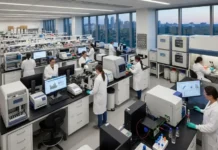
Regulatory compliance extends beyond method validation to include the maintenance of equipment and the training of laboratory personnel. Data integrity is a major focus for regulatory agencies, which require that all analytical results be fully traceable and protected from unauthorized changes. The use of electronic laboratory notebooks and laboratory information management systems has become standard practice for ensuring that data is recorded and stored according to current good manufacturing practices. Regular audits by internal quality teams and external agencies verify that these systems are functioning correctly and that the lab is operating within the required regulatory framework.
The globalization of the pharmaceutical market has also increased the importance of harmonizing analytical standards across different regions. Organizations like the International Council for Harmonisation work to create common guidelines that are accepted by regulatory bodies worldwide, simplifying the process of bringing new drugs to international markets. However, companies must still be aware of local requirements and ensure that their analytical strategies are flexible enough to accommodate different standards. By maintaining a high level of technical excellence and a commitment to regulatory compliance, pharmaceutical organizations can build trust with patients and healthcare providers, ensuring that their products are recognized for their quality and reliability.
Future Trends in Analytical Science and Data Analytics
The field of analytical science is rapidly evolving, driven by the need for more sensitive, specific, and efficient testing methods. One of the most promising trends is the miniaturization of analytical devices, leading to the development of lab-on-a-chip technologies. These systems allow for the performance of complex chemical analyses on a single microchip, reducing the amount of sample and reagents required and providing faster results. While still in the early stages of adoption for routine pharmaceutical testing, these devices have the potential to revolutionize point-of-care testing and field-based quality control.
The integration of artificial intelligence and machine learning into the analytical workflow is also gaining momentum. These technologies can be used to analyze large and complex datasets, identifying patterns that might be missed by traditional statistical methods. In pharmaceutical analytical testing, machine learning algorithms can assist in the interpretation of mass spectrometry data, the prediction of stability trends, and the optimization of chromatographic methods. This can lead to more efficient development processes and a deeper understanding of the molecular behavior of new drug candidates. The use of digital twins to simulate the analytical laboratory environment can also help in training personnel and optimizing lab operations.
Another significant trend is the increasing focus on the analysis of complex biologics and cell-based therapies. These products present unique challenges due to their inherent variability and structural complexity. The development of new analytical tools, such as multi-attribute methods that can monitor several quality attributes in a single analysis, is essential for the efficient characterization of these advanced treatments. As the industry moves toward more personalized medicine, the ability to rapidly and accurately characterize small batches of patient-specific therapies will be a key differentiator. By staying at the forefront of these technological advancements, pharmaceutical companies can continue to drive improvements in drug quality and patient outcomes.