






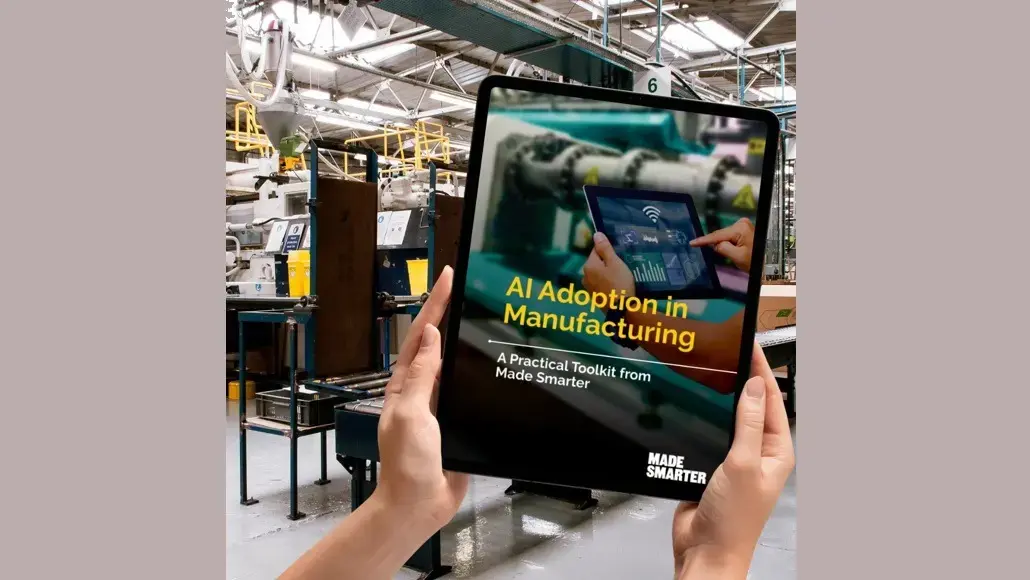
A new initiative from Made Smarter is aiming to simplify how manufacturers approach artificial intelligence, with a focus on practical deployment rather than theoretical potential. The organisation has introduced a downloadable guide titled AI Adoption in Manufacturing: A Practical Toolkit from Made Smarter, designed specifically to support SME leaders as they navigate the growing relevance of AI in Manufacturing. Developed in collaboration with Chris Dungey, the resource addresses persistent uncertainty among manufacturers around where to begin, how to mitigate risks, and how to translate AI into tangible operational value.
Rather than emphasising complex systems, the toolkit adopts a task-oriented methodology that directs businesses to identify operational inefficiencies and areas where AI can deliver immediate benefits. Central to this is the “Scan, Pilot, Scale” framework, which reflects real-world adoption patterns across the sector. The approach encourages manufacturers to begin with clearly defined challenges, validate solutions in controlled settings, and expand implementation only after measurable success. This structure is particularly relevant in industrial environments where AI deployment intersects with safety, compliance, and productivity requirements, making cautious and structured adoption essential.
The guidance also outlines how AI can be applied across manufacturing processes, including predicting outcomes, identifying operational anomalies, and automating routine activities. It highlights typical barriers faced by SMEs, such as fragmented datasets and limited internal capabilities, while offering a pathway to overcome them. Case studies from companies including D Squared Product Development, Ritherdon & Co., Arden Dies, and ELE Advanced Technologies demonstrate how AI is already being used to optimise design processes, streamline order workflows, improve customer engagement, and monitor equipment performance.
The toolkit has been developed by Made Smarter North West alongside Manufacturing Technology Centre, incorporating insights on workforce readiness and the skills needed to support long-term adoption. Kevin Smith, Lead Technology Adoption Specialist at Made Smarter North West, said: “AI is no longer out of reach for SMEs. It doesn’t require major investment or specialist teams to get started. The opportunity now is to act with confidence and clarity. By starting small, testing safely and focusing on real business value, manufacturers can turn AI from an abstract concept into a practical tool for growth.” As industry momentum builds, the initiative reinforces how AI in Manufacturing can shift from experimentation to structured, scalable implementation.