








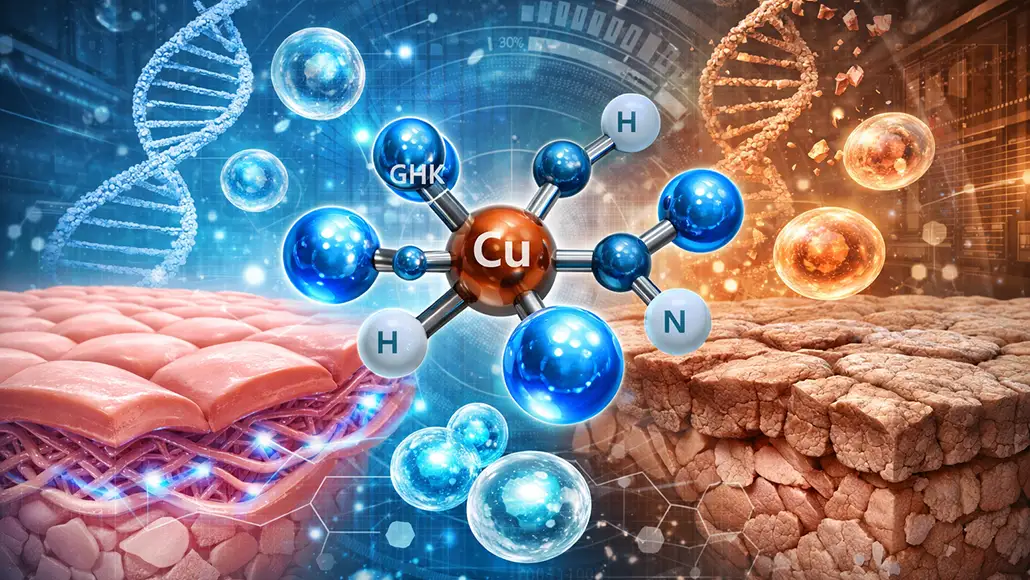
The landscape of regenerative medicine has shifted significantly toward signaling molecules that can modulate gene expression. Among the most researched and versatile of these molecules is the GHK-Cu peptide, a naturally occurring copper complex first identified in human plasma.
As we age, the concentration of GHK-Cu in our system declines sharply by roughly 60% between the ages of 20 and 60. This decline correlates with a reduced capacity for tissue repair and cellular maintenance. In the world of biohacking and peptide research, GHK-Cu has emerged as a “reset button” for gene expression, offering a sophisticated approach to longevity and tissue healing.
What is GHK-Cu Peptide?
GHK-Cu peptide (Glycyl-L-histidyl-L-lysine copper) is a tripeptide complex with a high affinity for copper ions. Originally discovered by Dr. Loren Pickart in 1973, it was noted for its ability to make aged liver tissue function like younger tissue.
Unlike many synthetic compounds, GHK-Cu is endogenous to the human body. It serves as a carrier, delivering copper a vital cofactor for enzymatic reactions to specific cellular sites. However, its functions extend far beyond mere mineral transport it acts as a powerful modulator of the remodeling phase of tissue repair.
How GHK-Cu Peptide Works: Cellular Mechanisms
To understand the efficacy of the GHK-Cu peptide, one must look at its impact on the human genome. Research suggests that GHK-Cu can modulate the expression of over 4,000 human genes, essentially “flipping the switch” from a state of decay to a state of repair.
1. Gene Expression and Epigenetics
GHK-Cu influences the expression of genes responsible for DNA repair, antioxidant defense, and proteasome activity. By upregulating genes associated with cellular regeneration and downregulating those associated with chronic inflammation and fibrosis, it promotes a systemic “younger” phenotype.
2. Extracellular Matrix (ECM) Remodeling
The peptide is a potent activator of fibroblasts. It stimulates the synthesis of collagen, elastin, and glycosaminoglycans. This remodeling capability makes it a primary subject of study for skin density and structural integrity.
3. Modulation of Inflammation
GHK-Cu suppresses the production of pro-inflammatory cytokines, such as interleukin-1 (IL-1) and TNF-alpha. This makes it a subject of intense interest for research into chronic inflammatory conditions and wound healing.
Key Benefits and Areas of Research Interest
The biological breadth of GHK-Cu peptide research spans multiple systems, from dermatology to neurology.
Skin Regeneration and Anti-Aging
GHK-Cu is perhaps most famous for its dermatological applications. It has been shown to:
- Increase skin density and firmness.
- Reduce fine lines and hyperpigmentation.
- Improve the “take” rate of hair transplants by stimulating follicle health.
Wound Healing and Tissue Repair
The peptide accelerates the healing of various wounds, including surgical incisions and diabetic ulcers. It promotes angiogenesis (the formation of new blood vessels), ensuring that damaged tissue receives the oxygen and nutrients required for recovery.
Nerve Regeneration and Neuroprotection
Preliminary studies indicate that GHK-Cu may promote nerve outgrowth and enhance the production of nerve growth factors. This aligns with broader research around GHK-Cu peptide benefits in the context of neuroprotection and systemic cellular repair.
Antioxidant and DNA Support
By increasing the activity of antioxidant enzymes like superoxide dismutase (SOD), GHK-Cu protects cells from oxidative stress a primary driver of the aging process.
GHK-Cu Peptide vs. Other Regenerative Peptides
In the peptide research niche, it is essential to understand where GHK-Cu sits relative to other popular compounds like BPC-157 or KPV.
| Feature | GHK-Cu | BPC-157 | KPV |
|---|---|---|---|
| Primary Focus | Skin, DNA repair, remodeling | Tendon, ligament, gut repair | Systemic inflammation, antimicrobial |
| Mechanism | Gene modulation & Copper delivery | Angiogenesis & Growth factor expression | Alpha-MSH derivative / Anti-inflammatory |
| Best For | Anti-aging and cosmetic repair | Acute injury recovery | Autoimmune and gut inflammation |
While BPC-157 is often favored for mechanical injuries (tears and strains), GHK-Cu peptide is the preferred choice for systemic cellular rejuvenation and dermatological integrity.
Limitations and Potential Risks
While GHK-Cu is naturally occurring, its use in a research or supplemental context requires nuance.
- Copper Imbalance: Because GHK has a high affinity for copper, excessive use without monitoring could theoretically disrupt the body’s zinc-to-copper ratio.
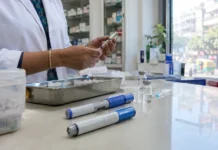
- Injection Site Irritation: When used as a research injectable, GHK-Cu is known to be slightly “stinging” compared to more neutral peptides.
- Dosage Sensitivity: High concentrations may lead to an over-stimulation of certain pathways precise, research-backed protocols are necessary.
Practical Considerations for Research
When sourcing or investigating GHK-Cu peptide, several factors influence its stability and efficacy.
- Formulation: GHK-Cu is highly water-soluble. In topical applications, it requires a delivery system (like liposomes) to penetrate the stratum corneum effectively.
- Color and Identity: Pure GHK-Cu has a distinct deep blue color due to the copper complex. If a “GHK-Cu” solution is clear, it likely lacks the copper component (GHK-Basic), which significantly alters its biological profile.
- Stability: The peptide is sensitive to oxidation and should be stored in a cool, dark environment.
Frequently Asked Questions (FAQ)
What is GHK-Cu peptide used for?
In a research setting, GHK-Cu is used to study tissue regeneration, skin health, hair growth, and gene modulation. It is highly valued for its ability to shift cellular environments from a pro-inflammatory state to a pro-repair state.
How does GHK-Cu work on the skin?
It stimulates fibroblasts to produce collagen and elastin while increasing the production of water-holding protective substances in the skin matrix. This results in improved elasticity and a reduction in visible signs of aging.
Is GHK-Cu peptide safe?
GHK-Cu is a naturally occurring peptide in human blood. It is generally considered to have a high safety profile however, research is ongoing regarding long-term systemic administration and its effect on mineral balance.
How does GHK-Cu compare to Retinol?
Unlike Retinol, which can be irritating and works by increasing cell turnover, GHK-Cu works by repairing the skin barrier and modulating gene expression. Many researchers view them as complementary rather than mutually exclusive.
Conclusion
The GHK-Cu peptide represents a bridge between traditional biochemistry and modern epigenetics. Its ability to influence thousands of genes suggests that it is not merely a “repair” peptide, but a fundamental signaling molecule that maintains human vitality. As research continues to unfold, its role in treating age-related decline and chronic injury remains one of the most promising frontiers in biotech.