






Close
CDMO Safety Testing 2026
Novotech

IBM Patents Machine Learning Model for Pharmaceutical Drug  Discovery

Note* - All images used are for editorial and illustrative purposes only and may not originate from the original news provider or associated company.

Subscribe

- Never miss a story with notifications

- Gain full access to our premium content

- Browse free from any location or device.

Media Packs

Expand Your Reach With Our Customized Solutions Empowering Your Campaigns To Maximize Your Reach & Drive Real Results!

– Access the Media Pack Now

– Book a Conference Call

Leave Message for Us to Get Back

Related stories

VoxCell and adMare Partner on Antibody Therapy Research

VoxCell BioInnovation Inc. and adMare BioInnovations have entered a...

Smart Thermal Packaging Enhancing Drug Stability Systems

Maintaining the stability of sensitive pharmaceutical compounds requires more than just standard insulation. Smart thermal packaging integrates advanced temperature control and real-time tracking to create a secure distribution environment. By ensuring that drugs remain within strict thermal parameters throughout their journey, these systems protect the efficacy of medications and enhance the reliability of pharmaceutical distribution networks worldwide.

Fujifilm Advances Drug Discovery with New Cyclic Peptide Screening Platform

FUJIFILM Corporation has developed a new screening methodology aimed...
- Advertisement -

IBM announced that its scientists have been granted a patent on machine learning models to predict therapeutic indications and side effects from various drug information sources.

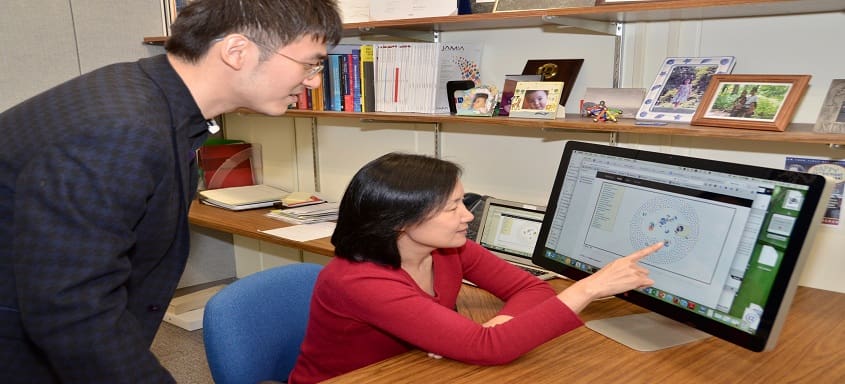
IBM Research has implemented a cognitive association engine to identify significant linkages between predicted therapeutic indications and side effects, and a visual analytics system to support the interactive exploration of these associations.

This approach could help researchers in pharmaceutical companies to generate hypotheses for drug discovery. For instance, strongly correlated disease-side-effect pairs identified by the patented invention could be beneficial for drug discovery in many ways. One could use the side-effect information to repurpose existing treatments (e.g. drugs causing postural hypotension could be potential candidates for treating hypertension). If a new drug is being designed for a disease that is strongly correlated with severe side effects, then special attention could be paid to controlling the formulation and dosing of the drug in the clinical trials to prevent serious safety issues.

IBM was granted U.S. Patent 9,536,194: Method and system for exploring the associations between drug side-effects and therapeutic indications for this invention.  

Lack of efficacy and adverse side effects are two of the primary reasons a drug fails clinical trials, each accounting for around 30 percent of failures. Computational models and machine learning methods that can derive useful insights from large amounts of data on drugs and diseases from various sources hold great promise for reducing these attrition rates and improving the drug discovery process.

“As inventors at IBM, we have the opportunity to help solve real-world problems,” said Jianying Hu, Senior Manager and Program Director, Center for Computational Health, IBM Research. “Our team is dedicated to this research and we continue to search for new ways to improve people’s health around the world through innovation and invention.”

One of the research areas of the Center for Computational Health at IBM Thomas J. Watson Research Center is translational informatics, which focuses on the development of novel techniques to extract insights and knowledge from biological and clinical data to support biological scientists, clinicians, and patients.

IBM has been working in this area for several years, and has developed a suite of advanced machine learning tools as well as computational models and platforms that can be used to derive insights from a wide variety of data sources  (e.g. pharmacological knowledge bases) to help improve the efficiency and effectiveness of drug discovery and development. These methodologies have been applied to many specific use cases including drug repurposing (i.e. helping to find new uses for existing drugs in the market), indication expansion (i.e. helping to identify potential new indications for drugs still in various stages of a development pipeline), drug safety (i.e. helping to detect and predict a drug’s safety profiles) and personalized medicine (e.g. personalized efficacy/safety profile predictions).

Contact(s) information
Chris Blake 
IBM Media Relations – Research 
415-613-1120 
blakechr@us.ibm.com

World Pharma Today brings together the global pharmaceutical industry — from R&D leaders and regulatory affairs professionals to manufacturers and distribution executives — through trusted editorial, market intelligence, and digital engagement.

Our 2026 Media Pack offers integrated solutions to reach your audience:

  • Magazine & Digital Editions Showcase your brand within premium pharmaceutical industry coverage read by executives and decision - makers worldwide.
  • Industry Insights & Reports Align with data - driven analysis, trend reports, and regional roundups across the global pharmaceutical and life sciences value chain.
  • Brand Authority & Credibility Position your company as a thought leader through expert commentary, interviews, and special features.

Latest stories

Related stories

VoxCell and adMare Partner on Antibody Therapy Research

VoxCell BioInnovation Inc. and adMare BioInnovations have entered a...

Smart Thermal Packaging Enhancing Drug Stability Systems

Maintaining the stability of sensitive pharmaceutical compounds requires more than just standard insulation. Smart thermal packaging integrates advanced temperature control and real-time tracking to create a secure distribution environment. By ensuring that drugs remain within strict thermal parameters throughout their journey, these systems protect the efficacy of medications and enhance the reliability of pharmaceutical distribution networks worldwide.

Fujifilm Advances Drug Discovery with New Cyclic Peptide Screening Platform

FUJIFILM Corporation has developed a new screening methodology aimed...

Quantum Machine Learning in Pharma Research Growth

The convergence of artificial intelligence and quantum processing is opening new avenues for rapid discovery and innovation within the life sciences. By utilizing advanced mathematical models that operate across multi-dimensional datasets, researchers can now identify complex biological patterns and predict molecular behaviors with a speed that surpasses traditional computational methods. This transformation is accelerating the development of novel therapies and providing deeper insights into disease mechanisms, fundamentally altering the trajectory of pharmaceutical research and development.

Subscribe

- Never miss a story with notifications

- Gain full access to our premium content

- Browse free from any location or device.

Media Packs

Expand Your Reach With Our Customized Solutions Empowering Your Campaigns To Maximize Your Reach & Drive Real Results!

– Access theMedia Pack Now

– Book a Conference Call

Leave Message for Us to Get Back

Translate »