









In a Good Manufacturing Practice (GMP) environment, the validity of every test result hinges on the accuracy of the instrument that produced it. Historically, calibration and maintenance were viewed as necessary evils—bureaucratic boxes to check. However, the advent of Industry 4.0 technologies has turned these support functions into strategic advantages. By embracing digital calibration and predictive maintenance lab instruments, pharmaceutical companies are moving from a reactive “break-fix” mentality to a proactive, data-driven approach that safeguards both product quality and operational efficiency. This shift is not merely technological; it is a fundamental reimagining of how risk is managed in the laboratory.
The Evolution of Calibration: From Paper to Digital
Traditional calibration involves a metrology technician visiting an instrument, placing a reference standard, writing down readings on a clipboard, and eventually typing a certificate. This process is rife with opportunities for error. A single digit transposed in a certificate can render a month’s worth of testing invalid during an audit.
The Digital Calibration Workflow
Digital calibration eliminates the clipboard. Smart calibrators—handheld devices used by technicians—communicate directly with calibration management software (CMS). The tolerance limits and Standard Operating Procedures (SOPs) are guided on the device screen. When the technician performs the test, the data is captured automatically and uploaded securely. This ensures that the record is “Attributable, Legible, Contemporaneous, Original, and Accurate” (ALCOA+).
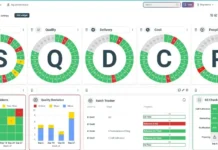
Furthermore, the integration of “digital signatures” allows for the instant approval of calibration records. In the past, a Quality Assurance manager might spend hours reviewing paper stacks. Now, they can review a digital dashboard where “pass” results are auto-approved based on validated logic, and only “fail” or “warning” results require human intervention. This “management by exception” approach drastically reduces the administrative burden.
Cloud-Based Certificates and Global Visibility
Digital calibration also enables global visibility. A VP of Quality can look at a dashboard and see the calibration status of every HPLC in every lab from New Jersey to Mumbai. If a specific model of balance is showing a high failure rate across multiple sites, the organization can issue a global hold or recall—something impossible with paper records locked in filing cabinets.
Predictive Maintenance: Listening to the Equipment
While calibration confirms accuracy at a specific point in time, maintenance ensures the instrument keeps running. Traditional “preventive” maintenance is time-based: change the pump seal every 6 months, replace the lamp every 1,000 hours. This creates two problems: you either replace good parts too early (wasting money) or you replace them too late (causing downtime).
IoT and the “Voice” of the Instrument
Predictive maintenance lab instruments solves this by using sensors to monitor the physical health of the asset.
- Vibration Analysis: A vibration sensor attached to a vacuum pump in a mass spectrometer can detect the microscopic “wobble” that precedes a bearing failure weeks before it happens. By analyzing the frequency spectrum of the vibration, algorithms can pinpoint exactly which component is degrading.
- Power Consumption: Current sensors on a heavily used ultra-low temperature (ULT) freezer can detect if the compressor is drawing 5% more power than usual—a sign of impending burnout or ice buildup on the coils.
- Environmental Monitoring: Smart sensors track the ambient temperature and humidity around sensitive equipment. If an NMR room gets too hot, the magnet could quench. Predictive systems alert facilities teams to fix the HVAC before the instrument is affected.
Moving from Reactive to Proactive
This telemetry data allows lab managers to schedule interventions during planned downtime rather than reacting to an emergency breakdown in the middle of a critical stability study. The system moves from saying “Fix me, I’m broken” to saying “Service me soon, or I will break.” This is particularly critical for “bottleneck” instruments where downtime costs thousands of dollars per hour in lost productivity.
Reducing Compliance Risk: The “Drift” Factor
One of the most feared scenarios in a pharma lab is the “Out of Tolerance” (OOT) investigation. If a pipette is found to be dispensing 10% less volume than it should during its annual calibration, the Quality Assurance team must investigate every test performed with that pipette since the last good calibration. This retroactive investigation is expensive and can lead to batch recalls.
Continuous Monitoring
Digital tools enable continuous monitoring of instrument “drift.” Instead of waiting for the annual check, automated system suitability tests (SST) can plot performance trends daily. If a detector’s response factor starts drifting downward, the predictive software generates an alert. The lab can then recalibrate the instrument before it falls out of specification. This proactive stance effectively eliminates the risk of OOT events.
The Financial Case: ROI of Prediction
The Return on Investment (ROI) for predictive maintenance lab instruments is measurable.
- Spare Parts Optimization: Instead of keeping a massive inventory of spare parts “just in case,” labs can order parts “just in time” based on predictive alerts.
- Asset Utilization: By preventing unplanned downtime, labs can get more throughput out of existing assets, potentially delaying the purchase of new capital equipment.
- Energy Savings: Monitoring power consumption often reveals “energy vampires”—equipment running inefficiently. Tuning these assets can lead to significant sustainability gains, aligning with corporate ESG goals.
Conclusion
The convergence of digital calibration and predictive maintenance lab instruments represents a maturity in pharmaceutical asset management. It is a shift that respects the critical nature of the equipment. By digitizing the chain of custody for metrology data and listening to the real-time health signals of laboratory assets, pharma companies can ensure that their instruments are not just compliant, but reliable, efficient and ready to support the relentless pace of modern drug discovery. The lab of the future is one where the equipment itself becomes a partner in quality assurance.