











Close
CDMO Safety Testing 2026
Novotech

RedHill Biopharma secures expanded manufacturing for COVID-19 therapeutic candidate

Note* - All images used are for editorial and illustrative purposes only and may not originate from the original news provider or associated company.

Subscribe

- Never miss a story with notifications

- Gain full access to our premium content

- Browse free from any location or device.

Media Packs

Expand Your Reach With Our Customized Solutions Empowering Your Campaigns To Maximize Your Reach & Drive Real Results!

โ€“ Access the Media Pack Now

โ€“ Book a Conference Call

โ€“ Leave Message for Us to Get Back

Related stories

Teva Adds Ecopipam Therapy in $700M Emalex Acquisition Deal

Teva Pharmaceuticals has entered into a definitive agreement to...

Designing Biotech Financial Models for Series B Success

Building a compelling Series B case in biopharma goes well beyond efficacy data and market size projections. Sophisticated investors are increasingly focused on CMC risk, licensing obligations, and the defensibility of your manufacturing timeline. This article breaks down what the financial model behind a strong Series B actually looks like and what quietly kills deals that should have worked.
- Advertisement -

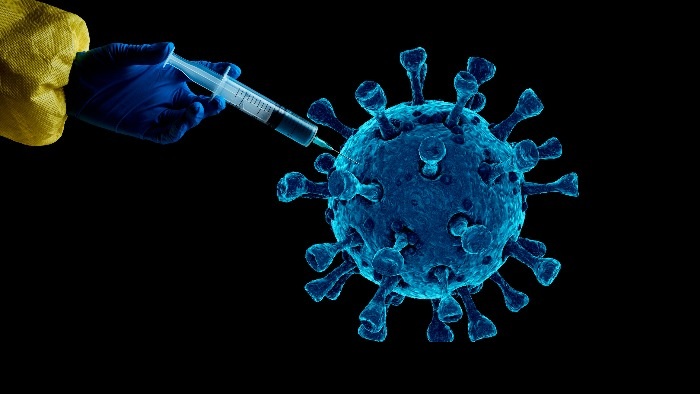
RedHill Biopharma, a specialty biopharmaceutical company, has announced collaborations with two specialist pharmaceutical manufacturers in Europe and Canada to ramp-up manufacturing of opaganib, currently in swiftly progressing global Phase II/III and US Phase II studies for severe COVID-19 pneumonia, to support potential emergency use applications and subsequent demand.

Opaganib is a first-in-class, orally-administered, sphingosine kinase-2 (SK2) selective inhibitor with demonstrated dual anti-inflammatory and antiviral activity that targets a host cell component, potentially minimizing the likelihood of viral resistance.

The late-stage development program for opaganib in patients with severe COVID-19 pneumonia includes the US Phase II study (NCT04414618) – ongoing in eight clinical trial sites – and is approaching completion of enrollment, and recently passed a second independent committee review, with data expected to follow before the end of this year; and the global Phase II/III study (NCT04467840), which is enrolling rapidly across 15 study sites and is on track to enroll up to 270 patients by the end of the year.

Both studies are randomized, double-blind, parallel-arm, placebo-controlled trials with opaganib in patients with severe COVID-19 pneumonia requiring hospitalization and treatment with supplemental oxygen.

Opaganib demonstrated potent antiviral activity against SARS-CoV-2, completely inhibiting viral replication in an in vitro model of human lung bronchial tissue.

The company is in discussions with US government agencies around potential funding to support the rapid advancement of opaganib toward potential emergency use applications and manufacturing scale-up.

โ€œIn light of the rapid progress of our Phase II/III COVID-19 development program with opaganib, we are expanding manufacturing capabilities and capacity for opaganib with trusted and high-quality partners, to meet likely demand ahead of potential global emergency use applications,โ€ said Reza Fathi, RedHillโ€™s Senior VP, R&D.

Latest stories

Related stories

Teva Adds Ecopipam Therapy in $700M Emalex Acquisition Deal

Teva Pharmaceuticals has entered into a definitive agreement to...

Designing Biotech Financial Models for Series B Success

Building a compelling Series B case in biopharma goes well beyond efficacy data and market size projections. Sophisticated investors are increasingly focused on CMC risk, licensing obligations, and the defensibility of your manufacturing timeline. This article breaks down what the financial model behind a strong Series B actually looks like and what quietly kills deals that should have worked.

CMC Bottleneck in Drug Development and IND Delays

Ask any experienced biopharma program manager what derails an IND filing most often, and the answer is rarely surprising: it is CMC. Not insufficient efficacy data, not toxicology surprises CMC. This article examines why Chemistry, Manufacturing, and Controls continues to be the most underestimated risk in early drug development, and what program leaders can do about it.

Subscribe

- Never miss a story with notifications

- Gain full access to our premium content

- Browse free from any location or device.

Media Packs

Expand Your Reach With Our Customized Solutions Empowering Your Campaigns To Maximize Your Reach & Drive Real Results!

โ€“ Access theMedia Pack Now

โ€“ Book a Conference Call

โ€“ Leave Message for Us to Get Back

Translate ยป