














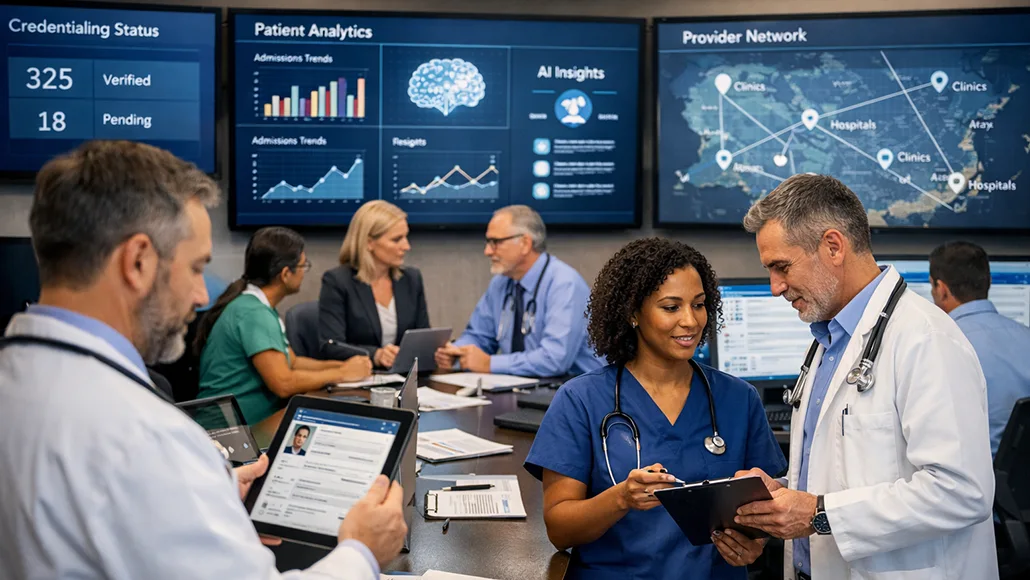
Healthcare organizations across the country are expanding their provider networks to meet growing demand. Population growth, physician shortages in certain specialties, and the rise of large integrated health systems are pushing hospitals to recruit more clinicians and extend their reach across multiple locations.
Scaling a provider network, however, is far more complex than simply hiring more doctors. Every new physician, nurse practitioner, or specialist adds layers of operational complexity. Hospitals must ensure that providers are properly credentialed, that clinical workflows remain coordinated, and that data flows efficiently across departments and systems. For healthcare leaders, scaling successfully requires careful attention to the operational details that keep provider networks functioning smoothly.
Establishing Strong Credentialing Processes From the Start
One of the first and most critical steps when expanding a provider network is verifying that every clinician meets the necessary licensing, certification, and training requirements. Credentialing is not simply a formality. It is a safeguard that protects patient safety and ensures regulatory compliance.
As hospitals recruit physicians across multiple specialties and geographic locations, credentialing demands grow significantly. Each provider must have their education, residency training, board certifications, and state licenses verified. Hospitals must also confirm malpractice coverage, professional history, and any disciplinary records.
In smaller practices, this process might be manageable through manual verification and spreadsheets. But when a hospital system is onboarding dozens or even hundreds of providers, the process quickly becomes more complex. Credentialing teams must coordinate with licensing boards, professional organizations, insurance networks, and internal medical staff committees.
Many health systems rely on digital credentialing solutions to manage this workload efficiently. These platforms help organizations automate parts of the credentialing process while maintaining strict verification standards. When credentialing is handled effectively, hospitals can onboard new providers more quickly without compromising oversight.
Using Data and AI to Strengthen Clinical Insights
As provider networks expand, the volume of healthcare data grows rapidly. Patient records, lab results, imaging reports, and clinical notes generate enormous amounts of information every day. Managing this data effectively can improve both operational efficiency and clinical outcomes.
Artificial intelligence is beginning to play a larger role in how healthcare organizations analyze complex datasets. In pharmaceutical research, for example, AI tools are already transforming how laboratories process experimental data and identify patterns that might otherwise remain hidden. These technologies allow researchers to analyze large volumes of information quickly and extract insights that guide drug development.
Healthcare providers are increasingly exploring similar approaches. AI-driven analytics can help hospitals identify trends in patient populations, monitor treatment effectiveness, and detect anomalies in clinical data. When integrated into hospital systems, these tools can assist clinicians in making more informed decisions.
For growing provider networks, advanced analytics can also help leaders understand operational performance. Data analysis can reveal patterns in patient demand, referral pathways, and care outcomes across different locations.
Coordinating Care Across Expanding Networks
One of the biggest challenges in scaling provider networks is maintaining continuity of care. When patients move between specialists, clinics, telehealth systems, and hospitals within a system, their care must remain coordinated.
Without effective coordination, patients may experience delays, duplicate tests, or conflicting treatment plans. These issues not only frustrate patients but also increase operational costs.
Health systems address this challenge by investing in care coordination programs that connect providers across departments and locations. Referral systems, shared electronic health records, and communication platforms help clinicians stay informed about a patient’s treatment history and current care plan.
Strong coordination also depends on clear communication between providers. When physicians collaborate effectively, patients receive more comprehensive and consistent care. As networks grow larger, maintaining these communication channels becomes even more important.
Supporting Providers as Networks Expand
Finally, hospitals must ensure that the physicians and clinicians within their networks receive the support they need to succeed. Rapid expansion can place additional pressure on providers if administrative processes are not carefully managed.
New providers may face onboarding challenges as they learn the systems and workflows used within the organization. Without adequate training and support, this transition can slow productivity and create frustration.
Healthcare leaders who prioritize provider experience often see stronger results during network expansion. Structured onboarding programs, clear communication channels, and responsive administrative teams help new clinicians integrate smoothly into the organization.
Supporting providers also means listening to their feedback. Physicians who interact with patients every day often have valuable insights about workflow inefficiencies and patient needs. By incorporating this feedback into operational planning, hospitals can create systems that benefit both providers and patients.