









The volume of data generated in modern biology has surpassed the capacity of traditional statistical methods. In this environment, AI in pharmaceutical lab data analysis has emerged as the most critical tool for converting raw biological signals into therapeutic leads. Pharmaceutical research today involves the simultaneous monitoring of thousands of variables, from genomic sequences to protein folding patterns. Without the assistance of machine learning, much of this information remains “dark data” captured but never truly understood. The shift toward intelligent, automated analysis is not just a trend; it is the new baseline for scientific excellence.
The Evolution of Data Interpretation in Science
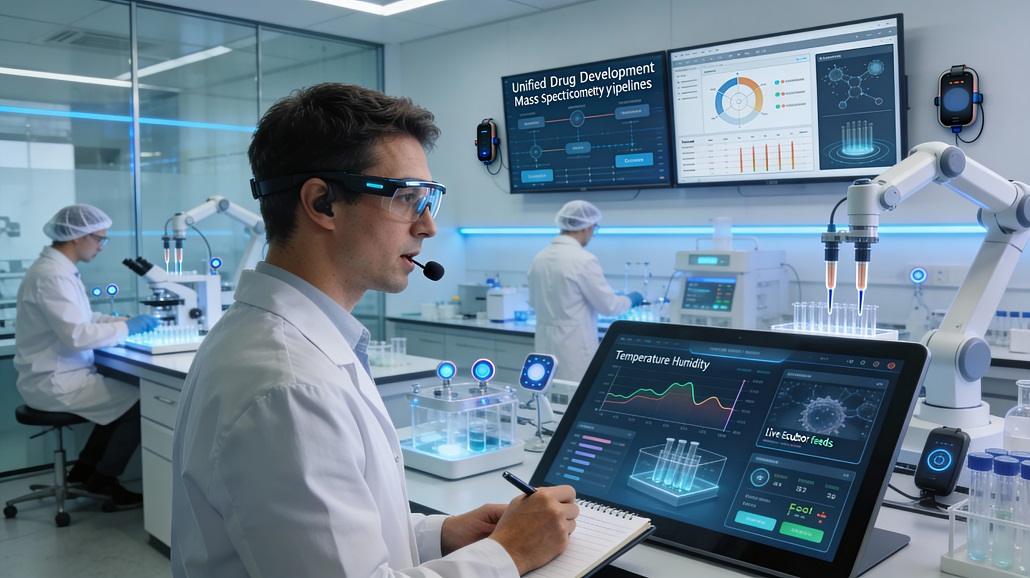
For decades, data analysis was a retrospective process. Scientists would conduct an experiment, collect the results, and then spend weeks or months attempting to find meaningful patterns. Today, AI in pharmaceutical lab data analysis allows for a more dynamic and concurrent approach. Smart lab AI systems can monitor experiments in real-time, adjusting parameters on the fly to maximize the quality of the output. This evolution from static observation to active participation by the analysis software is fundamentally changing the role of the laboratory computer from a storage device to a strategic partner.
Harnessing Machine Learning for Pattern Recognition
The core strength of AI lies in its ability to recognize patterns across massive, disparate datasets. In a typical screening assay, millions of data points are generated. AI in pharmaceutical lab data analysis can sift through this noise to find subtle signals that indicate a compound’s potential efficacy or toxicity. By training algorithms on historical data, researchers can create models that predict how a new molecule will behave even before it is synthesized. These digital lab solutions are drastically reducing the failure rate in the later stages of drug development.
Predictive Modeling in Drug-Target Interaction
A critical challenge in pharma is predicting how a drug will interact with its intended target while avoiding off-target effects. Advanced smart lab AI platforms use deep learning to simulate these interactions at a molecular level. By analyzing the structural biology of proteins and the chemical properties of ligands, these systems can rank candidates based on their likelihood of success. This targeted approach to lab data analysis ensures that the physical lab work is concentrated on the most viable options, significantly improving the efficiency of the entire research pipeline.
Streamlining Research with Intelligent Digital Lab Solutions
The integration of AI goes beyond just looking at the final results; it involves the entire lifecycle of pharmaceutical research. From the initial design of an experiment to the final regulatory submission, digital lab solutions are providing a framework for consistency and transparency. When every data point is processed through a standardized AI pipeline, the risk of human error or subjective bias is nearly eliminated. This standardization is vital for ensuring that results are reproducible across different laboratory sites and over time.
Automating High-Dimensional Data Processing
Modern labs often employ “omics” technologies genomics, proteomics, and metabolomics which produce incredibly dense datasets. Manually analyzing this level of information is an impossible task. AI in pharmaceutical lab data analysis excels at dimensionality reduction, helping scientists focus on the most influential genes or proteins within a complex biological pathway. By simplifying the complexity without losing the underlying detail, smart lab AI tools enable a clearer understanding of disease mechanisms and the potential impact of new therapeutic interventions.
Enhancing Decision-Making Through Real-Time Insights
One of the most immediate benefits of implementing AI is the acceleration of the decision-making process. In a traditional setting, a project might stall while waiting for a data scientist to process a batch of results. With integrated AI in pharmaceutical lab data analysis, the insights are available almost instantaneously. This allows for an iterative approach where researchers can pivot their strategy based on the morning’s data to optimize the afternoon’s experiments. This level of agility is a hallmark of the most successful modern pharmaceutical research programs.
Future-Proofing the Laboratory Environment
As we look forward, the role of AI will only expand. We are moving toward a state where the laboratory is not just a place where data is gathered, but an intelligent ecosystem that learns from every interaction. AI in pharmaceutical lab data analysis will eventually include “self-healing” data pipelines that can detect and correct sensor errors or data corruption automatically. This level of sophistication in smart lab AI will provide an unprecedented level of confidence in the integrity of pharmaceutical science.
Integrating AI with Laboratory Hardware
The next step in this transformation is the deeper integration between analysis software and laboratory hardware. Imagine a microscope that uses AI to identify the most interesting cells on a slide and automatically zooms in to capture high-resolution images of those specific areas. This synergy between AI in pharmaceutical lab data analysis and physical instrumentation represents the pinnacle of smart lab technologies. By automating the selection and acquisition of data, we can ensure that every byte of information stored is of the highest possible value.
Conclusion
The transformation of lab data interpretation through AI is a profound shift that is redefining the boundaries of what is possible in medicine. By embracing AI in pharmaceutical lab data analysis, organizations are unlocking the true potential of their research teams. The combination of smart lab AI and robust digital lab solutions provides a foundation for innovation that is both faster and more reliable than traditional methods. As these technologies continue to mature, they will remain the essential engine driving the next generation of life-saving pharmaceutical discoveries.