














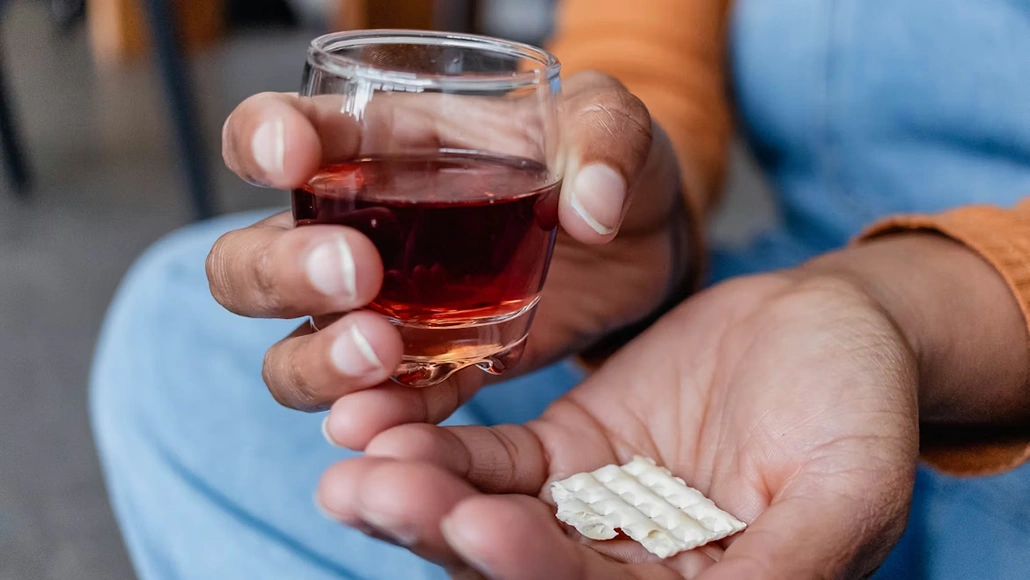
We have all been there: a nagging head cold or sinus pressure hits right before a weekend plan or social gathering. It is incredibly tempting to take a Sudafed to clear your head and go out anyway, assuming a drink or two won’t hurt. However, even though pseudoephedrine (the active ingredient in Sudafed) is available over the counter, it is a potent stimulant that does not pair well with alcohol.
The Psychological Tug of War
The main issue is that alcohol and Sudafed are essentially pulling your body in opposite directions. Pseudoephedrine is a sympathomimetic drug; its job is to act as a stimulant, narrowing blood vessels to reduce swelling in your nasal passages so you can breathe again. On the other hand, alcohol is a central nervous system (CNS) depressant that can act as a vasodilator, widening blood vessels and improving blood flow.
When you mix a stimulant with a depressant, they do not simply cancel each other out like a math equation. Instead, they mask one another’s signals. The “high” from the Sudafed can hide the “down” of the alcohol, making you feel more sober than you actually are. This false sense of alertness often leads people to drink more than they should, putting unnecessary stress on their internal organs.
Real-World Physical Risks
The primary dangers of mixing alcohol with sudafed often manifest in the cardiovascular system. Since pseudoephedrine naturally tightens blood vessels and raises your heart rate, adding alcohol into the mix creates a volatile environment for your heart. You might notice your heart racing, palpitations, or a sudden spike in blood pressure. If you already have a history of hypertension this combination can become dangerous very quickly.
Then there is the issue of dehydration to consider. Both substances flush water out of your system. When combined, they accelerate fluid loss. This thickens the mucus you are trying to clear, working against the very reason you took medication in the first place.
The Metabolic Bottleneck
Your liver is a multitasker, but it has its limits. When alcohol enters your bloodstream, the liver prioritizes breaking it down above almost everything else. This creates a metabolic “bottleneck”. While your body is processing the alcohol, the Sudafed stays in your system longer than it is supposed to, potentially reaching higher concentrations that can lead to insomnia or intense anxiety.
You also need to be careful with “multi-symptom” versions of Sudafed. Many of these contain acetaminophen (Tylenol) to help with aches and pains. Mixing Tylenol with alcohol is one of the fastest ways to cause acute liver toxicity, as the liver struggles to process the toxic byproducts of both at the same time.
Who Is Most at Risk?
While no one should ideally mix these two, certain groups are more vulnerable. For older adults, the body’s ability to filter drugs and alcohol slows down, making the side effects much more pronounced. Similarly, anyone with underlying heart or kidney issues should avoid this combination entirely to prevent a medical emergency.
If you are feeling under the weather, the best thing you can do for your recovery is to skip the bar and stick to water or tea. Most medical professionals recommend waiting at least 24 hours after your last dose of pseudoephedrine before having a drink. It might not be an exciting Friday night, but your heart and liver will certainly thank you for it.