













Close
Smartlab Europe
Inizio Ignite

Schreiner MediPharm Equips Cap-Lock Security Label with RFID Technology

Note* - All images used are for editorial and illustrative purposes only and may not originate from the original news provider or associated company.

Subscribe

- Never miss a story with notifications

- Gain full access to our premium content

- Browse free from any location or device.

Media Packs

Expand Your Reach With Our Customized Solutions Empowering Your Campaigns To Maximize Your Reach & Drive Real Results!

– Access the Media Pack Now

– Book a Conference Call

Leave Message for Us to Get Back

Related stories

Predictive Analytics in Labs: Driving Smarter Decisions in Pharma

The application of statistical algorithms and machine learning techniques to historical research data is enabling scientists to anticipate experimental outcomes and identify emerging patterns with unprecedented accuracy. By moving from a retrospective view of data to a forward-looking perspective, research facilities can optimize their strategies and focus their resources on the most promising therapeutic avenues.

IoT Applications Enhancing Laboratory Operational Efficiency

The integration of internet-connected sensors and smart devices is fundamentally reshaping how research facilities monitor their environment and manage their instrumentation. By providing a constant stream of real-time data, these technological advancements allow for a more granular level of control over laboratory operations, ensuring that the delicate conditions required for high-stakes pharmaceutical research are maintained with absolute precision.

Optimizing Pharma Workflows with Integrated Lab Software Solutions

The modern laboratory environment requires a unified approach to data management and process control to remain competitive. By bridging the gap between disparate instruments and legacy databases, research facilities can eliminate operational silos and create a high-speed environment where innovation is no longer hindered by fragmented digital infrastructure.
- Advertisement -

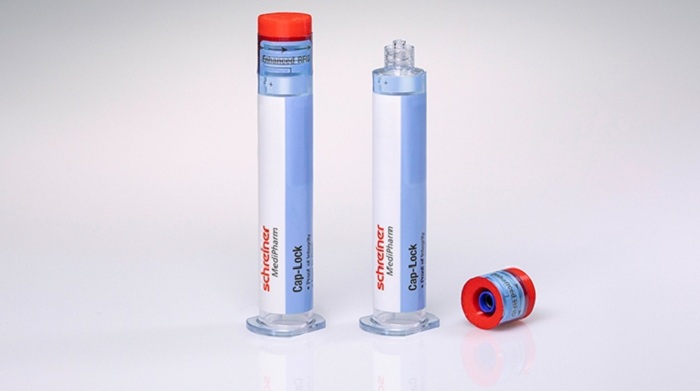
Schreiner MediPharm, a Germany-based global provider of innovative functional label solutions for the healthcare industry, has enhanced its tamper-evident specialty label, Cap-Lock, with a special RFID inlay. Developed to help hospitals expand digitization initiatives, the label-and-cap security concept for prefilled syringes now also enables automated inventory and supply chain management, as well as digital first-opening indication. In doing so, the new Cap-Lock plus RFID solution offers efficient and reliable product authentication and enhanced patient safety.

Equipping syringes containing liquid medications with RFID-Labels poses a challenge, as both the container material and the composition of the liquid may impair reading of a UHF RFID-Label. Flag labels protruding from the container are frequently used for this purpose; however, these typically require additional space, are prone to being torn off and must be applied manually.

With Cap-Lock plus RFID, the RFID chip is integrated in the label. Cap-Lock is a combination of a cap adapter and label. The adapter is placed on top of the syringe’s primary closure and interlinked with it to equalize the diameter differences of the syringe body and closure. The label wraps around the syringe body and cap adapter and—once opened—provides irreversible tamper evidence due to an integrated perforation.

The RFID inlay is located in the upper part of the label at the level of the cap. Thus, it largely sits outside the liquid-filled area and enables reliable long-range reading. Due to the RFID functionality, digital first-opening evidence is now possible in addition to the previous, purely visual first-opening indication provided by the destroyed label. The RFID-Label can be automatically processed as part of the primary container’s normal labeling workflow.

For live monitoring and control of the logistic flow of materials and products in automated inventory and supply chain management, the data of syringes equipped with RFID-Labels can be automatically captured at various stations. As a result of reading the picked and placed products, current inventory information is consistently stored in a database. Additionally, integrity, first-opening or tampering with containers can be digitally monitored by means of the purpose-developed RFID-Sensor-Label.

In medication management, data stored on the RFID-Labels—such as product name, manufacturer, batch number and expiration date—is read automatically either individually or in bulk using simple handheld or specialty readers, and matched with a database. This enables exact tracking of inventories and provides transparency regarding medicines that are missing or approaching their expiration date. This helps protect patients against potential medication errors.

About Schreiner MediPharm

Based in the Munich area of Germany, Schreiner MediPharm is a global leader in the development and manufacture of innovative specialty labels with value-added benefits that have set the standard in the healthcare and pharmaceutical industries. Schreiner MediPharm’s expertise is based on over 65 years of experience. The family-owned company provides specialty labels and label printing services to the biggest names in the healthcare market around the world.


Latest stories

Related stories

Predictive Analytics in Labs: Driving Smarter Decisions in Pharma

The application of statistical algorithms and machine learning techniques to historical research data is enabling scientists to anticipate experimental outcomes and identify emerging patterns with unprecedented accuracy. By moving from a retrospective view of data to a forward-looking perspective, research facilities can optimize their strategies and focus their resources on the most promising therapeutic avenues.

IoT Applications Enhancing Laboratory Operational Efficiency

The integration of internet-connected sensors and smart devices is fundamentally reshaping how research facilities monitor their environment and manage their instrumentation. By providing a constant stream of real-time data, these technological advancements allow for a more granular level of control over laboratory operations, ensuring that the delicate conditions required for high-stakes pharmaceutical research are maintained with absolute precision.

Optimizing Pharma Workflows with Integrated Lab Software Solutions

The modern laboratory environment requires a unified approach to data management and process control to remain competitive. By bridging the gap between disparate instruments and legacy databases, research facilities can eliminate operational silos and create a high-speed environment where innovation is no longer hindered by fragmented digital infrastructure.

Advanced Robotics Driving Pharmaceutical Lab Efficiency

The implementation of high-speed robotic systems and automated handling technologies is fundamentally altering the productivity of modern research facilities. By taking over repetitive physical tasks and operating with sub-millimeter precision, these mechanical innovators are allowing scientific staff to redirect their cognitive energy toward complex analysis and the development of breakthrough therapies.

Subscribe

- Never miss a story with notifications

- Gain full access to our premium content

- Browse free from any location or device.

Media Packs

Expand Your Reach With Our Customized Solutions Empowering Your Campaigns To Maximize Your Reach & Drive Real Results!

– Access theMedia Pack Now

– Book a Conference Call

Leave Message for Us to Get Back

Translate »