







Close
CDMO Safety Testing 2026
Novotech

Rules To Treat Drug-Resistant TB Have Been Altered By WHO

Note* - All images used are for editorial and illustrative purposes only and may not originate from the original news provider or associated company.

Subscribe

- Never miss a story with notifications

- Gain full access to our premium content

- Browse free from any location or device.

Media Packs

Expand Your Reach With Our Customized Solutions Empowering Your Campaigns To Maximize Your Reach & Drive Real Results!

โ€“ Access the Media Pack Now

โ€“ Book a Conference Call

โ€“ Leave Message for Us to Get Back

Related stories

BeOne Signs $2B Trispecific Antibody Deal with Huahui Health

BeOne Medicines has entered into a high-value agreement with...

Quantum Machine Learning in Pharma Research Growth

The convergence of artificial intelligence and quantum processing is opening new avenues for rapid discovery and innovation within the life sciences. By utilizing advanced mathematical models that operate across multi-dimensional datasets, researchers can now identify complex biological patterns and predict molecular behaviors with a speed that surpasses traditional computational methods. This transformation is accelerating the development of novel therapies and providing deeper insights into disease mechanisms, fundamentally altering the trajectory of pharmaceutical research and development.

Quantum Sensors Enabling Advanced Drug Diagnostics

The landscape of medical diagnostics is being reshaped by the introduction of sensing technologies that operate with atomic-level sensitivity. By providing high-fidelity measurements and real-time data, these tools allow for the detection of subtle biological changes and chemical markers that were previously invisible to conventional equipment. This advancement is enhancing the precision of drug testing and clinical monitoring, leading to earlier disease detection and more effective therapeutic interventions across the global healthcare spectrum.
- Advertisement -

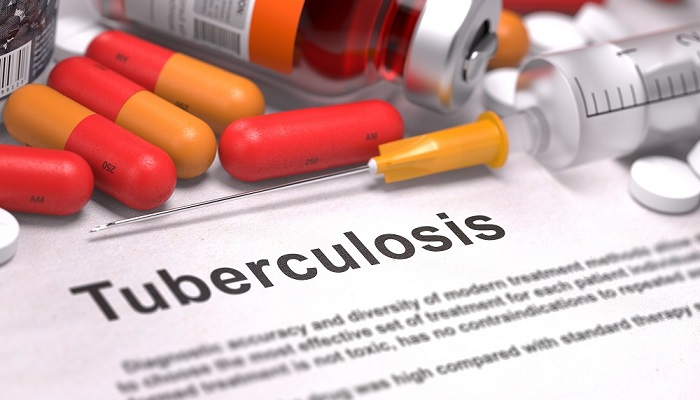
The World Health Organization (WHO) has released its revised consolidated recommendations for treating drug-resistant tuberculosis (DR-TB), which include significant advancements in the treatment options available to individuals with MDR or RR-TB: multidrug-resistant or rifampicin-resistant tuberculosis) and a regimen that provides better patient outcomes.

For patients with MDR/RR-TB or MDR/RR-TB with added fluoroquinolone resistance, aย unique all-oral six-month regimen composed of bedaquiline, pretomanid, linezolid, and moxifloxacin (BPaLM) is recommended in the 2022 updates (pre-XDR-TB). For those with MDR/RR-TB, the new regimen dramatically improves quality of life by providing better results and significantly cutting down on treatment time.

Who can use the 2022 update from the World Health Organization?

The publication contains all current recommendations for treating DR-TB, and it is reinforced with an operational manual created to make it easier for Member States, technical partners, and those in charge of managing patients with DR-TB to put the WHO recommendations into practice. The new suggestions offer helpful advice on how to implement the suggested therapeutic choices at a national and international level to facilitate a good impact.

The material is intended for national TB programmes or their equivalent in Ministries of Health, policymakers, and technical organisations engaged in TB and infectious disease research in the public and private sectors as well as in the community.

The new BPaLM/BPaL treatment combination will be less expensive and more widely available as a result of new projects by the public and private sectors to lower the price of protomanid and possibly other component drugs.

Implementing the new tuberculosis drug-resistant treatment protocol

The WHO has stated that it intends to establish a regular online discussion platform with the participation of high MDR/RR-TB burden nations, civil society, technical partners, and the donor community to assist the introduction of the new DR-TB treatment regimen.

They now have a better and quicker all-oral therapy alternative for drug-resistant tuberculosis thanks to the newly accessible data. As Director of WHO’s Global TB Programme, Dr. Tereza Kasaeva,ย noted that itย is a historic move that will be of immense help to people suffering with drug-resistant TB, relieving the strain on health systems, and saving lives. They now urge partners and national TB programmes to take immediate action to switch over to the new drug-resistant TB treatment protocol.

Latest stories

Related stories

BeOne Signs $2B Trispecific Antibody Deal with Huahui Health

BeOne Medicines has entered into a high-value agreement with...

Quantum Machine Learning in Pharma Research Growth

The convergence of artificial intelligence and quantum processing is opening new avenues for rapid discovery and innovation within the life sciences. By utilizing advanced mathematical models that operate across multi-dimensional datasets, researchers can now identify complex biological patterns and predict molecular behaviors with a speed that surpasses traditional computational methods. This transformation is accelerating the development of novel therapies and providing deeper insights into disease mechanisms, fundamentally altering the trajectory of pharmaceutical research and development.

Quantum Sensors Enabling Advanced Drug Diagnostics

The landscape of medical diagnostics is being reshaped by the introduction of sensing technologies that operate with atomic-level sensitivity. By providing high-fidelity measurements and real-time data, these tools allow for the detection of subtle biological changes and chemical markers that were previously invisible to conventional equipment. This advancement is enhancing the precision of drug testing and clinical monitoring, leading to earlier disease detection and more effective therapeutic interventions across the global healthcare spectrum.

Quantum Computing Optimizing Pharma Supply Chains

The global distribution of pharmaceutical products is facing unprecedented challenges that demand a new level of logistical precision and resilience. By utilizing advanced analytical models, companies can now navigate complex international networks with greater efficiency, ensuring that temperature-sensitive medicines and life-saving therapies reach their destinations without delay. This evolution toward a more intelligent and responsive supply chain is critical for maintaining public health and responding effectively to emerging medical needs on a global scale.

Subscribe

- Never miss a story with notifications

- Gain full access to our premium content

- Browse free from any location or device.

Media Packs

Expand Your Reach With Our Customized Solutions Empowering Your Campaigns To Maximize Your Reach & Drive Real Results!

โ€“ Access theMedia Pack Now

โ€“ Book a Conference Call

โ€“ Leave Message for Us to Get Back

Translate ยป