














Close
CDMO Safety Testing 2026
Novotech

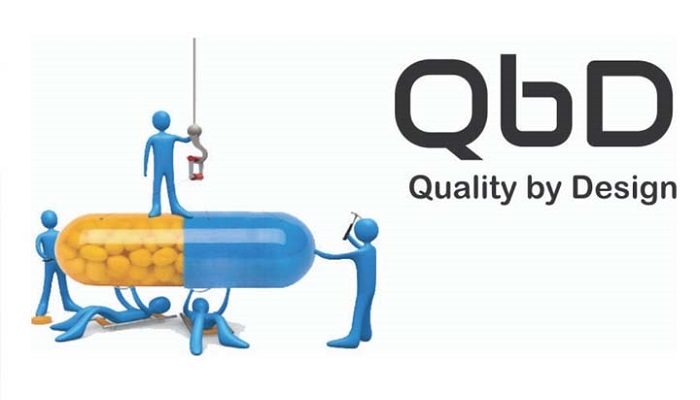
Pushing Quality By Design, A Standard In Drug Development

Note* - All images used are for editorial and illustrative purposes only and may not originate from the original news provider or associated company.

Subscribe

- Never miss a story with notifications

- Gain full access to our premium content

- Browse free from any location or device.

Media Packs

Expand Your Reach With Our Customized Solutions Empowering Your Campaigns To Maximize Your Reach & Drive Real Results!

โ€“ Access the Media Pack Now

โ€“ Book a Conference Call

โ€“ Leave Message for Us to Get Back

Related stories

BeOne Signs $2B Trispecific Antibody Deal with Huahui Health

BeOne Medicines has entered into a high-value agreement with...

Quantum machine learning in pharma research growth

The convergence of artificial intelligence and quantum processing is opening new avenues for rapid discovery and innovation within the life sciences. By utilizing advanced mathematical models that operate across multi-dimensional datasets, researchers can now identify complex biological patterns and predict molecular behaviors with a speed that surpasses traditional computational methods. This transformation is accelerating the development of novel therapies and providing deeper insights into disease mechanisms, fundamentally altering the trajectory of pharmaceutical research and development.

Quantum sensors enabling advanced drug diagnostics

The landscape of medical diagnostics is being reshaped by the introduction of sensing technologies that operate with atomic-level sensitivity. By providing high-fidelity measurements and real-time data, these tools allow for the detection of subtle biological changes and chemical markers that were previously invisible to conventional equipment. This advancement is enhancing the precision of drug testing and clinical monitoring, leading to earlier disease detection and more effective therapeutic interventions across the global healthcare spectrum.
- Advertisement -

A paper that has been published in the European Journal of Pharmaceutics and Biopharmaceutics has gone on to review the present application status of Quality by Design- QbD within the framework of the ICH guidelines- ICH Q8(R2) โ€“ Q14 as well as ICH Q2(R2)). Throughout the past several years, the pharma industry has gone on to face numerous challenges pertaining to quality assurance when it comes to drug development.

Making use of a high-quality approach when it comes to the development of pharmaceuticals

Still Quality by Design goes on to offer an innovative, systematic, scientific, as well as risk-based approach when it comes to pharmaceutical quality.ย 

This process helps save time along with financial cost savings by making sure to streamline the pharmaceutical R&D process while at the same time providing greater flexibility when it comes to manufacturing. It also helps to lower the regulatory burden as well as reported in the paper.

The authors went on to state that critically, drug development by way of using Quality by Design means an in-depth understanding of a formulation of drug as well as its manufacturing process can be attained, and establishment of an apt control strategy along with the reduction of regulatory oversight.

While the advantages when it comes to the Quality by Design approach happen to be clear and practical execution of Quality by Design is stressed by the publication of public guidance documents ICH Q8(R2) โ€“ ICH Q14, the sector, apparently, has not yet fully included the QbD approach in Marketing Authorization Applications (MAAs) when it comes to European market approval, the authors noted.

For instance, Simoes et al. underscored that within the EU market, a comparatively low number of pharmaceutical products that were approved adopted the QbD methodology or described QbD aspects in their regulatory submissions.

Giving a review of the implementation of QbD in the pharma landscape

To compile the overall review when it comes to Quality by Design in the context of MAAs across Europe, the researchers evaluated the implementation of the QbD methodology for all MAAs that have been given a nod by the European Medicines Agency- EMA since the ICH Q8(R2) guideline was put in place in 2009. The team went on to analyze the European Public Assessment Report- EPAR when it comes to the QbD approach.

It is well to be noted that the authors went on to rank the MAAs for 1780 pharma products that happened to be approved between 2009 and 2023 as per the different application types: full application (Article 8(3)), well-established usage (Article 10a), fixed dose mix (Article 10b), informed consent (Article 10c), generic (Article 10(1)), hybrid (Article 10(3)), as well as biosimilar (Article 10(4)).

So as to continue bridging the gaps when it comes to traditional and modern, also known as enhanced development approaches, the sector must go on to meet regulatory expectations and also look into certain innovative frameworks that make sure of high-quality levels, concluded Simoes et al.


Latest stories

Related stories

BeOne Signs $2B Trispecific Antibody Deal with Huahui Health

BeOne Medicines has entered into a high-value agreement with...

Quantum machine learning in pharma research growth

The convergence of artificial intelligence and quantum processing is opening new avenues for rapid discovery and innovation within the life sciences. By utilizing advanced mathematical models that operate across multi-dimensional datasets, researchers can now identify complex biological patterns and predict molecular behaviors with a speed that surpasses traditional computational methods. This transformation is accelerating the development of novel therapies and providing deeper insights into disease mechanisms, fundamentally altering the trajectory of pharmaceutical research and development.

Quantum sensors enabling advanced drug diagnostics

The landscape of medical diagnostics is being reshaped by the introduction of sensing technologies that operate with atomic-level sensitivity. By providing high-fidelity measurements and real-time data, these tools allow for the detection of subtle biological changes and chemical markers that were previously invisible to conventional equipment. This advancement is enhancing the precision of drug testing and clinical monitoring, leading to earlier disease detection and more effective therapeutic interventions across the global healthcare spectrum.

Quantum computing optimizing pharma supply chains

The global distribution of pharmaceutical products is facing unprecedented challenges that demand a new level of logistical precision and resilience. By utilizing advanced analytical models, companies can now navigate complex international networks with greater efficiency, ensuring that temperature-sensitive medicines and life-saving therapies reach their destinations without delay. This evolution toward a more intelligent and responsive supply chain is critical for maintaining public health and responding effectively to emerging medical needs on a global scale.

Subscribe

- Never miss a story with notifications

- Gain full access to our premium content

- Browse free from any location or device.

Media Packs

Expand Your Reach With Our Customized Solutions Empowering Your Campaigns To Maximize Your Reach & Drive Real Results!

โ€“ Access theMedia Pack Now

โ€“ Book a Conference Call

โ€“ Leave Message for Us to Get Back

Translate ยป