








Close
CDMO Safety Testing 2026
Novotech

Patient Blood Cells Get Rid of Tumour Through New Therapy

Note* - All images used are for editorial and illustrative purposes only and may not originate from the original news provider or associated company.

Subscribe

- Never miss a story with notifications

- Gain full access to our premium content

- Browse free from any location or device.

Media Packs

Expand Your Reach With Our Customized Solutions Empowering Your Campaigns To Maximize Your Reach & Drive Real Results!

โ€“ Access the Media Pack Now

โ€“ Book a Conference Call

โ€“ Leave Message for Us to Get Back

Related stories

Quantum machine learning in pharma research growth

The convergence of artificial intelligence and quantum processing is opening new avenues for rapid discovery and innovation within the life sciences. By utilizing advanced mathematical models that operate across multi-dimensional datasets, researchers can now identify complex biological patterns and predict molecular behaviors with a speed that surpasses traditional computational methods. This transformation is accelerating the development of novel therapies and providing deeper insights into disease mechanisms, fundamentally altering the trajectory of pharmaceutical research and development.

Quantum sensors enabling advanced drug diagnostics

The landscape of medical diagnostics is being reshaped by the introduction of sensing technologies that operate with atomic-level sensitivity. By providing high-fidelity measurements and real-time data, these tools allow for the detection of subtle biological changes and chemical markers that were previously invisible to conventional equipment. This advancement is enhancing the precision of drug testing and clinical monitoring, leading to earlier disease detection and more effective therapeutic interventions across the global healthcare spectrum.

Quantum computing optimizing pharma supply chains

The global distribution of pharmaceutical products is facing unprecedented challenges that demand a new level of logistical precision and resilience. By utilizing advanced analytical models, companies can now navigate complex international networks with greater efficiency, ensuring that temperature-sensitive medicines and life-saving therapies reach their destinations without delay. This evolution toward a more intelligent and responsive supply chain is critical for maintaining public health and responding effectively to emerging medical needs on a global scale.
- Advertisement -

Adoptive cell therapy has gone on to become a promising immunotherapy tool that can be used to help in the treatment of advanced melanoma. The therapy, which makes use of the immune cells that are collected from the individual’s own tumours, can go on to provide new treatment options to cancer patients, thereby potentially bypassing cancer therapies and also those harsh chemotherapy drugs.

For the very first time in history, the Northwestern University scientists have explored whether it is indeed possible to isolate the tumourโ€™s attack cells non-invasively via blood rather than from the tumours. These findings thereby open the door for the ACT to take care of the harder-to-reach cancer types, thereby making it a more viable option when it comes to hospitals.

As per Shana O. Kelley, paperโ€™s corresponding author, they had begun probing about whether the immune cells which enter the tumours come back out and if one could find them in the bloodstream. She added that they did not know if they would be able to find them or see enough of them so as to even study them. Apparently, this is the first time these cells have been examined in this very context.

The study that is published in the Nature Biomedical Engineering journal is a continuation of the previous work that was done in the lab, which was again published in the same journal. In the previous study, Kelley as well as her team had gone on to treat the mice through their own immune cells, which were gathered from a mass, which most importantly shrank their tumours compared to traditional cell therapy methods.

The paper, which was published last year, also laid out a detailed method that is used to isolate as well as multiply tumour-infiltrating lymphocytes, a process that goes through and harvest cells to gain more than what the current approaches are giving, thereby making the anti-cancer response much stronger.

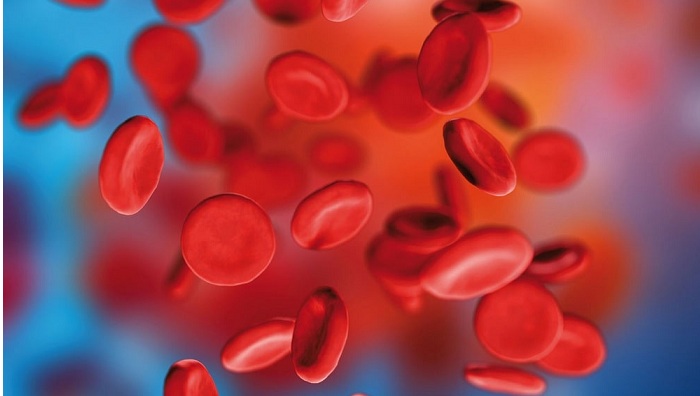
By removing and processing the melanoma tumours, the scientists have found TILs in them. That said, at times, removing the tumours so as to harvest TILs can prove to be a bigger risk to patients, leaving no gap to harness ACT so as to fight many cancers. Post finding TIL-like lymphocytes in the animal blood, the team went on to test whether or not cTRLs had the same capacity as TILs to thwart the tumour cells, and surprisingly, they did.

To get over another point, post-finding as well as profiling cTRLs, Kelley also used its new technology platform in order to isolate and then also replicate only those tumour fighters that were best.

It was seen that the cTRLs efficiently again levelled competition by engaging in a direct combat with the tumour cells. Kelley goes on to add that the engineering-based tools enable doing things that open up new biological regions. As per her, they could see making use of the platform across any major medical centre so that a significant number of patients could be reached. The platform that they used to capture the cells is very fast, thereby helping to bring the costs down, and besides, medical centres happen to be comfortable handling blood.

It is well to note that the scientists also found the cTRLs not only in melanoma models but also in breast, colon, and lung cancer, where each tumour represented a distinctive signature that TIL gets bound to.

Latest stories

Related stories

Quantum machine learning in pharma research growth

The convergence of artificial intelligence and quantum processing is opening new avenues for rapid discovery and innovation within the life sciences. By utilizing advanced mathematical models that operate across multi-dimensional datasets, researchers can now identify complex biological patterns and predict molecular behaviors with a speed that surpasses traditional computational methods. This transformation is accelerating the development of novel therapies and providing deeper insights into disease mechanisms, fundamentally altering the trajectory of pharmaceutical research and development.

Quantum sensors enabling advanced drug diagnostics

The landscape of medical diagnostics is being reshaped by the introduction of sensing technologies that operate with atomic-level sensitivity. By providing high-fidelity measurements and real-time data, these tools allow for the detection of subtle biological changes and chemical markers that were previously invisible to conventional equipment. This advancement is enhancing the precision of drug testing and clinical monitoring, leading to earlier disease detection and more effective therapeutic interventions across the global healthcare spectrum.

Quantum computing optimizing pharma supply chains

The global distribution of pharmaceutical products is facing unprecedented challenges that demand a new level of logistical precision and resilience. By utilizing advanced analytical models, companies can now navigate complex international networks with greater efficiency, ensuring that temperature-sensitive medicines and life-saving therapies reach their destinations without delay. This evolution toward a more intelligent and responsive supply chain is critical for maintaining public health and responding effectively to emerging medical needs on a global scale.

Quantum security strengthening pharma data protection

Protecting sensitive patient information and proprietary research data is becoming a critical priority as the pharmaceutical industry navigates an increasingly complex digital landscape. By integrating advanced cryptographic methods and secure communication protocols, researchers can ensure the integrity of their clinical findings and the privacy of those involved in medical trials. This shift toward a more resilient digital infrastructure is essential for maintaining public trust and fostering global collaboration in the pursuit of life-saving therapeutic breakthroughs.

Subscribe

- Never miss a story with notifications

- Gain full access to our premium content

- Browse free from any location or device.

Media Packs

Expand Your Reach With Our Customized Solutions Empowering Your Campaigns To Maximize Your Reach & Drive Real Results!

โ€“ Access theMedia Pack Now

โ€“ Book a Conference Call

โ€“ Leave Message for Us to Get Back

Translate ยป