












Close
CDMO Safety Testing 2026
Novotech

Future-Proofing Pharma Supply Chains Via Temperature Control

Note* - All images used are for editorial and illustrative purposes only and may not originate from the original news provider or associated company.

Subscribe

- Never miss a story with notifications

- Gain full access to our premium content

- Browse free from any location or device.

Media Packs

Expand Your Reach With Our Customized Solutions Empowering Your Campaigns To Maximize Your Reach & Drive Real Results!

โ€“ Access the Media Pack Now

โ€“ Book a Conference Call

โ€“ Leave Message for Us to Get Back

Related stories

BeOne Signs $2B Trispecific Antibody Deal with Huahui Health

BeOne Medicines has entered into a high-value agreement with...

Quantum Machine Learning in Pharma Research Growth

The convergence of artificial intelligence and quantum processing is opening new avenues for rapid discovery and innovation within the life sciences. By utilizing advanced mathematical models that operate across multi-dimensional datasets, researchers can now identify complex biological patterns and predict molecular behaviors with a speed that surpasses traditional computational methods. This transformation is accelerating the development of novel therapies and providing deeper insights into disease mechanisms, fundamentally altering the trajectory of pharmaceutical research and development.

Quantum Sensors Enabling Advanced Drug Diagnostics

The landscape of medical diagnostics is being reshaped by the introduction of sensing technologies that operate with atomic-level sensitivity. By providing high-fidelity measurements and real-time data, these tools allow for the detection of subtle biological changes and chemical markers that were previously invisible to conventional equipment. This advancement is enhancing the precision of drug testing and clinical monitoring, leading to earlier disease detection and more effective therapeutic interventions across the global healthcare spectrum.
- Advertisement -

The summer of 2023 might become the hottest on record, raising concerns about climate change and the need to prepare for more instances of extreme heat. The occurrence of El Niรฑo, a global weather phenomenon, coupled with high temperatures experienced in different regions during the first half of the year and throughout the summer, has emphasized the urgency of addressing the challenges presented by extreme temperatures. This is especially important to avoid disruptions in the pharmaceutical supply chains.

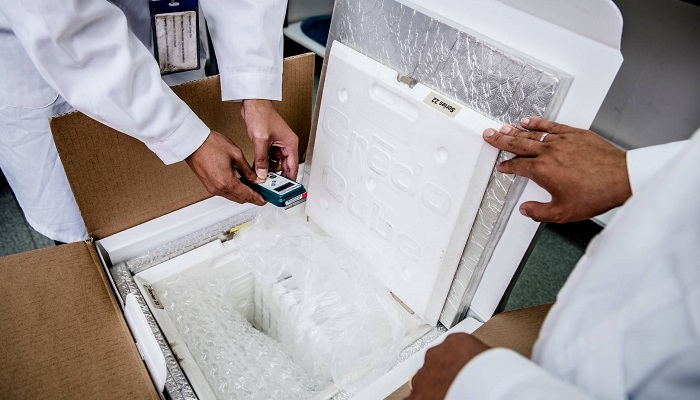
Conventional methods of transporting essential medications, such as dry ice and one-way styrofoam containers, are inadequate in maintaining the quality and effectiveness of products. When products are suspected of being exposed to temperature fluctuations, they are often discarded, leading to potential shortages for patients. It’s time to embrace innovative temperature-controlled solutions and real-time data monitoring for pharmaceutical logistics.

Within the pharmaceutical sector, failures in maintaining the cold supply chain lead to an estimated annual loss of $35 billion, with many of these losses attributed to logistical shortcomings. Temperature-controlled solutions are designed to endure harsh external conditions and uphold the specific temperature requirements of various products. These solutions encompass refrigeration, deep freezing, and ambient storage capabilities, facilitated by advanced cooling systems and insulation.

Advancements in technology now make real-time data monitoring feasible. By integrating sensors and advanced tracking technologies into temperature-controlled containers, companies can oversee crucial operational factors like temperature, humidity, and other vital indicators. Continuous monitoring allows for the swift identification of deviations from optimal conditions, enabling prompt preventive measures. This not only increases transparency and accountability but also enhances the entire transportation process.

Even with well-executed shipping strategies, the risk of temperature deviations remains. A more proactive approach involves combining simulation data (S data) with real-time operational data (O data).

S data is instrumental in predicting and preventing potential issues beforehand, facilitating proactive problem-solving. By anticipating disruptions, determining optimal shipping routes, and preemptively addressing transit challenges, simulation data safeguards the integrity of pharmaceutical goods. Conversely, real-time O data offers immediate insights into ongoing shipment status, enabling timely interventions when problems arise.

However, the potential of data extends beyond simulations and real-time monitoring. As the impact of hot weather intensifies, innovative solutions are essential for increased resilience and risk reduction. Collecting data directly from patients creates a powerful feedback loop, providing valuable insights into product performance. Equipped with this knowledge, pharmaceutical companies can optimize their supply chains, fine-tune processes to navigate hot weather challenges, and enhance medicine delivery.

Ultimately, the strength of data lies in its capacity to drive continuous improvement across the entire supply chain and enhance the patient experience. Through temperature-controlled solutions and leveraging real-time data monitoring, the industry can establish a robust ecosystem capable of navigating scorching summers and unforeseen disruptions.


Latest stories

Related stories

BeOne Signs $2B Trispecific Antibody Deal with Huahui Health

BeOne Medicines has entered into a high-value agreement with...

Quantum Machine Learning in Pharma Research Growth

The convergence of artificial intelligence and quantum processing is opening new avenues for rapid discovery and innovation within the life sciences. By utilizing advanced mathematical models that operate across multi-dimensional datasets, researchers can now identify complex biological patterns and predict molecular behaviors with a speed that surpasses traditional computational methods. This transformation is accelerating the development of novel therapies and providing deeper insights into disease mechanisms, fundamentally altering the trajectory of pharmaceutical research and development.

Quantum Sensors Enabling Advanced Drug Diagnostics

The landscape of medical diagnostics is being reshaped by the introduction of sensing technologies that operate with atomic-level sensitivity. By providing high-fidelity measurements and real-time data, these tools allow for the detection of subtle biological changes and chemical markers that were previously invisible to conventional equipment. This advancement is enhancing the precision of drug testing and clinical monitoring, leading to earlier disease detection and more effective therapeutic interventions across the global healthcare spectrum.

Quantum Computing Optimizing Pharma Supply Chains

The global distribution of pharmaceutical products is facing unprecedented challenges that demand a new level of logistical precision and resilience. By utilizing advanced analytical models, companies can now navigate complex international networks with greater efficiency, ensuring that temperature-sensitive medicines and life-saving therapies reach their destinations without delay. This evolution toward a more intelligent and responsive supply chain is critical for maintaining public health and responding effectively to emerging medical needs on a global scale.

Subscribe

- Never miss a story with notifications

- Gain full access to our premium content

- Browse free from any location or device.

Media Packs

Expand Your Reach With Our Customized Solutions Empowering Your Campaigns To Maximize Your Reach & Drive Real Results!

โ€“ Access theMedia Pack Now

โ€“ Book a Conference Call

โ€“ Leave Message for Us to Get Back

Translate ยป