













Close
CDMO Safety Testing 2026
Novotech

A Biosimilars Pilot Program Is In The Offering By The FDA

Note* - All images used are for editorial and illustrative purposes only and may not originate from the original news provider or associated company.

Subscribe

- Never miss a story with notifications

- Gain full access to our premium content

- Browse free from any location or device.

Media Packs

Expand Your Reach With Our Customized Solutions Empowering Your Campaigns To Maximize Your Reach & Drive Real Results!

โ€“ Access the Media Pack Now

โ€“ Book a Conference Call

โ€“ Leave Message for Us to Get Back

Related stories

Quantum Simulation Improving Molecular Drug Design

Advancements in quantum mechanical modeling are revolutionizing the way pharmaceutical scientists engineer new therapeutic agents. By providing a high-fidelity simulation of electronic structures and molecular dynamics, these tools enable the precise design of compounds tailored to specific biological targets. This transition from traditional experimental screening to digital molecular architecture is accelerating the development of highly potent and selective medicines, fundamentally changing the landscape of pharmaceutical innovation and computational chemistry.

Quantum Algorithms Transforming Pharma Data Analysis

The pharmaceutical industry is entering a new era of data-driven discovery where traditional analytical methods are being augmented by quantum-enhanced logic. By utilizing specialized mathematical frameworks, researchers can now process massive, high-dimensional datasets with a speed and depth that classical systems cannot match. This transformation is streamlining clinical workflows, optimizing drug-to-patient matching, and revealing hidden patterns within biological data, paving the way for more efficient research and faster therapeutic breakthroughs.

Quantum Computing Accelerating Drug Discovery Models

Integrating quantum mechanics into pharmaceutical research marks a paradigm shift in how scientists identify and develop therapeutic compounds. By leveraging the principles of superposition and entanglement, researchers can simulate molecular interactions with unprecedented accuracy, bypassing the limitations of traditional binary computation. This evolution promises to drastically reduce the time and capital required to bring life-saving drugs to market while opening new doors for treating complex diseases that have long remained elusive.
- Advertisement -

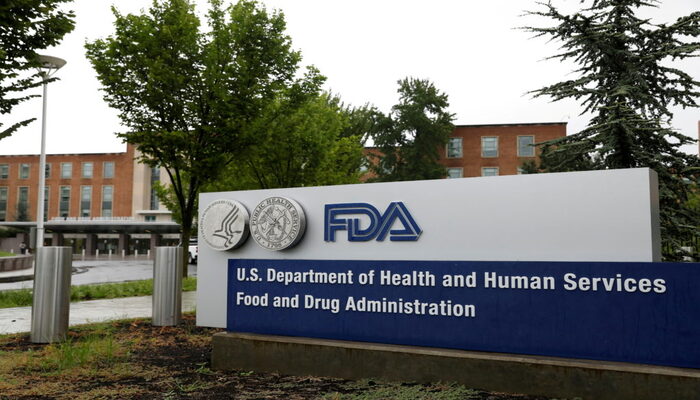
The FDA has gone on to release the Biosimilar User Fee Amendments III Regulatory Science Pilot Program, called the Research Roadmap, to give out more information on the biosimilar regulatory science research pilot program. The agency has gone on to open a public docket that collects feedback, as per a press release.

The regulatory science pilot programme helps in the development of effective and secure biosimilars as well as interchangeable biosimilars for patients by supporting the FDA’s review of biosimilar submissions. There will be a regulatory science programme that will be piloted by the FDA in order to facilitate interchangeable biological product development as well as biosimilars, as mentioned in the BsUFA reauthorization letter of commitment for fiscal years ranging from 2023 to 2027.

The regulatory research pilot programme pinpoints the knowledge gaps and directs research in order to facilitate biosimilar development. The regulatory research pilot programme has two goals, also known as demonstration projects- the first is advancing the interchangeable products development and the second is enhancing the efficiency of biosimilar product development.

On the roadmap, the research areas that are stressed here may impact science-based recommendation as well as regulatory decision making. To be more exact, the research aims at-

  • Increasing the capabilities as well as accuracy of analytical- both structural and functional as well as chemistry, manufacturing and also controls characterization.
  • Developing certain alternatives in order to reduce the study size that involves human subjects.

The research team, which happens to be both internal as well as external to the FDA must make use of this roadmap so as to guide research proposals, partnerships, and any other efforts as they look to have BsUFA III research funding opportunities. The roadmap also includes data on research project deliverable dates and the methods to consider when it comes to research conducted as per the pilot project.

Overall, the entire objective of the pilot programme is to make sure that the efficiency and predictability of biosimilar development are enhanced, which further helps in reducing both the cost and time for development. This would help in increasing the access and availability to the much-required biological treatment option for the patients.


Latest stories

Related stories

Quantum Simulation Improving Molecular Drug Design

Advancements in quantum mechanical modeling are revolutionizing the way pharmaceutical scientists engineer new therapeutic agents. By providing a high-fidelity simulation of electronic structures and molecular dynamics, these tools enable the precise design of compounds tailored to specific biological targets. This transition from traditional experimental screening to digital molecular architecture is accelerating the development of highly potent and selective medicines, fundamentally changing the landscape of pharmaceutical innovation and computational chemistry.

Quantum Algorithms Transforming Pharma Data Analysis

The pharmaceutical industry is entering a new era of data-driven discovery where traditional analytical methods are being augmented by quantum-enhanced logic. By utilizing specialized mathematical frameworks, researchers can now process massive, high-dimensional datasets with a speed and depth that classical systems cannot match. This transformation is streamlining clinical workflows, optimizing drug-to-patient matching, and revealing hidden patterns within biological data, paving the way for more efficient research and faster therapeutic breakthroughs.

Quantum Computing Accelerating Drug Discovery Models

Integrating quantum mechanics into pharmaceutical research marks a paradigm shift in how scientists identify and develop therapeutic compounds. By leveraging the principles of superposition and entanglement, researchers can simulate molecular interactions with unprecedented accuracy, bypassing the limitations of traditional binary computation. This evolution promises to drastically reduce the time and capital required to bring life-saving drugs to market while opening new doors for treating complex diseases that have long remained elusive.

Glass vs Polymer: Choosing the Right Material for Parenteral Packaging

In the pharmaceutical industry, material selection plays a critical...

Subscribe

- Never miss a story with notifications

- Gain full access to our premium content

- Browse free from any location or device.

Media Packs

Expand Your Reach With Our Customized Solutions Empowering Your Campaigns To Maximize Your Reach & Drive Real Results!

โ€“ Access theMedia Pack Now

โ€“ Book a Conference Call

โ€“ Leave Message for Us to Get Back

Translate ยป