







Over the past two decades, the global pharmaceutical industry’s geography has changed profoundly: India’s pharmaceutical sector has evolved from a low-cost manufacturing base into a globally competitive industry capable of supplying regulated markets. China remains structurally critical, above all for APIs and key starting materials. South Korea is moving rapidly up the pharmaceutical value chain, from contract manufacturing to innovation, one of the leading locations for large-scale biologics contract manufacturing and biosimilars. Singapore is a global hub for multinational production and distribution, and Japan an innovative powerhouse. Emerging markets and niche specialisations drive growth in many other Asian countries such as Taiwan, Vietnam, Malaysia.
As pharmaceutical manufacturers across Asia move from regional producers to global commercial players, internationalization is part of the natural evolution for many of them with Europe remaining one of the most attractive commercial opportunities. At the same time, the rules governing international expansion have also changed. The EU’s regulatory framework has become increasingly stringent, making it one of the most demanding markets to enter.
Success increasingly depends not only on regulatory approval, but on building a holistic European operating model encompassing GDP-compliant logistics, quality management, and local regulatory expertise.
Changing Regulatory Circumstances
The transformation, which in recent years has been driven by the COVID-19 pandemic, is currently being further accelerated through new regulation. With formal adoption expected in 2026, the EU Pharma Package will replace the current directive and regulation, with the main provisions expected to apply from around 2028. While the new legislation does not create a totally separate rulebook for non-European pharmaceutical manufacturers, it applies the same expectations to everyone, which in practice hits those without an established European operating model hardest. The focus is on diversifying supply chains for critical medicines, joint procurement, strengthening EU manufacturing capacity, and introducing mandatory resilience criteria in public procurement.
Together with the Critical Medicines Act (CMA), the EU’s “Buy European” approach solidifies. International manufacturers must therefore demonstrate a tangible European operational footprint—for example, EU-based warehousing, EU batch release and EU-based inventory management. This can transform a European platform from a compliance cost into a competitive advantage in public tenders.
For Indian companies specifically, the EU-India Free Trade Agreement (India-EU FTA)— signed in January 2026, yet to be ratified—represents an important opportunity. Once enforced, the relevance for Indian pharmaceutical exporters is not in tariffs on finished pharmaceutical products, as most medicines already enter the EU duty-free. Instead, its importance lies in greater predictability, clear rules of origin, more efficient customs procedures, lower duties on intermediates, excipients and medical devices, as well as closer regulatory cooperation.
The Race is Off: From Time-to-Market to Access
For many international pharmaceutical manufacturers, Europe is no longer a race for time to market but a challenge of access to market. What is more, market access has become an end-to-end capability rather than a single regulatory event. It requires a site covered by a wholesale distribution authorisation and operating to GDP, robust quality management systems, and end-to-end traceability. In other words, operational readiness has become as critical to success as regulatory readiness.
The challenge lies in setting up an entire EU-compliant operating model as a manufacturer cannot simply ship products into Europe and distribute them commercially. It needs both legal and operational capabilities, starting with the establishment of an EU-based legal entity, designated importer or marketing authorization holder. Furthermore, a GDP-compliant certified warehouse as well as a designated Responsible Person is needed. One of the most time-consuming work streams is often the setting-up of a compliant quality management and documentation system. In our experience, building the full set-up typically takes 12–18 months and culminates in an official GDP inspection.
Leveraging Partnerships for Growth
Instead of building infrastructure from scratch, manufacturers can leverage an existing GDP-compliant platform for warehousing, distribution and more: Local full-service partners specializing in pharma logistics and distribution such as the pfenning group can reduce implementation from well over a year to a matter of a few months.
When selecting respective partners, it is important they have a manufacturing and import authorisation (MIA, § 13, 72 AMG; Art. 40 Directive 2001/83/EC). Within the scope of this authorisation, pfenning can act as the importing site for medicinal products that hold a valid EU or national marketing authorisation, including the required GMP documentation under § 72a AMG and QP batch certification.
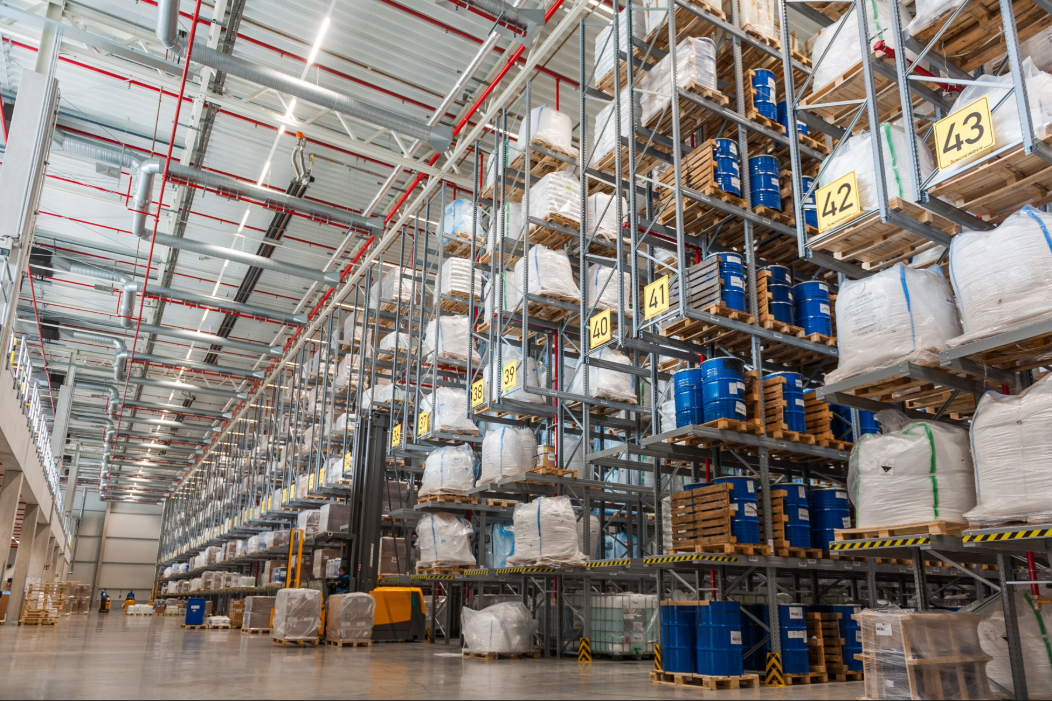
Beyond logistics, pfenning provides the regulatory infrastructure that enables non-EU pharmaceutical manufacturers to bring their products to the European market. An important prerequisite is the Wholesale Distribution Authorisation pursuant to Section 52a of the German Medicinal Products Act (AMG), which allows pfenning to act as the wholesale distributor for a non-EU client, provided the products hold a valid EU marketing authorisation. As the authorisation holder must be established in the EU, this is typically where pharmaceutical exporters need a European structure – and where pfenning can point them in the right direction.
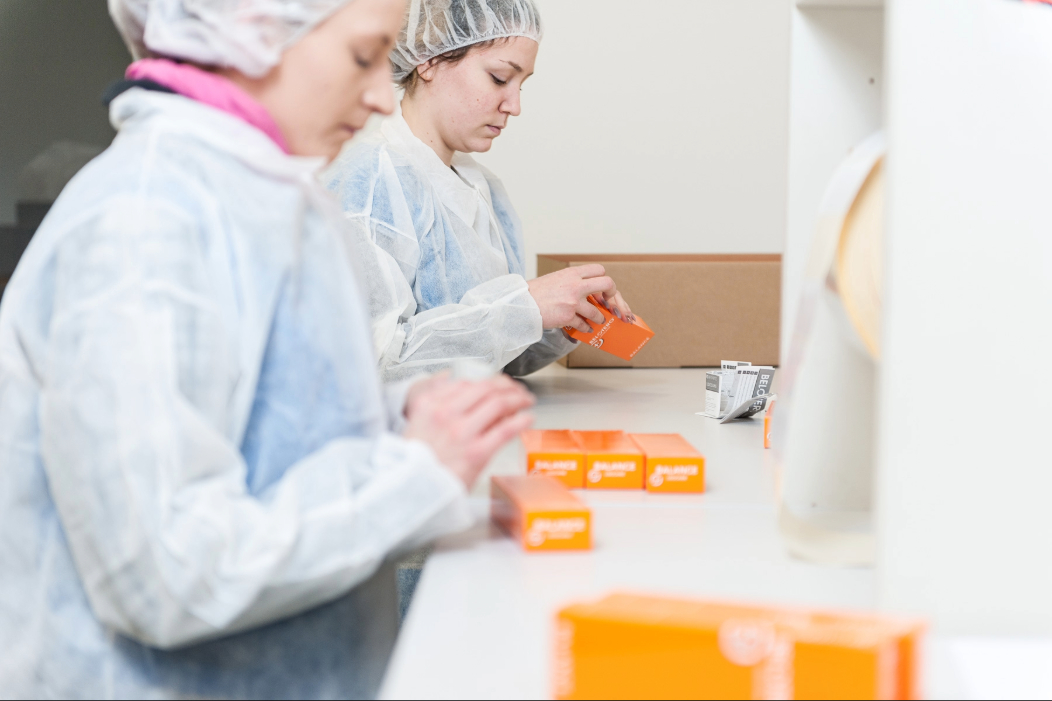
Furthermore, as a 5PL-provider pfenning has a Manufacturing Authorisation, which permits the company to open and repackage medicines thus greatly streamlining the supply chain. Finally, pfenning complements its logistics and regulatory offering with administrative support services such as accounting, local-language customer service, packaging design and print.
Start-Up-Classes and Scaling up
pfenning logistics has a proven record when it comes to establishing international companies in the heart of Europe. One recent example is Botanic Healthcare, a globally recognized leader in herbal extracts originating from India. Together with pfenning, Botanic Healthcare is growing its presence in the EU market.
compliant operating model. Leveraging strong partnerships strategically can be key for
success, especially in the early stages. (CHR_9036, Copyright pfenning group)
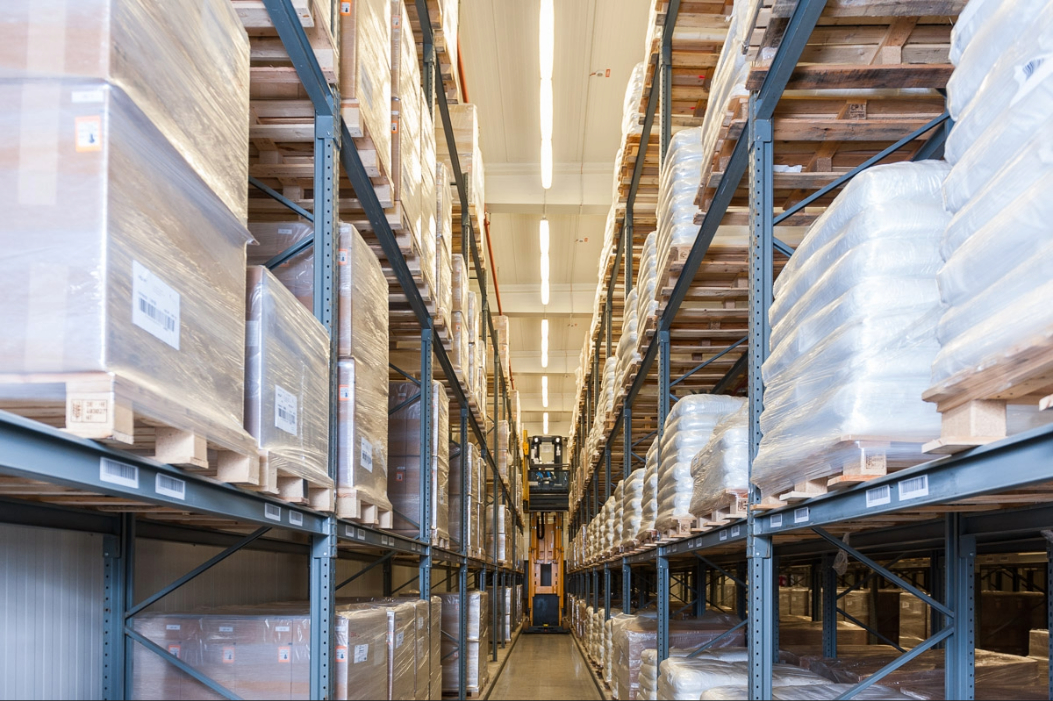
For smaller and emerging pharmaceutical companies such as Botanic Healthcare, establishing their own European infrastructure can tie up significant resources before meaningful sales volumes have even materialised. This is where an established partner can substantially lower the barriers to market entry: pfenning makes available a certified and fully integrated platform covering import authorisation and import handling, warehousing and order picking, manufacturing activities such as the adaptation of secondary packaging, and distribution through to the end customer. Administrative services, including customer service and order-to-cash processes, can also be integrated into the operating model.
For pfenning, supporting companies at this early stage is a strategic commitment to long-term strategic partnerships. As a company, pfenning is willing to invest capability before scale even exists, creating the foundation for a relationship built on shared development and growth over time.
The Takeaway: Growth Needs Time – or the Right Partner
European regulation is becoming increasingly intertwined with supply-chain operations, making operational regulatory readiness a strategic advantage rather than merely a compliance obligation. Yet Europe remains one of the world’s most demanding markets, and establishing a compliant infrastructure can be a highly complex undertaking. Partnering up with full-service 5PL providers such as pfenning logistics means companies can leverage existing certifications and processes to build local representation and reputation fast, thus providing a solid foundation for timely success and continued growth.
Author: Sebastian Wondrak, Director Sales Pharma & Healthcare + Chemicals