









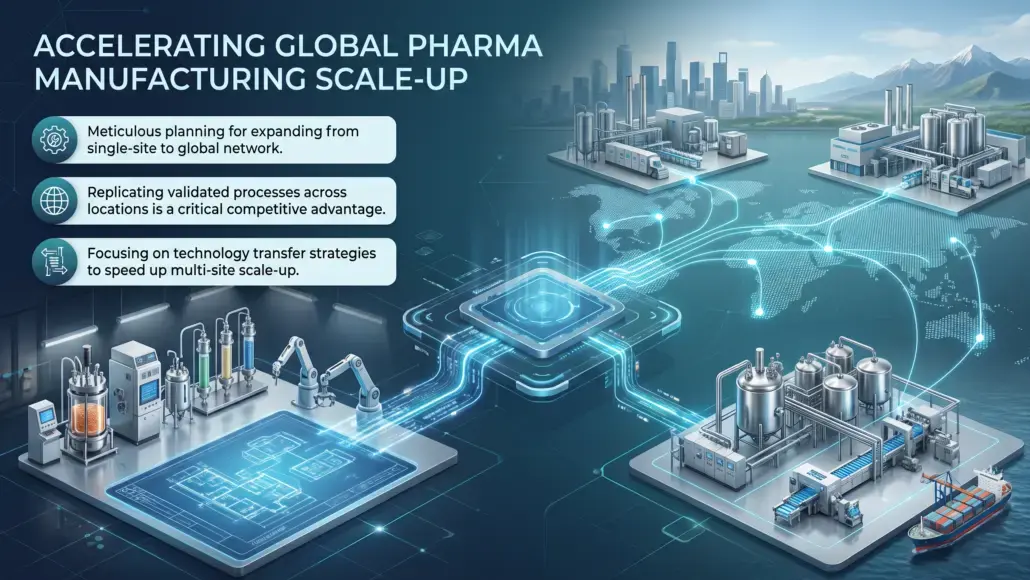
The expansion of pharmaceutical manufacturing capabilities from a single development site to a network of global production facilities is a complex undertaking that requires meticulous planning and coordination. As the demand for new therapies increases, the ability to replicate a validated process across different geographic locations becomes a critical competitive advantage. Organizations are increasingly focusing on technology transfer strategies accelerating multi-site pharmaceutical scale-up to ensure that the transition from small-scale clinical batches to high-volume commercial production is both efficient and compliant. This process involves the movement of not just physical materials and equipment specifications, but also a deep understanding of the underlying science and the specific nuances of the manufacturing environment. When successful, this knowledge exchange allows for the rapid deployment of essential medicines, reducing the time to market and ensuring that patients have access to treatments regardless of their location.
Standardizing Data Packages for Global Site Readiness
A fundamental component of a successful transfer is the creation of a comprehensive and standardized data package. This package must include detailed descriptions of the manufacturing process, critical quality attributes, and the range of acceptable operating parameters. By establishing a uniform format for this information, companies can ensure that the receiving site has all the necessary details to begin production without extensive troubleshooting. This standardization is a core element of technology transfer strategies accelerating multi-site pharmaceutical scale-up, as it minimizes the risk of interpretation errors and ensures that the process is executed consistently across the network. In addition, digital platforms are now being used to manage these data packages, providing a single source of truth that is accessible to all stakeholders involved in the transfer. This digital accessibility eliminates the delays associated with physical document transfers and ensures that everyone is working from the most recent version of the process instructions.
The use of structured data also facilitates more effective communication between the sending and receiving units. When data is presented in a consistent manner, it becomes easier to identify potential gaps in equipment capabilities or facility infrastructure at the new site. This proactive identification allows for the necessary upgrades or modifications to be made well in advance of the first production run. Additionally, standardized documentation streamlines the regulatory filing process, as the information required for site-specific approvals is already organized and validated. By investing in the digital infrastructure to support data standardization, pharmaceutical organizations can significantly reduce the lead time required for multi-site expansions, allowing them to respond more quickly to changes in global demand.
Risk Management Frameworks for Knowledge Transfer
Knowledge transfer is perhaps the most challenging aspect of any scale-up operation, as it involves the communication of tacit knowledge that may not be fully captured in written SOPs. To manage this complexity, firms are adopting formal risk management frameworks that identify potential points of failure during the transfer process. These frameworks use tools such as Failure Mode and Effects Analysis to prioritize risks based on their likelihood and impact on product quality. By focusing resources on the most critical steps, teams can develop targeted mitigation strategies that ensure a smooth transition. This disciplined approach to risk is a hallmark of technology transfer strategies accelerating multi-site pharmaceutical scale-up, providing a structured way to address the uncertainties inherent in moving a process to a new environment.
One effective strategy for mitigating knowledge-related risks is the implementation of personnel exchange programs. Sending experienced operators and scientists from the development site to the receiving site allows for hands-on training and the direct observation of the process in action. Conversely, bringing the staff from the receiving site to the original facility for pre-transfer training ensures that they are familiar with the equipment and the specific behaviors of the materials. This human element is essential for bridging the gap between theoretical process descriptions and practical execution. When combined with rigorous risk assessments, these programs create a resilient transfer process that is capable of handling the unexpected challenges that often arise during the initial stages of scale-up.
Analytical Method Validation Across Diverse Facilities
Ensuring that analytical methods are consistent across all manufacturing sites is vital for maintaining product quality and regulatory compliance. The transfer of analytical procedures involves not just the movement of the methods themselves, but also the verification that the receiving laboratory has the equipment and expertise to execute them accurately. Differences in instrumentation, reagent sources, and laboratory environmental conditions can all impact the results of a test. Therefore, a comprehensive validation protocol must be established to prove that the results obtained at the new site are equivalent to those from the original facility. This focus on analytical consistency is integrated into technology transfer strategies accelerating multi-site pharmaceutical scale-up, as it provides the evidence needed to confirm that the product remains within its validated specifications throughout the expansion. By maintaining this level of precision, companies can avoid the delays associated with analytical discrepancies.
The validation process often involves inter-laboratory comparison studies, where identical samples are tested at multiple sites and the results are statistically analyzed for equivalence. If significant differences are found, the teams must work together to identify the root cause, which might involve recalibrating equipment or refining the specific steps of the procedure. In addition, the adoption of harmonized laboratory information management systems allows for the real-time sharing of analytical data, facilitating faster troubleshooting and collaborative problem-solving. This real-time visibility into lab results allows teams to address deviations immediately, preventing them from impacting the overall timeline of the transfer. By prioritizing the standardization of analytical methods, pharmaceutical firms can ensure that their quality control measures are consistent across the globe, providing a high level of assurance to both regulators and patients.
Strategic Partnerships with Contract Development Organizations
Many pharmaceutical organizations choose to utilize the expertise and infrastructure of contract development and manufacturing organizations to support their scale-up efforts. These partnerships allow firms to access specialized technologies and additional capacity without the need for significant capital investment. However, transferring a process to an external partner adds another layer of complexity to the operation. Successful technology transfer strategies accelerating multi-site pharmaceutical scale-up in this context require a high degree of transparency and a strong cultural alignment between the two organizations. Detailed contracts and service-level agreements should clearly define the responsibilities of each party and the specific milestones that must be met throughout the transfer process.
Effective collaboration with a CDMO depends on the early involvement of the partner in the development process. By bringing the contract manufacturer into the conversation during the clinical stages, sponsors can ensure that the process is designed for manufacture at the partner’s specific facilities. This “design for transfer” mindset minimizes the need for significant process changes during the scale-up phase, which can trigger additional regulatory requirements and delays. Regular joint management meetings and shared digital workspaces further enhance the partnership, allowing for the rapid exchange of information and the collective management of risks. When managed effectively, these strategic alliances provide a flexible and scalable way to expand production capabilities, allowing pharmaceutical companies to focus on their core competencies in drug discovery and clinical development.
Optimizing Equipment Equivalency and Process Characterization
A common hurdle in multi-site expansion is the variance in equipment between different manufacturing facilities. Even when the same type of machinery is used, differences in manufacturer, model, or age can impact the performance of the process. To address this, engineers must conduct detailed equipment equivalency studies to understand how these differences will affect critical process parameters. This might involve the use of computational fluid dynamics to model the mixing behavior in different types of vessels or the use of pilot-scale trials to test the impact of different heat transfer rates. This technical rigor is a central part of technology transfer strategies accelerating multi-site pharmaceutical scale-up, ensuring that the process is comprehensive enough to handle the variations in the manufacturing environment.
Beyond equipment, a thorough characterization of the process is necessary to understand the design space within which the product can be safely produced. By identifying the sensitivity of the process to changes in raw material properties or environmental conditions, manufacturers can build in the necessary controls to manage these variables. This knowledge is especially important when scaling up to larger volumes, as the physical forces acting on the materials can change in non-linear ways. Investing in advanced process modeling tools allows for the prediction of these effects, reducing the need for expensive and time-consuming trial-and-error experiments. The resulting deep process understanding provides a solid foundation for a successful transfer, enabling the organization to replicate its successes across multiple sites with confidence and precision.