










The velocity of clinical research is often the deciding factor in whether a life-saving therapy reaches patients in time to make a meaningful difference in their lives. In the modern pharmaceutical landscape, characterized by intense competition and high patient expectations, the traditional approach of “sequential discovery” is rapidly being replaced by a more dynamic and integrated model of research and development. The industry has reached a strong consensus that efficient early strategies clinical progress is the most sustainable way to reduce the time-to-market for new drugs without compromising on safety or scientific rigor. These early strategies pharma companies employ are not just about doing things faster; they are about doing them smarter by building a solid operational and scientific foundation from the very beginning of the program. When a project is launched with a clear focus on efficient early strategies clinical progress, the entire development timeline becomes more predictable, more resilient, and ultimately more successful.
The Foundation of Early Strategies Pharma
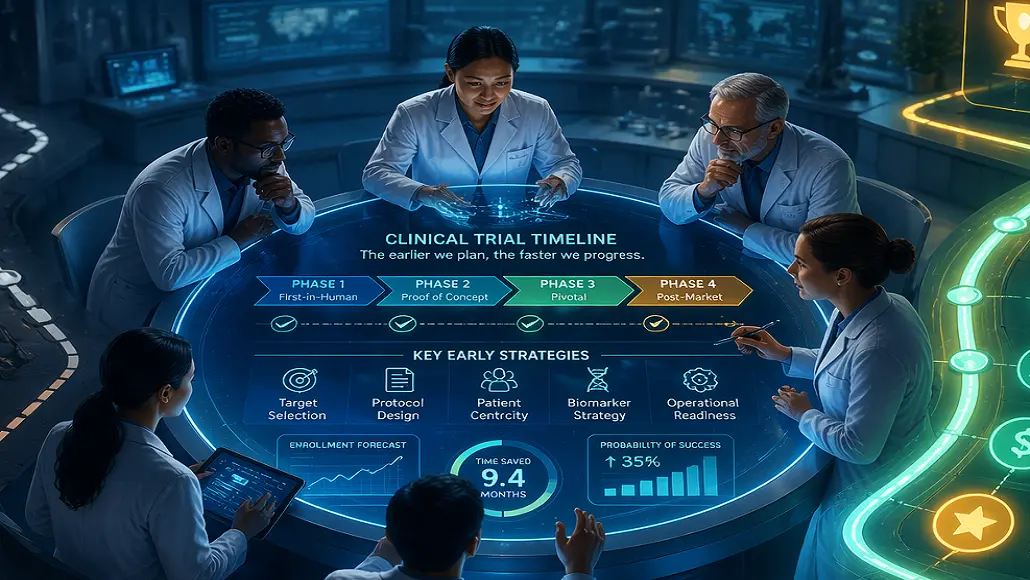
A successful clinical program is built on the quality and robustness of its earliest strategic decisions. These early strategies pharma experts develop involve a careful and delicate balancing of scientific rigor, complex regulatory requirements, and practical operational feasibility. This foundational work includes the selection of the most promising lead candidate from a pool of potential molecules, the identification of key biomarkers that can indicate early success, and the development of a comprehensive and forward-looking clinical development plan (CDP). By investing significant resources in efficient early strategies clinical progress during the preclinical and Phase I stages, sponsors can identify and mitigate potential obstacles before they become major and costly delays. This level of foresight is what separates the industry leaders from the laggards, as it allows for a seamless and efficient transition through the various stages of human testing.
Furthermore, the foundation of these strategies must be rooted in a deep understanding of the patient journey and the unmet medical needs within the target therapeutic area. This patient-centric approach ensures that the clinical program is not only scientifically sound but also practically relevant and appealing to the people it intends to help. By incorporating patient and physician feedback into the early strategies pharma framework, sponsors can design trials that are more likely to succeed in the real world. This alignment between scientific goals and patient needs is a key driver of efficient early strategies clinical progress, as it facilitates faster recruitment and higher engagement throughout the development process. A strong foundation also includes early consideration of the market access and reimbursement landscape, ensuring that the drug will be accessible to patients once approved.
Strengthening Trial Readiness for Immediate Impact
Trial readiness is a multi-dimensional and complex concept that encompasses everything from international regulatory approvals to site selection and global supply chain logistics. Achieving a high state of trial readiness is a central and non-negotiable component of efficient early strategies clinical progress. It requires a proactive and intensive approach to site engagement, ensuring that clinical investigators are fully trained, motivated, and that the necessary infrastructure and local laboratory services are in place before the first patient is even screened. When a program demonstrates superior trial readiness, it avoids the sluggish startup phases that often drain resources and dampen the momentum of a new project. This readiness is particularly critical in highly competitive therapeutic areas, such as oncology or rare diseases, where the ability to enroll patients quickly can provide a significant first-mover advantage and accelerate the entire lifecycle.
In addition to site-level readiness, organizational trial readiness involves having the internal systems and processes to handle large volumes of data and regulatory submissions. This includes the use of advanced electronic data capture (EDC) systems, interactive response technology (IRT) for patient randomization, and robust quality management systems. By making these operational investments part of the efficient early strategies clinical progress plan, sponsors can ensure that their teams are equipped to manage the trial with precision and speed. Trial readiness also extends to the clinical supply chain, where having a reliable and flexible manufacturing and distribution strategy for the investigational product is essential for preventing delays. When all these elements are synchronized, the program can move from one phase to the next with minimal friction, directly contributing to the overall clinical progress.
Reducing Risks through Strategic Foresight
One of the primary and most important goals of any pharmaceutical development program is the mitigation of risk across scientific, regulatory, and financial dimensions. Efficient early strategies clinical progress focus on identifying and addressing the “known unknowns” as early as possible in the development lifecycle. This includes everything from understanding complex toxicity profiles to ensuring manufacturing scalability for large-scale production. By using early strategies pharma tools such as translational modeling, in silico simulations, and adaptive trial designs, companies can gather critical safety and efficacy data much sooner than was possible in traditional models. This early data allows for the implementation of de-risking maneuvers, such as adjusting dose levels, refining inclusion criteria, or even pivoting the primary indication, which prevents the need for costly and time-consuming protocol amendments later in the process.
Strategic foresight also involves anticipating and preparing for potential changes in the regulatory landscape or the competitive environment. For example, if a competitor’s drug is expected to reach the market soon, an efficient early strategy might involve accelerating a specific trial or focusing on a unique patient subgroup to differentiate the new product. By incorporating this type of external intelligence into the efficient early strategies clinical progress framework, sponsors can ensure that their program remains relevant and competitive. This proactive risk management is a core component of pharma efficiency, as it minimizes the likelihood of “late-stage surprises” that can derail a program after years of work and millions of dollars of investment. The goal is to create a program that is both scientifically robust and strategically agile.
Improving Overall Development Timelines
The ultimate and most objective measure of success for any clinical strategy is the measurable impact it has on the overall development timelines. In a global industry where every day of delay can cost millions of dollars in lost revenue and, more importantly, delays patient access to needed treatments, efficiency is paramount. Efficient early strategies clinical progress work by intelligently compressing the time between clinical phases and maximizing the information gathered at each individual step. For example, by using “seamless” Phase I/II designs, where the study transitions directly from dose-escalation to efficacy-testing without a break, sponsors can bypass the traditional administrative delays and data analysis gaps. This integration of phases is a direct result of meticulous early-stage planning and is a hallmark of high-level pharma efficiency.
Furthermore, improving timelines requires a relentless focus on the “critical path” of the development program—the sequence of activities that determines the total duration of the project. Efficient early strategies clinical progress involve identifying and managing these critical activities with extreme precision. This might include parallelizing certain tasks, such as starting manufacturing scale-up while Phase II trials are still ongoing, or using innovative recruitment methods to reach enrollment targets months ahead of schedule. When these time-saving strategies are applied consistently across the entire program, the cumulative effect on the development timeline can be dramatic. This not only improves the internal rate of return for the sponsor but also ensures that life-saving innovations reach the global market as quickly as humanly and scientifically possible.
The Role of Collaborative Efficiency in Drug R&D
Modern drug development is a highly complex “team sport” that requires the seamless coordination of hundreds of internal and external stakeholders, often spread across different time zones and organizations. Collaborative efficiency is a key and often undervalued driver of efficient early strategies clinical progress. This involves creating a transparent, communicative, and highly synchronized environment where sponsors, contract research organizations (CROs), clinical sites, and academic partners are all perfectly aligned on the project’s strategic goals and operational timelines. When these partnerships are managed through early strategies pharma best practices, information flows more freely, and decisions are made more quickly and with higher confidence. This alignment ensures that every participant in the development chain is working toward the same objective: the safe and rapid advancement of the clinical program.
Collaborative efficiency also extends to the relationship with regulatory authorities. By engaging in open and frequent dialogue with health agencies like the FDA or EMA, sponsors can ensure that their efficient early strategies clinical progress are aligned with regulatory expectations. This collaborative approach can lead to faster protocol approvals and more streamlined reviews of clinical data. It also allows for the early identification of potential regulatory hurdles, which can then be addressed in the development plan. In a world where regulatory requirements are constantly evolving, these strong and collaborative relationships are essential for maintaining the momentum of a program and ensuring that it remains on track for eventual approval and market launch.
Enhancing Scalability and Execution
A strategy, no matter how brilliant, is only as good as its ultimate execution in the real world. To ensure that the benefits of efficient early strategies clinical progress are fully realized, companies must have the organizational and operational “muscle” to scale their activities rapidly as the program grows in size and complexity. This means having a robust and scalable quality management system, a flexible manufacturing strategy that can adapt to changing clinical needs, and a highly skilled team of clinical project managers. During the earliest phases of development, it is crucial to develop processes and assays that are fully scalable to the larger volumes and higher regulatory standards required for Phase III trials and eventual commercial production.
By addressing these operational and scalability challenges early in the process, sponsors can avoid the “manufacturing bottlenecks” or “data quality issues” that frequently stall clinical progress just as a drug is showing its greatest promise. Efficient early strategies clinical progress therefore include a heavy focus on CMC (Chemistry, Manufacturing, and Controls) and data integrity from day one. This proactive approach ensures that the program is always “ready for the next step,” whether that is a large pivotal trial or a global regulatory submission. This operational excellence is the foundation upon which scientific innovation is built, and it is a critical component of overall pharma efficiency in a demanding and fast-paced global market.
Conclusion: Accelerating Progress Without Compromise
Accelerating clinical progress does not mean cutting corners or sacrificing the quality of the scientific data; rather, it means optimizing every single aspect of the development process through intelligent planning, strategic foresight, and relentless execution. The widespread adoption of efficient early strategies clinical progress is a clear testament to the pharmaceutical industry’s commitment to continuous improvement and innovation. By focusing on trial readiness, proactive risk reduction, and the compression of development timelines, companies can bring new and life-changing therapies to market with unprecedented speed and precision.
As we look forward to the future of medicine, the integration of new technologies, more collaborative research models, and even more data-driven strategies will only further enhance our ability to deliver on the promise of modern science. Those organizations and leaders who master the art of early strategy will not only lead the industry in pharma efficiency but will also make the greatest possible contribution to global human health and wellbeing. The journey from a discovery in the lab to a cure in the clinic is a long and arduous one, but with the right early strategies in place, we can make that journey faster, safer, and more successful for everyone involved. The ultimate beneficiary of these efforts is the patient, for whom a faster clinical progress can mean the difference between a life of illness and a future of health.