










The pharmaceutical industry has undergone a radical transformation in how it perceives and manages the risks associated with cross-contamination. For decades, the industry relied on relatively simplistic benchmarks for equipment cleanliness, such as the visual clean criterion or the traditional “one-thousandth of the lowest clinical dose.” While these methods provided a baseline for safety, they lacked the scientific granularity required for modern, highly potent compounds. Today, the focus has shifted toward a more sophisticated methodology: contamination control with toxicological reference data. This transition is not merely a trend but a regulatory imperative driven by the need for deeper patient protection and more robust manufacturing processes.
In the current landscape of multi-product facilities, where a single production line may handle a diverse array of therapeutic agents ranging from biologics to high-potency small molecules, the margin for error has narrowed significantly. The primary challenge lies in determining exactly how much residue of one product can safely remain on a surface before it poses a risk to the next patient. This is where the importance of specialized platforms providing toxicological data becomes evident. Relying on manual literature searches or outdated internal databases is no longer sufficient. Modern pharmaceutical manufacturing compliance demands that these safety thresholds be derived from the most current, peer-reviewed, and expert-evaluated toxicological information available globally.
Evolution of Cleaning Validation and the HBEL Framework
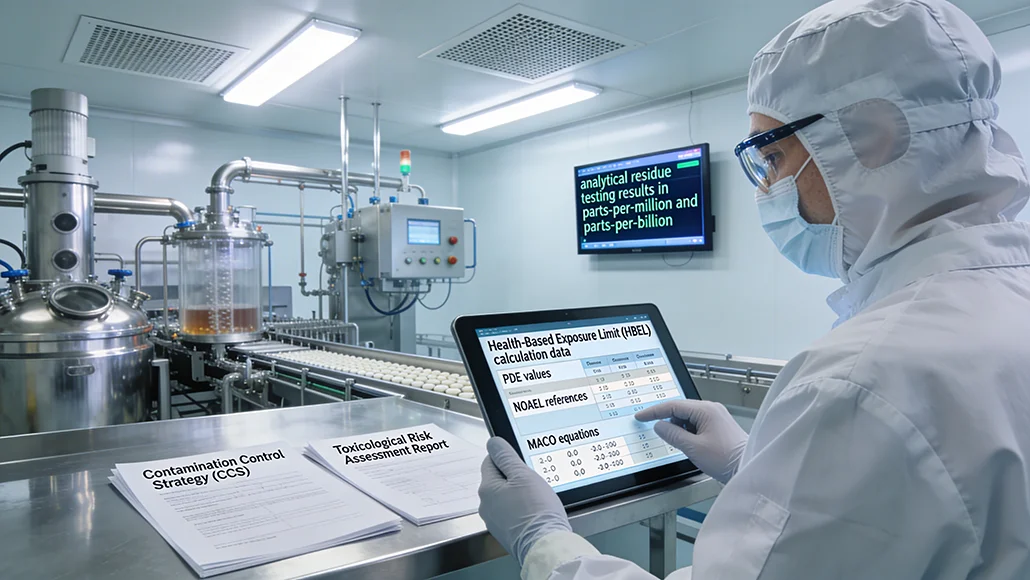
The move toward science-based limits reached a critical milestone with the introduction of Health-Based Exposure Limits (HBEL). Unlike legacy methods, the HBEL calculation is a substance-specific value that defines a dose unlikely to cause adverse effects in a human, even if exposed daily for a lifetime. This shift has necessitated a much closer collaboration between production engineers and toxicologists. The foundational data for these calculations specifically NOAEL and PDE limits must be extracted from a vast sea of clinical and non-clinical data.
A significant hurdle for many organizations is the sheer volume of data required to perform an accurate toxicological risk assessment. Without access to a centralized platform that aggregates and verifies this data, quality teams are often left to navigate complex monographs and conflicting study results. This manual process is not only time-consuming but also prone to human error, which can lead to either overly conservative limits that hinder production efficiency or, more dangerously, limits that do not fully account for specific toxicological endpoints like genotoxicity or reproductive harm. Therefore, utilizing professional platforms for contamination control with toxicological reference data has become the gold standard for ensuring that every cleaning limit is defensible and scientifically rigorous.
The Mathematical Rigor of HBEL Calculation
When diving into the mechanics of safety limit determination, the process typically begins with identifying the No-Observed-Adverse-Effect Level (NOAEL) from the most relevant animal or human studies. To move from this experimental value to a Permitted Daily Exposure (PDE), toxicologists must apply a series of adjustment factors. These factors often labeled F1 through F5 account for various uncertainties, such as inter-species differences, individual variability within the human population, the duration of the studies, and the severity of the observed effects.
Performing an HBEL calculation requires an expert understanding of which studies are most representative of the compound’s risk profile. Platforms that provide ready-to-use toxicological reports or verified datasets significantly streamline this process. They allow manufacturers to skip the arduous task of data gathering and move straight to the application of the data within their specific manufacturing context. By integrating these high-quality inputs into the cleaning validation GMP workflow, companies can ensure that their Maximum Allowable Carryover (MACO) calculations are based on the most accurate biological reality of the substances they handle.
Integrating Data into the Contamination Control Strategy (CCS)
A modern manufacturing facility does not view cleaning as an isolated event; rather, it is viewed as a single component of a holistic contamination control strategy. This strategy, as emphasized by recent updates to EudraLex Annex 1, requires a comprehensive overview of all technical and organizational measures designed to prevent contamination. Contamination control with toxicological reference data serves as the intellectual heart of this strategy. It provides the empirical evidence required to justify the design of cleaning cycles, the selection of detergents, and the frequency of monitoring.
Without a centralized source of toxicological truth, a contamination control strategy remains reactive rather than proactive. If a facility relies on disparate data sources, there is a risk of inconsistency between different product lines or manufacturing sites. By utilizing a dedicated platform, a global pharmaceutical company can ensure that a PDE value for a specific API is identical across its entire network, whether the product is manufactured in Europe, North America, or Asia. This level of consistency is a hallmark of superior quality risk management pharma and is highly regarded by regulatory inspectors during facility audits.
The Role of Quality Risk Management in Shared Facilities
In multi-product environments, the complexity of managing cross-contamination risks grows exponentially with each new product introduced. Quality risk management pharma principles dictate that the level of effort and documentation should be commensurate with the level of risk. Toxicological data allows for a risk-based prioritization of cleaning efforts. For instance, compounds with a very low PDE indicating high potency or high toxicity are identified as high-risk contaminants that require more intensive cleaning validation, more sensitive analytical methods, and perhaps even dedicated equipment.
Conversely, for substances with a high PDE and low toxicity, the cleaning requirements may be less stringent, allowing for faster turnover times and increased facility throughput. This strategic allocation of resources is only possible when the underlying toxicological risk assessment is accurate and accessible. When quality teams can quickly pull a verified toxicological report from a reliable platform, they can make informed decisions about product sequencing and equipment sharing without compromising patient safety. This agility is vital in a competitive market where “speed to patient” is a key performance indicator.
Navigating the Nuances of NOAEL and PDE Limits
It is important to recognize that NOAEL and PDE limits are not static numbers. As new clinical data emerges or as compounds are used in different patient populations (such as moving from adult to pediatric indications), the perceived risk profile of a substance can change. This is another area where professional data platforms provide an advantage over static internal documents. High-quality platforms are frequently updated to reflect the latest toxicological research, ensuring that a facility’s cleaning validation GMP remains current with the latest scientific understanding.
Furthermore, the determination of these limits often involves evaluating “lead effects” the specific adverse effect that occurs at the lowest dose. This could be anything from liver enzyme changes to more serious concerns like carcinogenicity. A professional toxicological report from a reputable source will detail these lead effects, providing the rationale for the chosen uncertainty factors. This level of detail is crucial when defending a cleaning limit to a regulator; being able to show the full lineage of the data used in contamination control with toxicological reference data builds immediate credibility and demonstrates a high level of technical competence.
Achieving Pharmaceutical Manufacturing Compliance
The regulatory landscape is increasingly unforgiving of companies that use arbitrary safety factors. Regulatory bodies like the FDA and EMA expect a clear, documented link between a drug’s toxicity and the limits used in the cleaning validation process. Pharmaceutical manufacturing compliance is now intrinsically tied to how well a company manages its toxicological data. During an inspection, the question is no longer “is it clean?” but rather “how do you know this level of cleanliness is safe for the next patient based on the toxicological profile of the previous product?”
The use of external platforms to source this data actually enhances compliance by providing an independent, expert-validated foundation for cleaning protocols. It eliminates the conflict of interest that can sometimes arise when internal teams are pressured to set higher limits to simplify production. By using standardized exposure limit standards provided by third-party experts, manufacturers can point to an objective scientific basis for their operations. This transparency not only satisfies regulators but also protects the organization from the catastrophic legal and reputational consequences of a cross-contamination incident.
Enhancing Cleaning Validation GMP through Data Integrity
Data integrity is a pillar of the pharmaceutical industry, and it applies as much to cleaning validation as it does to laboratory testing or batch records. When a company uses contamination control with toxicological reference data, the integrity of that data must be beyond reproach. This is why the selection of a data platform is so critical. The platform must offer traceable, well-referenced, and peer-reviewed information. If the source of a PDE calculation is a “black box” with no clear methodology, it will not stand up to regulatory scrutiny.
Integrating these digital data sources into the cleaning validation GMP framework also facilitates better documentation practices. Many platforms allow for the direct export of reports into a facility’s Quality Management System (QMS), creating a seamless digital thread from the toxicological research to the final cleaning validation report. This reduces the risk of transcription errors and ensures that the most recent version of a PDE is always used in calculations. In an era where digital transformation is sweeping through the industry, the modernization of toxicological data management is a key step toward the “Factory of the Future.”
The Global Harmonization of Exposure Limit Standards
As the pharmaceutical supply chain becomes more globalized, there is a growing movement toward the harmonization of exposure limit standards. International organizations and regulatory frameworks are increasingly aligning on the methodology for setting HBELs. This harmonization makes it even more important for companies to use data platforms that reflect international consensus. Whether a product is being sold in the US, the EU, or Japan, the toxicological data supporting its manufacture should be consistent and based on globally recognized principles.
For global companies, this harmonization simplifies the management of their international manufacturing network. They can apply the same high standards of contamination control with toxicological reference data across all sites, regardless of local regulatory variations, knowing that their baseline meets or exceeds the most stringent requirements in the world. This proactive approach to global compliance reduces the complexity of managing multiple regulatory dossiers and ensures a uniform level of quality across the entire brand.
The Human Element and Expert Interpretation
While the availability of high-quality data platforms is a game-changer, the role of the human expert remains central to the process. Toxicological data is rarely “one size fits all.” It requires professional judgment to apply a PDE to a specific manufacturing scenario. For example, if a piece of equipment is used exclusively for topically applied products, the risk profile and therefore the cleaning limit may be different than if the equipment were used for injectable or oral medications. Expert toxicologists must interpret the reference data and adjust the risk assessment to account for the route of administration and the sensitivity of the target patient population.
This human-centric approach ensures that contamination control with toxicological reference data is not just a mathematical exercise but a practical safety tool. By combining expert platforms with expert personnel, pharmaceutical companies create a “defense-in-depth” strategy against contamination. This synergy allows for the identification of nuance such as the potential for synergistic effects when multiple residues are present that an automated system might overlook. It is this combination of high-tech data sourcing and high-touch expert analysis that defines the current state of the art in pharmaceutical safety.
Conclusion
The integration of expert-curated toxicological data into the manufacturing lifecycle is more than a compliance necessity; it is a strategic advantage. It allows pharmaceutical companies to operate more efficiently, safely, and with a greater level of confidence in their processes. As compounds become more complex and personalized medicine leads to smaller, more frequent batches of diverse products, the ability to rapidly and accurately access toxicological reference data will be the deciding factor in manufacturing success.
By prioritizing contamination control with toxicological reference data, the industry is demonstrating its commitment to the highest levels of patient safety. The shift away from arbitrary limits toward science-based HBELs is a clear sign of a maturing industry that values data, transparency, and rigorous risk management. In the end, the goal of all these complex calculations and toxicological risk assessments is simple: to ensure that every dose of medicine delivered to a patient is as pure and safe as possible. Through the use of professional data platforms and the application of expert knowledge, the pharmaceutical industry is well-positioned to meet this challenge today and in the future.