










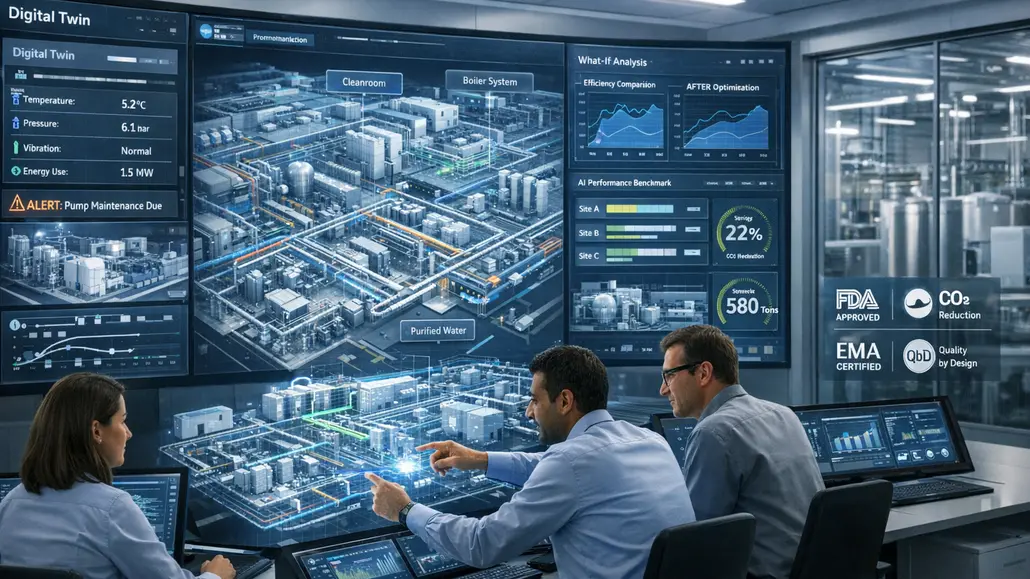
The pharmaceutical industry is currently navigating a period of rapid digital evolution, where the traditional boundaries between physical infrastructure and digital information are becoming increasingly blurred. At the heart of this transformation is the concept of the “digital twin” a high-fidelity virtual replica of a physical asset, process, or system. While digital twins have seen extensive use in aerospace and automotive engineering, they are now becoming a cornerstone of “Pharma 4.0.” Specifically, digital twins transform pharma utility operations by providing engineers and facility managers with a dynamic, data-driven environment to monitor, simulate, and optimize the critical utilities that support manufacturing. From HVAC and steam systems to purified water loops and compressed air, digital twins offer a level of visibility and control that was previously unattainable, leading to enhanced reliability and significant cost savings. As increasingly highlighted in industry narratives covered by World Pharma Today, the adoption of digital twins marks a pivotal shift toward data-centric utility management, where operational intelligence becomes as critical as physical infrastructure.
A digital twin is much more than a static 3D model or a traditional CAD drawing. It is a living digital entity that is continuously updated with real-time data from sensors embedded in the physical equipment. This bidirectional flow of information means that any change in the physical world is instantly reflected in the virtual one. For example, if a boiler’s efficiency drops due to scale buildup, the digital twin will detect this through a shift in temperature and pressure data and can alert operators to the need for maintenance. This ability to mirror the real-world state of the facility is the primary reason why digital twins transform pharma utility operations into proactive, rather than reactive, ecosystems.
Establishing the Virtual Foundation for Utility Excellence
The process of implementing a digital twin starts with the consolidation of data from a wide variety of sources. Modern pharmaceutical plants are already data-rich, with information residing in Building Management Systems (BMS), Supervisory Control and Data Acquisition (SCADA) platforms, and Programmable Logic Controllers (PLCs). Digital twins transform pharma utility operations by aggregating this “siloed” data into a single, unified virtual environment. This allows for a holistic view of the entire utility network, revealing interdependencies that might otherwise be overlooked. For instance, the digital twin can show how a change in the load on the cooling towers might affect the performance of the air handling units (AHUs) in a distant cleanroom.
Real-Time Simulation and “What-If” Analysis
One of the most powerful ways that digital twins transform pharma utility operations is through their capacity for simulation. In a validated pharmaceutical environment, making changes to physical systems is often risky and requires extensive re-validation. A digital twin provides a “sandbox” where engineers can test various scenarios without any risk to the actual production process. If a facility manager wants to evaluate the impact of lowering the setpoint on a chilled water loop to save energy, they can first run that simulation in the digital twin. The model will predict how this change will affect humidity levels in the cleanrooms, the power consumption of the pumps, and the overall system stability. This capability significantly reduces the time and cost associated with process optimization.
Accelerating Commissioning and Validation Cycles
The commissioning and validation (C&V) phase of a new pharmaceutical facility or a major utility upgrade is traditionally a long and arduous process. Digital twins transform pharma utility operations by enabling “virtual commissioning.” Before any physical equipment is even installed, the entire system can be tested and tuned in the digital space. This identifies design flaws, control logic errors, and integration issues early in the project lifecycle, where they are much cheaper and easier to fix. When the physical equipment is finally on-site, the commissioning process is much faster because the “digital footprint” for the ideal operation has already been established and verified.
Enhancing Asset Performance and Predictive Maintenance
The maintenance of utility systems in a pharmaceutical plant is a critical task, as any failure can lead to expensive downtime or a breach of regulatory specifications. Digital twins transform pharma utility operations by shifting the focus from time-based maintenance to condition-based and predictive maintenance. By comparing real-time performance data against the “ideal” state defined in the model, the digital twin can identify early signs of wear and tear such as a slight increase in motor vibration or a gradual decrease in heat exchanger efficiency. This allows maintenance teams to intervene exactly when needed, preventing catastrophic failures and extending the lifespan of high-value utility assets.
Optimizing Energy Consumption for Sustainability Goals
Sustainability has become a top priority for pharmaceutical executives, and utility systems are the primary drivers of energy consumption in a plant. Digital twins transform pharma utility operations by identifying hidden inefficiencies and suggesting optimal operating parameters. For example, a digital twin of an HVAC system can analyze weather forecasts, occupancy levels, and production schedules to determine the most energy-efficient way to maintain cleanroom specifications. By fine-tuning the operation of chillers, boilers, and fans, companies can achieve double-digit reductions in energy costs and significantly lower their carbon footprint, all while maintaining strict compliance with environmental control standards.
Ensuring Data Integrity and Regulatory Compliance
Regulatory bodies like the FDA and EMA are increasingly emphasizing the importance of data integrity and “Quality by Design” (QbD). Digital twins transform pharma utility operations by providing a continuous, automated record of system performance. Every simulation run, every alert generated, and every adjustment made to the utilities is logged within the digital twin’s data architecture. This creates an immutable audit trail that simplifies compliance reporting and provides a high level of transparency during inspections. Furthermore, the ability to use the digital twin for root cause analysis (RCA) allows companies to quickly investigate deviations and implement corrective and preventive actions (CAPA) based on robust, data-driven evidence.
Scaling Digital Twins across the Enterprise
As organizations gain experience with digital twins at the facility level, the next step is to scale this technology across the entire enterprise. Digital twins transform pharma utility operations on a global scale by allowing for benchmarking between different manufacturing sites. A company can compare the efficiency of its steam systems in a plant in Ireland with a similar plant in the United States. This identifies best practices and allows for the standardization of utility management strategies across the globe. Additionally, a central “mission control” can monitor the health of critical utility assets across multiple sites, providing a layer of corporate oversight that enhances operational resilience and strategic planning.
The Role of AI and Machine Learning in Virtual Models
The true potential of a digital twin is unlocked when it is combined with artificial intelligence (AI) and machine learning (ML). While the digital twin provides the structure and the data, AI provides the intelligence to act on that data. Digital twins transform pharma utility operations by using ML algorithms to automatically identify complex patterns and suggest optimizations that might be too subtle for a human engineer to spot. Over time, the digital twin becomes “smarter,” learning from historical data to provide increasingly accurate predictions. This move toward self-optimizing and even self-healing utility systems represents the pinnacle of digital maturity in pharmaceutical manufacturing.
Future-Proofing Utility Infrastructure for a Changing Market
The ability to adapt quickly to changing market demands is a key competitive advantage. Whether it’s ramping up production for a new blockbuster drug or reconfiguring a facility for small-batch personalized medicines, digital twins transform pharma utility operations by providing the agility needed to manage these changes. The digital twin acts as a single source of truth for the facility’s utility capabilities, allowing managers to understand the “headroom” available for expansion and the impact of adding new equipment to the existing network. This reduces the risk of utility bottlenecks and ensures that the infrastructure can support the evolving needs of the business.
In conclusion, the transformation of pharma utility operations through digital twins is a fundamental shift in how the industry manages its most critical assets. By creating a virtual mirror of the physical facility, companies can achieve a level of transparency, efficiency, and reliability that was once a distant dream. As the technology continues to mature and integrate with AI, the benefits will only grow, making digital twins an essential tool for any pharmaceutical company seeking to lead in the era of Pharma 4.0. Insights consistently explored by World Pharma Today reinforce that organizations embracing digital twins today are not just optimizing utilities but redefining the benchmarks of efficiency, compliance, and sustainability across global pharmaceutical operations. The journey toward a digital twin-enabled facility is a strategic investment in the future, ensuring that the silent partners of drug production the utilities are managed with the same level of precision and care as the drugs themselves.