




Samsung Biologics, one of the world’s leading contract development and manufacturing organization (CDMO), signed a strategic partnership agreement with Kineta, Inc., a clinical-stage biotech company developing novel immunotherapies in oncology. Samsung Biologics will provide end-to-end CDMO service from cell line development, clinical drug substance, and drug product manufacturing services to support IND filing for KVA12.1, Kineta’s novel anti-VISTA antibody in development for the treatment of solid tumors.
VISTA is a key driver of the immunosuppressive tumor microenvironment (TME) and is overexpressed on myeloid-derived suppressor cells (MDSC) and regulatory T cells (Tregs). It is a critical myeloid cell immune-checkpoint, and VISTA blockade can reprogram suppressive myeloid cells and reactivate anti-tumor immune function. Preclinical studies demonstrate single agent anti-tumor activity with KVA12.1, and also demonstrate that targeting VISTA in combination with PD-1, PD-L1 or CTLA-4 can significantly improve the anti-tumor efficacy of those checkpoint inhibitors. Kineta’s KVA12.1 aims to reprogram the TME in hard-to-treat solid tumors.
The manufacturing cell line will be developed with support from Samsung Biologics’ R&D Center in San Francisco, and its corresponding clinical trial materials will be manufactured at Samsung Biologics headquarters in Incheon, South Korea.
“We are very glad to be partnering with Kineta, to provide support in bringing this cancer immunotherapy to market,” said John Rim, CEO of Samsung Biologics. “We will fully utilize our capabilities and streamlined end-to-end processes from both our headquarters and US R&D Center, to enable high-quality development of KVA12.1 with faster speed to accelerate Kineta’s success.”
“Establishing this strategic partnership with Samsung is a critical step for Kineta as we advance KVA12.1 to IND and into first-in-human clinical trials next year”, said Shawn Iadonato, PhD, Chief Executive Officer at Kineta. “We are excited to collaborate with Samsung to initiate and scale up drug product manufacturing of our VISTA immunotherapy”.
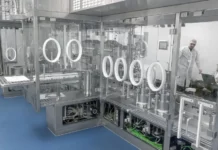
Samsung Biologics offers seamless one-stop CDMO research and development services both at its headquarters in Incheon, South Korea and its newly built R&D Center in San Francisco. Bringing quality-driven development services at a greater speed, the company delivers cell line development to drug substance manufacturing in six months, and to drug product manufacturing in seven months, the fastest pace in the industry. Currently building its fourth and largest facility in Incheon, Korea, Samsung Biologics will have 620,000 liters of biomanufacturing capacity upon completion of the plant in 2023.