











Close
Smartlab Europe
Inizio Ignite

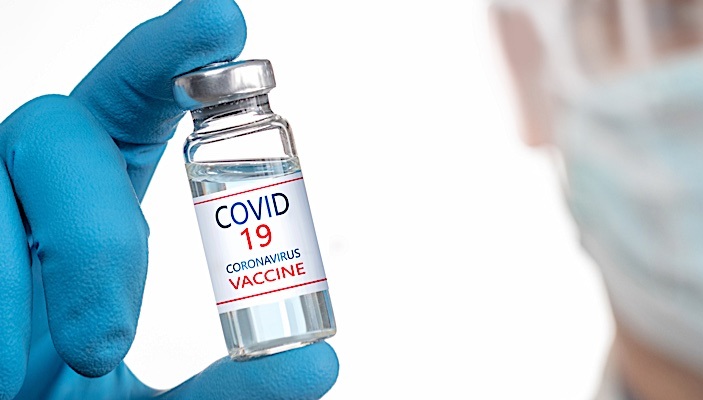
Eisai enters joint research pact with four research organizations in Japan for development of therapeutics for novel COVID-19

Note* - All images used are for editorial and illustrative purposes only and may not originate from the original news provider or associated company.

Subscribe

- Never miss a story with notifications

- Gain full access to our premium content

- Browse free from any location or device.

Media Packs

Expand Your Reach With Our Customized Solutions Empowering Your Campaigns To Maximize Your Reach & Drive Real Results!

– Access the Media Pack Now

– Book a Conference Call

Leave Message for Us to Get Back

Related stories

Predictive Analytics in Labs: Driving Smarter Decisions in Pharma

The application of statistical algorithms and machine learning techniques to historical research data is enabling scientists to anticipate experimental outcomes and identify emerging patterns with unprecedented accuracy. By moving from a retrospective view of data to a forward-looking perspective, research facilities can optimize their strategies and focus their resources on the most promising therapeutic avenues.

IoT Applications Enhancing Laboratory Operational Efficiency

The integration of internet-connected sensors and smart devices is fundamentally reshaping how research facilities monitor their environment and manage their instrumentation. By providing a constant stream of real-time data, these technological advancements allow for a more granular level of control over laboratory operations, ensuring that the delicate conditions required for high-stakes pharmaceutical research are maintained with absolute precision.

Optimizing Pharma Workflows with Integrated Lab Software Solutions

The modern laboratory environment requires a unified approach to data management and process control to remain competitive. By bridging the gap between disparate instruments and legacy databases, research facilities can eliminate operational silos and create a high-speed environment where innovation is no longer hindered by fragmented digital infrastructure.
- Advertisement -

Eisai Co Ltd announced that it has entered into a joint research agreement with four research organizations (KAN Research Institute, National Center for Global Health and Medicine, Nagasaki University, and Yokohama City University) in Japan concerning the “Development of Therapeutics to Prevent the Aggravation of the Novel Coronavirus Infectious Disease (COVID-19)” (Grant Number: 20fk0108255), which is a research project with Eisai as the representative research organization.

This joint research project “Development of Therapeutics for Novel Coronavirus Infectious Disease (COVID-19)” was adopted for the second public call by the Japan Agency for Medical Research and Development (AMED) as part of its operation for promotion of the research and development of innovative treatments for emerging and re-emerging infectious diseases in fiscal year 2020.

In patients with COVID-19 due to the SARS-CoV-2 infection, severe cases such as acute respiratory distress syndrome (ARDS) and subsequent multiple organ failure have been reported. The involvement of the formation and exacerbation of vasculopathy as well as the cytokine storm in the process of aggravation are assumed. However, at this time, the mechanism of aggravation based on the SARS-CoV-2 infection is not fully understood.

In this collaborative research, a non-clinical animal model of SARS-CoV-2 infection will be constructed. Additionally, TLR (Toll-Like Receptor) 4 antagonist eritoran, discovered by Eisai, and an anti-FKN (fractalkine) antibody E6011, discovered by Eisai’s research subsidiary KAN Research Institute, will be evaluated. In addition, this project will promote biomarker research using clinical samples derived from SARS-CoV-2 infected patients. This collaborative research, aims to elucidate the mechanism of COVID-19 aggravation based on SARS-CoV-2 infection and to create drugs that prevent the aggravation of COVID-19.

In the fight against the expansion of COVID-19, based on the human health care (hhc) philosophy, Eisai will continue the development of therapeutics, stable supply of pharmaceuticals, and support activities in each country.

TLR (Toll-Like Receptor)s are receptors of the innate immune system, and recognize the specific molecular structure of pathogens. It is considered that TLR initiated activation of the innate immune system plays a critical role in eliminating pathogens, causing an inflammatory reaction or an antiviral response. TLR4, one of the TLRs which constitute a family of various receptors, is activated by endotoxins such as lipopolysaccharide released from bacteria.

Eritoran is Eisai’s in-house discovered and developed TLR4 antagonist created by natural product organic synthesis technology. It is a structural analogue of Lipid A, which is an active pharmacophore of endotoxins. It has been previously observed to have well-tolerated safety profile in 14 clinical studies including a large Phase III randomized trial in severe sepsis. Eritoran has been shown to have the effects of suppressing cytokine production and improving systemic condition in a mouse influenza virus infection model. It is expected to suppress inflammation and aggravation caused by COVID-19 by inhibiting the activation of TLR4, which is the most upstream of various cytokine gene expression signaling that causes the cytokine-storm.

Eritoran has been selected as the therapeutic drug candidate in the international trial REMAP-COVID for hospitalized patients with moderate COVID-19.

FKN (fractalkine) is a chemokine that has dual functions of cell migration regulation and cell adhesion, which is induced in vascular endothelial cells during inflammation. The FKN receptor (CX3CR1) is mostly expressed in monocytes, macrophages and killer lymphocytes selectively and plays a key role in efficient collection of cells to the inflamed site. It has been suggested that the FKN-CX3CR1 system relates to various chronic inflammatory diseases including inflammatory bowel disease, rheumatoid arthritis, liver disease, central nervous system disease, arteriosclerosis, dermatosis and others.

E6011 is the world’s first humanized anti-FKN monoclonal antibody developed by Eisai’s research subsidiary KAN Research Institute, Inc., and has a novel action mechanism inhibiting cell invasion by neutralizing activity of fractalkine (FKN), unlike existing cytokine treatments.

Latest stories

Related stories

Predictive Analytics in Labs: Driving Smarter Decisions in Pharma

The application of statistical algorithms and machine learning techniques to historical research data is enabling scientists to anticipate experimental outcomes and identify emerging patterns with unprecedented accuracy. By moving from a retrospective view of data to a forward-looking perspective, research facilities can optimize their strategies and focus their resources on the most promising therapeutic avenues.

IoT Applications Enhancing Laboratory Operational Efficiency

The integration of internet-connected sensors and smart devices is fundamentally reshaping how research facilities monitor their environment and manage their instrumentation. By providing a constant stream of real-time data, these technological advancements allow for a more granular level of control over laboratory operations, ensuring that the delicate conditions required for high-stakes pharmaceutical research are maintained with absolute precision.

Optimizing Pharma Workflows with Integrated Lab Software Solutions

The modern laboratory environment requires a unified approach to data management and process control to remain competitive. By bridging the gap between disparate instruments and legacy databases, research facilities can eliminate operational silos and create a high-speed environment where innovation is no longer hindered by fragmented digital infrastructure.

Advanced Robotics Driving Pharmaceutical Lab Efficiency

The implementation of high-speed robotic systems and automated handling technologies is fundamentally altering the productivity of modern research facilities. By taking over repetitive physical tasks and operating with sub-millimeter precision, these mechanical innovators are allowing scientific staff to redirect their cognitive energy toward complex analysis and the development of breakthrough therapies.

Subscribe

- Never miss a story with notifications

- Gain full access to our premium content

- Browse free from any location or device.

Media Packs

Expand Your Reach With Our Customized Solutions Empowering Your Campaigns To Maximize Your Reach & Drive Real Results!

– Access theMedia Pack Now

– Book a Conference Call

Leave Message for Us to Get Back

Translate »