















Close
Almac
Achema middle east

WHO classifies India Covid strain as ‘variant of concern’

Note* - All images used are for editorial and illustrative purposes only and may not originate from the original news provider or associated company.

Subscribe

- Never miss a story with notifications

- Gain full access to our premium content

- Browse free from any location or device.

Media Packs

Expand Your Reach With Our Customized Solutions Empowering Your Campaigns To Maximize Your Reach & Drive Real Results!

– Access the Media Pack Now

– Book a Conference Call

Leave Message for Us to Get Back

Related stories

First GLP-1 Pill for Obesity by Novo Nordisk Approved by FDA

The U.S. Food and Drug Administration – FDA on...

How High-Achievers Stay Future-Ready in Evolving Job Markets

Job markets today are transforming rapidly. In the past...

Proactive Risk Management as a Core Capability in Pharma Development

Risk management in pharma is often treated as a reactive compliance box-ticking exercise. This article argues for reframing risk as a strategic competitive advantage. It details proactive frameworks like the "Excipient Exclusion Filter," Decision Quality (DQ) matrices, and "pre-mortem" analyses that allow development teams to anticipate failure modes and engineer them out of the pipeline before they occur.
- Advertisement -

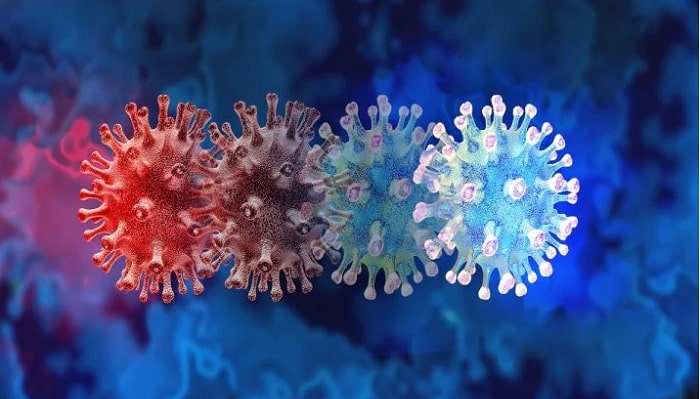
The B-1617 variant of coronavirus, first identified in India, has been classified as a “variant of concern” at the global level by the World Health Organisation (WHO).

Dr Maria Van Kerkhove, Covid-19 Technical Lead at WHO, on Monday said that the B.1.617 virus variant had been classified as a “variant of interest” by the WHO.

She said the Epi team and WHO lab team has been discussing with the WHO virus evolution working group this variant, and everything that “we know about it in terms of transmissibility and any studies that are being done in India as well as in other countries” where this virus is circulating.

“In consultation with our virus evolution working group, and our Epi teams and our lab teams internally, there is some available information to suggest increased transmissibility of B-1617; as such we are classifying this as a variant of concern at the global level,” she said.

She added that even though there is increased transmissibility demonstrated by some preliminary studies, “we need much more information about this virus variant in this lineage, so we need more targeted sequencing to be done, and to be shared in India and elsewhere so that we know how much of this virus is circulating”.

Van Kerkhove said there is need for more information on the epidemiologic studies that are underway, the studies that are evaluating neutralization severity. “So far, from information that we have (is) the public health and social measures work, but we need to work that much harder to control any virus variants that have demonstrated increased transmissibility,” she said, adding that the WHO does not have anything to suggest that “our diagnostics or therapeutics and our vaccines don’t work”.

“This is important. We will continue to see variants emerge. We will continue to see variants of concern around the world and we must do everything that we can to really limit the spread, limit infections, prevent the spread and reduce severe disease and death with the tools that we have at hand,” she said.

She emphasised that no matter where one lives and no matter what viruses are circulating, “we need to make sure that we take all of the measures at hand to prevent ourselves from getting sick”. She said, “It’s the individual-level measures… all of the measures that are at hand and ensuring that governments provide a supportive and an enabling environment so that we can carry out measure that can keep us safe.”


Latest stories

Related stories

First GLP-1 Pill for Obesity by Novo Nordisk Approved by FDA

The U.S. Food and Drug Administration – FDA on...

How High-Achievers Stay Future-Ready in Evolving Job Markets

Job markets today are transforming rapidly. In the past...

Proactive Risk Management as a Core Capability in Pharma Development

Risk management in pharma is often treated as a reactive compliance box-ticking exercise. This article argues for reframing risk as a strategic competitive advantage. It details proactive frameworks like the "Excipient Exclusion Filter," Decision Quality (DQ) matrices, and "pre-mortem" analyses that allow development teams to anticipate failure modes and engineer them out of the pipeline before they occur.

Rethinking Pipeline Value Beyond Peak Sales Forecasts

The traditional reliance on risk-adjusted Net Present Value (rNPV) and peak sales forecasts is failing to capture the true potential of modern pharmaceutical assets, particularly platform technologies. This article introduces holistic valuation frameworks like Real Options Analysis (ROA) and the Platform VISTA model, arguing for a shift toward valuing "strategic fit," "lifecycle potential," and the intangible equity of innovation engines.

Subscribe

- Never miss a story with notifications

- Gain full access to our premium content

- Browse free from any location or device.

Media Packs

Expand Your Reach With Our Customized Solutions Empowering Your Campaigns To Maximize Your Reach & Drive Real Results!

– Access theMedia Pack Now

– Book a Conference Call

Leave Message for Us to Get Back

Translate »