













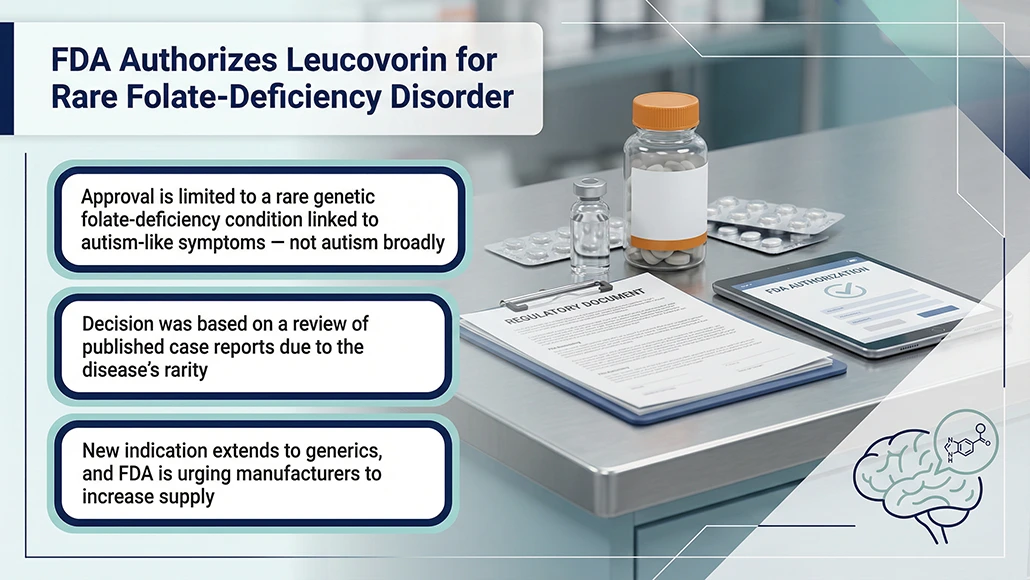
The U.S. Food and Drug Administration on Tuesday authorized the use of leucovorin, a long-established generic medicine, for the treatment of a rare genetic disorder associated with autism-like symptoms. The decision does not extend to children diagnosed with autism more broadly, despite earlier suggestions last year that the drug might help address autism symptoms. Regulators said the determination was based on insufficient supporting data.
The approval specifically targets folate deficiency linked to the disorder and represents a narrower outcome than the expectations raised during a September press conference involving Donald Trump and Robert F. Kennedy Jr., when the drug was promoted as a potential therapy for autism symptoms. Explaining the regulatory decision, an FDA official said: “So while we did originally approach this with a broad scope, as we looked through the scientific data, we ended up narrowing our scope to come to the strongest data evidence that we could find to support the approval.”
According to the FDA, the authorization covers Wellcovorin, a branded formulation of leucovorin previously produced by GSK. Regulators said their assessment relied on a systematic review of published research rather than clinical trial evidence. A second official noted that conducting a randomized controlled trial was not feasible because of the rarity of the disease. GSK, which no longer manufactures the drug, declined to comment on the review process.
Regulatory documents show the agency reviewed 26 published case reports and analyses through 2024, identifying 27 patients who had received oral leucovorin. Among them, 24 experienced varying degrees of improvement, including reductions in seizure severity or frequency as well as improvements in motor function, communication and behavior. Leucovorin, also referred to as folinic acid, is a form of folate an essential B vitamin known as B9. It is commonly used alongside chemotherapy but can be prescribed for other purposes. The expanded authorization means generic versions of the drug can also carry the new indication, and regulators said the agency is encouraging manufacturers to increase production.
The drug had drawn heightened attention following remarks from FDA Commissioner Marty Makary during the earlier White House event, where officials said manufacturers had been asked to prepare to expand leucovorin production for certain autism patients. At the same press conference, Trump linked autism to childhood vaccine use and to the use of the pain medication Tylenol during pregnancy. Kennedy, who has pledged to investigate the causes of autism, described the treatment as an “exciting therapy that may benefit large numbers of children who suffer from autism.”
The attention surrounding the announcement appeared to influence prescribing patterns. A recent study published in The Lancet reported that Tylenol use among pregnant women declined in the months following the event, while prescriptions for leucovorin in children increased by 71%. Researchers studying potential applications of the drug have pointed to smaller studies suggesting that some children with autism may develop autoantibodies that block folate a vitamin important for brain signaling from reaching the brain, creating a deficiency similar to cerebral folate deficiency.