









Close
Almac
Achema middle east

Pfizer Shells Out $11.6 Bn. For Biohaven- Largest Since 2016

Note* - All images used are for editorial and illustrative purposes only and may not originate from the original news provider or associated company.

Subscribe

- Never miss a story with notifications

- Gain full access to our premium content

- Browse free from any location or device.

Media Packs

Expand Your Reach With Our Customized Solutions Empowering Your Campaigns To Maximize Your Reach & Drive Real Results!

– Access the Media Pack Now

– Book a Conference Call

– Leave Message for Us to Get Back

Related stories

First GLP-1 Pill for Obesity by Novo Nordisk Approved by FDA

The U.S. Food and Drug Administration – FDA on...

How High-Achievers Stay Future-Ready in Evolving Job Markets

Job markets today are transforming rapidly. In the past...

Proactive Risk Management as a Core Capability in Pharma Development

Risk management in pharma is often treated as a reactive compliance box-ticking exercise. This article argues for reframing risk as a strategic competitive advantage. It details proactive frameworks like the "Excipient Exclusion Filter," Decision Quality (DQ) matrices, and "pre-mortem" analyses that allow development teams to anticipate failure modes and engineer them out of the pipeline before they occur.
- Advertisement -

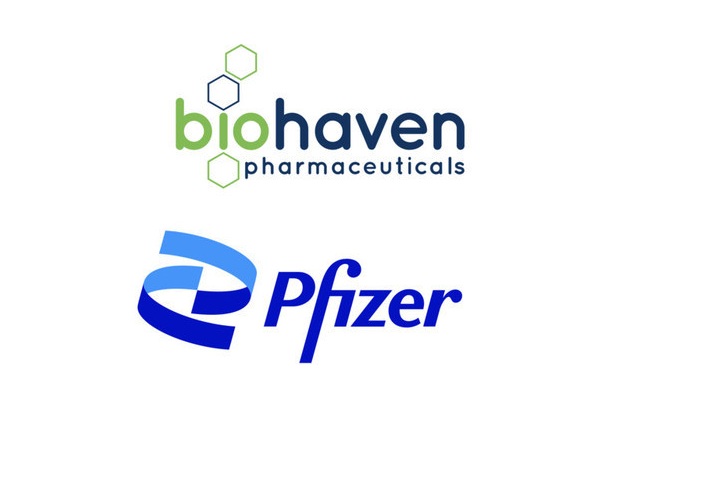
Pfizer will pay $11.6 billion for migraine medicine manufacturer Biohaven Pharmaceutical, signifying the company’s largest acquisition since 2016, as it seeks to expand its inventory ahead of patent expiration dates for many cancer drugs.

Pfizer will gain access to Biohaven’s approved rimegepant, a potentially breakthrough migraine medicine that belongs to the calcitonin gene-related peptide (CGRP) inhibitor class, as part of the recently announced agreement. Pfizer has been trying to add treatments as copyrights on its top-selling drugs, such as the blood thinner Eliquis, near expiration. The company has about $32 billion in money on hand after its accomplishment with COVID-19 drugs.

As per the company, sales of COVID-19 vaccines are also destined to drop from last year’s peaks. This offer will appeal to investors. Given Pfizer’s solid balance sheet, this is still a modest deal, and they expect more like it, Mohit Bansal, a Wells Fargo analyst, wrote in a note.

The Biohaven transaction is the biggest since Pfizer acquired cancer firm Medivation for $14 billion in 2016. Pfizer will pay $148.50 a share in cash for all Biohaven shares it does not yet hold, a 78.6% gain over the previous closing price. In November, it purchased a 2.6% investment in Biohaven. Biohaven shares soared 70.1% to $141.39, while Pfizer remained unchanged at $48.60. Pfizer will engage in a busy market for migraine medications with other prominent pharmaceutical companies like Eli Lilly.

In the U.S., Biohaven’s rimegepant, known as Nurtec ODT, is approved for both treatment and prevention of migraines, and sales are estimated to reach $4 billion by 2030. In 2021, it made $462.5 million in sales. Biohaven is also working on yet another CGRP inhibitor and is doing late-stage trials on two non-CGRP medicines.

Biohaven shareholders, including Pfizer, will receive 0.5 of a share of a new publicly listed firm that will keep Biohaven’s non-CGRP medications after the sale concludes.
Latest stories

Related stories

First GLP-1 Pill for Obesity by Novo Nordisk Approved by FDA

The U.S. Food and Drug Administration – FDA on...

How High-Achievers Stay Future-Ready in Evolving Job Markets

Job markets today are transforming rapidly. In the past...

Proactive Risk Management as a Core Capability in Pharma Development

Risk management in pharma is often treated as a reactive compliance box-ticking exercise. This article argues for reframing risk as a strategic competitive advantage. It details proactive frameworks like the "Excipient Exclusion Filter," Decision Quality (DQ) matrices, and "pre-mortem" analyses that allow development teams to anticipate failure modes and engineer them out of the pipeline before they occur.

Rethinking Pipeline Value Beyond Peak Sales Forecasts

The traditional reliance on risk-adjusted Net Present Value (rNPV) and peak sales forecasts is failing to capture the true potential of modern pharmaceutical assets, particularly platform technologies. This article introduces holistic valuation frameworks like Real Options Analysis (ROA) and the Platform VISTA model, arguing for a shift toward valuing "strategic fit," "lifecycle potential," and the intangible equity of innovation engines.

Subscribe

- Never miss a story with notifications

- Gain full access to our premium content

- Browse free from any location or device.

Media Packs

Expand Your Reach With Our Customized Solutions Empowering Your Campaigns To Maximize Your Reach & Drive Real Results!

– Access theMedia Pack Now

– Book a Conference Call

– Leave Message for Us to Get Back

Translate »