









Close
Almac
Achema middle east

Monoclonal Antibodies Help COVID – 19 Hospitalisation To Dip

Note* - All images used are for editorial and illustrative purposes only and may not originate from the original news provider or associated company.

Subscribe

- Never miss a story with notifications

- Gain full access to our premium content

- Browse free from any location or device.

Media Packs

Expand Your Reach With Our Customized Solutions Empowering Your Campaigns To Maximize Your Reach & Drive Real Results!

– Access the Media Pack Now

– Book a Conference Call

Leave Message for Us to Get Back

Related stories

AstraZeneca Commits $100mn for Pan-KRAS Inhibitor by Jacobio

AstraZeneca has gone ahead and committed $100 million to...

Laboratory Equipment Outsourcing Through CDMOs: Strategic and Cost Implications

Outsourcing laboratory infrastructure to CDMOs offers pharma companies critical agility, transforming fixed capital costs into flexible operational expenses while accessing cutting-edge technology like Cryo-EM.

Specialized Laboratory Equipment Requirements for Biologics and Biosimilar Development

The development of complex biological molecules requires a specialized toolkit distinct from traditional small-molecule chemistry. This article details the critical laboratory equipment—from advanced bioreactors to high-resolution characterization tools—that enables the precise engineering and rigorous analysis required for successful biologics and biosimilar innovation.
- Advertisement -

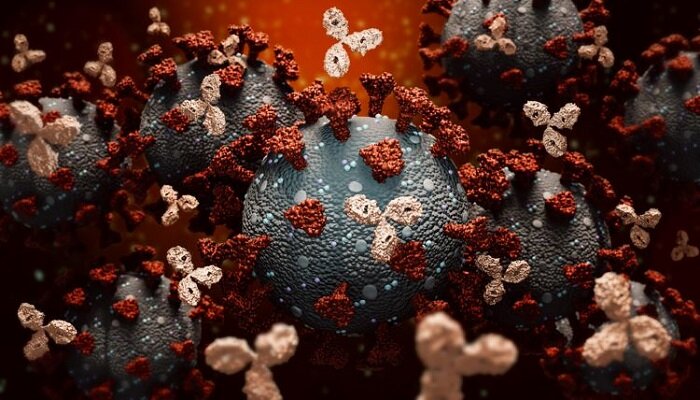
A study has gone on to find that monoclonal antibodies (mAbs) decreased the risk of hospitalisation or even death by 39% if given within two days to people who are tested positive for COVID-19.

The research compared the patients who were administered this treatment to those who were eligible but did not receive it. Notably, the immunocompromised patients got to experience a further reduced risk, as per the researchers. The risk infection level was determined at a period of 28 days.

The researchers from the University of Pittsburgh Medical Centre, under the trial, evaluated around 2571 patients who got treated with monoclonal antibodies. The details of these patients were then matched with the data from 5131 eligible COVID-19 patients who did not get the treatment. Notably, single-dose intravenous mAb treatment doses were administered with either sotrovimab, bamlanivavimab, bebtelovimab, bamlanivimab-etesevimab, intravenous, or imdevimab. The inferences pointed to the total risk when it came to hospitalisation or death at 28 days, which stood at 4.6% in the patients who were treated as compared to 7.6% in non-treated and controlled patients.

It is well to note that between 2020 and 2022, the US FDA granted emergency use authorization (EUA) to five varied COVID-19 monoclonal antibody treatments. All these treatments ultimately showed a reduction in COVID-19 viral load. Subsequently, they also showed their ability to decrease hospitalisation and death rates in some of the at-risk patients as well.

These authorised treatments somehow have either been suspended or revoked by the FDA ever since, because of the in vitro evidence that involves loss of efficacy surrounding novel COVID-19 variants. That said, this action was taken without the availability of any randomised trial or even any real-world data.

In the current study, the growing real-world efficacy of an early mAb treatment was determined for outpatients suffering from COVID-19 who were treated for almost 2 years. As per the authors, the results indicate that all across the pandemic, early treatment using monoclonal antibodies significantly lowered the severity of COVID-19. These findings are indeed very important since, as of date, there aren’t any FDA-approved monoclonal antibody treatments when it comes to COVID-19 outpatients, the authors emphasise.

Latest stories

Related stories

AstraZeneca Commits $100mn for Pan-KRAS Inhibitor by Jacobio

AstraZeneca has gone ahead and committed $100 million to...

Laboratory Equipment Outsourcing Through CDMOs: Strategic and Cost Implications

Outsourcing laboratory infrastructure to CDMOs offers pharma companies critical agility, transforming fixed capital costs into flexible operational expenses while accessing cutting-edge technology like Cryo-EM.

Specialized Laboratory Equipment Requirements for Biologics and Biosimilar Development

The development of complex biological molecules requires a specialized toolkit distinct from traditional small-molecule chemistry. This article details the critical laboratory equipment—from advanced bioreactors to high-resolution characterization tools—that enables the precise engineering and rigorous analysis required for successful biologics and biosimilar innovation.

Next-Generation Laboratory Equipment Redefining Drug Discovery Workflows

Advanced technologies such as AI-integrated high-throughput screening platforms and automated assay systems are fundamentally transforming early-stage pharmaceutical research. These innovations address critical bottlenecks in productivity and data quality, enabling research teams to accelerate timeline-to-candidate selection while enhancing the predictive accuracy of drug discovery campaigns.

Subscribe

- Never miss a story with notifications

- Gain full access to our premium content

- Browse free from any location or device.

Media Packs

Expand Your Reach With Our Customized Solutions Empowering Your Campaigns To Maximize Your Reach & Drive Real Results!

– Access theMedia Pack Now

– Book a Conference Call

Leave Message for Us to Get Back

Translate »