










Close
Almac
Achema middle east

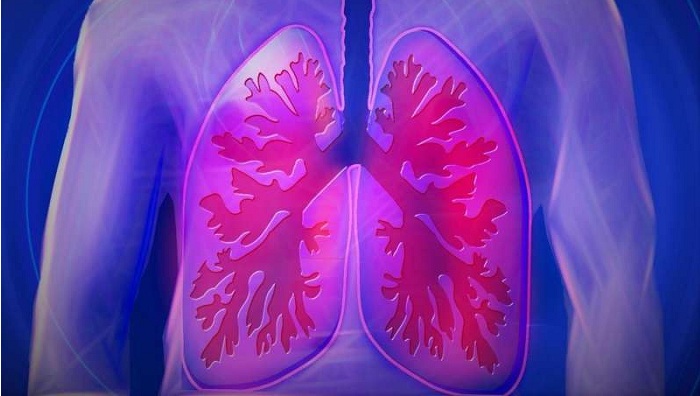
Human Lungs Created To Test Drugs By Australian Scientists

Note* - All images used are for editorial and illustrative purposes only and may not originate from the original news provider or associated company.

Subscribe

- Never miss a story with notifications

- Gain full access to our premium content

- Browse free from any location or device.

Media Packs

Expand Your Reach With Our Customized Solutions Empowering Your Campaigns To Maximize Your Reach & Drive Real Results!

– Access the Media Pack Now

– Book a Conference Call

Leave Message for Us to Get Back

Related stories

AstraZeneca Commits $100mn for Pan-KRAS Inhibitor by Jacobio

AstraZeneca has gone ahead and committed $100 million to...

Laboratory Equipment Outsourcing Through CDMOs: Strategic and Cost Implications

Outsourcing laboratory infrastructure to CDMOs offers pharma companies critical agility, transforming fixed capital costs into flexible operational expenses while accessing cutting-edge technology like Cryo-EM.

Specialized Laboratory Equipment Requirements for Biologics and Biosimilar Development

The development of complex biological molecules requires a specialized toolkit distinct from traditional small-molecule chemistry. This article details the critical laboratory equipment—from advanced bioreactors to high-resolution characterization tools—that enables the precise engineering and rigorous analysis required for successful biologics and biosimilar innovation.
- Advertisement -

University of Australia scientists, with collaborators from South Korea, China, and, of course, Australia, have gone on to develop a step-wise blueprint so as to create advanced human lung models in the lab, which, according to them, is going to accelerate the exploration and also the development of novel drugs and thereby reduce reliance on animal testing to gauge their efficacy.

Notably, lab-made lungs that are named organoids or mini organs are 3D structures that are grown from human primary cells that mirror actual organs in the body. They, as a matter of fact, serve as a testing ground when it comes to biomedical research.

Professor of nanomedicine at the Sydney Pharmacy School, Wojciech Chrzanowski, who happens to be the faculty of medicine and a member of the Charles Perkins Centre as well as a senior author, opines that this work is important since, because of it, they will be able to lessen the animal numbers in medical research, speed up the discovery of new drugs, and also accelerate innovative strategies when it comes to treating diseases.

It is well to note that Australia went on to ban cosmetic animal testing in 2020, and even the United States passed legislation last year ending the requirement that new drugs be tested on animals.

Significantly, these artificial lung models put Australia at the forefront in mini organ research, said Professor Wojciech Chrzanowski, who has been asking for the establishment of a national centre for medical research alternatives to animal methodology.

Latest stories

Related stories

AstraZeneca Commits $100mn for Pan-KRAS Inhibitor by Jacobio

AstraZeneca has gone ahead and committed $100 million to...

Laboratory Equipment Outsourcing Through CDMOs: Strategic and Cost Implications

Outsourcing laboratory infrastructure to CDMOs offers pharma companies critical agility, transforming fixed capital costs into flexible operational expenses while accessing cutting-edge technology like Cryo-EM.

Specialized Laboratory Equipment Requirements for Biologics and Biosimilar Development

The development of complex biological molecules requires a specialized toolkit distinct from traditional small-molecule chemistry. This article details the critical laboratory equipment—from advanced bioreactors to high-resolution characterization tools—that enables the precise engineering and rigorous analysis required for successful biologics and biosimilar innovation.

Next-Generation Laboratory Equipment Redefining Drug Discovery Workflows

Advanced technologies such as AI-integrated high-throughput screening platforms and automated assay systems are fundamentally transforming early-stage pharmaceutical research. These innovations address critical bottlenecks in productivity and data quality, enabling research teams to accelerate timeline-to-candidate selection while enhancing the predictive accuracy of drug discovery campaigns.

Subscribe

- Never miss a story with notifications

- Gain full access to our premium content

- Browse free from any location or device.

Media Packs

Expand Your Reach With Our Customized Solutions Empowering Your Campaigns To Maximize Your Reach & Drive Real Results!

– Access theMedia Pack Now

– Book a Conference Call

Leave Message for Us to Get Back

Translate »