








Close
CDMO Safety Testing 2026
Novotech

Fatty Liver Disease Gets A Novel Drug Healing Contender

Note* - All images used are for editorial and illustrative purposes only and may not originate from the original news provider or associated company.

Subscribe

- Never miss a story with notifications

- Gain full access to our premium content

- Browse free from any location or device.

Media Packs

Expand Your Reach With Our Customized Solutions Empowering Your Campaigns To Maximize Your Reach & Drive Real Results!

โ€“ Access the Media Pack Now

โ€“ Book a Conference Call

โ€“ Leave Message for Us to Get Back

Related stories

Quantum machine learning in pharma research growth

The convergence of artificial intelligence and quantum processing is opening new avenues for rapid discovery and innovation within the life sciences. By utilizing advanced mathematical models that operate across multi-dimensional datasets, researchers can now identify complex biological patterns and predict molecular behaviors with a speed that surpasses traditional computational methods. This transformation is accelerating the development of novel therapies and providing deeper insights into disease mechanisms, fundamentally altering the trajectory of pharmaceutical research and development.

Quantum sensors enabling advanced drug diagnostics

The landscape of medical diagnostics is being reshaped by the introduction of sensing technologies that operate with atomic-level sensitivity. By providing high-fidelity measurements and real-time data, these tools allow for the detection of subtle biological changes and chemical markers that were previously invisible to conventional equipment. This advancement is enhancing the precision of drug testing and clinical monitoring, leading to earlier disease detection and more effective therapeutic interventions across the global healthcare spectrum.

Quantum computing optimizing pharma supply chains

The global distribution of pharmaceutical products is facing unprecedented challenges that demand a new level of logistical precision and resilience. By utilizing advanced analytical models, companies can now navigate complex international networks with greater efficiency, ensuring that temperature-sensitive medicines and life-saving therapies reach their destinations without delay. This evolution toward a more intelligent and responsive supply chain is critical for maintaining public health and responding effectively to emerging medical needs on a global scale.
- Advertisement -

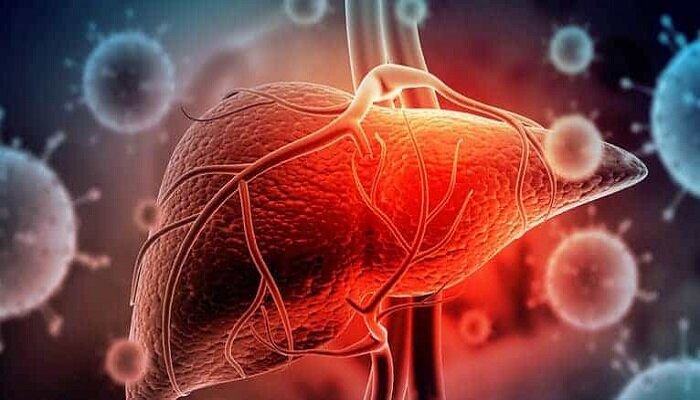
Karolinska Institute researchers have come up with a promising antibody medication candidate for the medication of non-alcoholic fatty liver disease.

There is presently no treatment for non-alcoholic fatty liver disease, which affects individuals with type 2 diabetes and can develop into other extreme liver problems. The researchers discovered an antibody that can inhibit the protein VEGF-B, potentially opening the door to new therapy options for the illness.

The investigation has been reported in the Journal of Hepatology.

Fatty liver happens to be a serious condition

Annelie Falkevall, the first author of the study and a researcher at the Department of Medical Biochemistry and Biophysics and Karolinska Institutet, stated that with the therapeutic principle that they have developed, it might be possible to prevent fatty liver and potentially reduce the risk of liver failure and terminal liver cancer. Fatty liver is associated with many severe and often fatal disorders.

Obesity and overweight are major global health challenges that have contributed to an increase in the prevalence of type 2 diabetes. As per the Swedish Diabetes Association, there are 500,000 diabetics in Sweden, with 85โ€“90% being type 2.

Chronic obesity and type 2 diabetes can raise the risk of non-alcoholic fatty liver disease, which is the leading cause of liver-related disorders in Europe and the United States, such as liver failure and liver cancer.

Although white adipose tissue may store energy in the form of lipids, it fails to do so in persons with persistent obesity and type 2 diabetes. As a result, the concentration of fatty acids in the blood rises.

The body is thus obliged to store this energy somewhere else, such as the liver. The development of this fat in the liver impairs glucose secretion and also leads to insulin resistance. As a result, the risk of lasting liver damage increases.

Non-alcoholic fatty liver disease affects approximately 100 million persons, and a previous study suggests that those with the illness are 17 times more likely to develop liver cancer.

A drug candidate examination

The researchers discovered a therapeutic candidate in the form of an antibody to the protein Vascular Endothelial Growth Factor B, which is crucial for fatty acid release from white adipose tissue.

The professor at the Department of Medical Biochemistry and Biophysics, Karolinska Institutet, Ulf Eriksson, said that they have discovered a new approach to treating fatty liver disease that entails maintaining the fatty acids in the adipose tissue so that they do not spill out and build up in the liver.

Their findings reveal that inhibiting the VEGB-B signal pathway pharmacologically in mice avoids fat formation in the liver and lowers the risk of non-alcoholic fatty liver disease.

On both regular and genetically altered mice, the researchers conducted pharmacological testing. The researchers also looked at fat tissue from 48 bariatric surgery patients. The non-alcoholic fatty liver disease affected 50% of the subjects, whereas it did not affect the other 50%. The findings revealed a clear link between VEGB-B signalling in white adipose tissue and the occurrence of non-alcoholic fatty liver disease. Professor Eriksson concluded that the next step in developing this intriguing medication candidate further is to incorporate it into a clinical research program.
Latest stories

Related stories

Quantum machine learning in pharma research growth

The convergence of artificial intelligence and quantum processing is opening new avenues for rapid discovery and innovation within the life sciences. By utilizing advanced mathematical models that operate across multi-dimensional datasets, researchers can now identify complex biological patterns and predict molecular behaviors with a speed that surpasses traditional computational methods. This transformation is accelerating the development of novel therapies and providing deeper insights into disease mechanisms, fundamentally altering the trajectory of pharmaceutical research and development.

Quantum sensors enabling advanced drug diagnostics

The landscape of medical diagnostics is being reshaped by the introduction of sensing technologies that operate with atomic-level sensitivity. By providing high-fidelity measurements and real-time data, these tools allow for the detection of subtle biological changes and chemical markers that were previously invisible to conventional equipment. This advancement is enhancing the precision of drug testing and clinical monitoring, leading to earlier disease detection and more effective therapeutic interventions across the global healthcare spectrum.

Quantum computing optimizing pharma supply chains

The global distribution of pharmaceutical products is facing unprecedented challenges that demand a new level of logistical precision and resilience. By utilizing advanced analytical models, companies can now navigate complex international networks with greater efficiency, ensuring that temperature-sensitive medicines and life-saving therapies reach their destinations without delay. This evolution toward a more intelligent and responsive supply chain is critical for maintaining public health and responding effectively to emerging medical needs on a global scale.

Quantum security strengthening pharma data protection

Protecting sensitive patient information and proprietary research data is becoming a critical priority as the pharmaceutical industry navigates an increasingly complex digital landscape. By integrating advanced cryptographic methods and secure communication protocols, researchers can ensure the integrity of their clinical findings and the privacy of those involved in medical trials. This shift toward a more resilient digital infrastructure is essential for maintaining public trust and fostering global collaboration in the pursuit of life-saving therapeutic breakthroughs.

Subscribe

- Never miss a story with notifications

- Gain full access to our premium content

- Browse free from any location or device.

Media Packs

Expand Your Reach With Our Customized Solutions Empowering Your Campaigns To Maximize Your Reach & Drive Real Results!

โ€“ Access theMedia Pack Now

โ€“ Book a Conference Call

โ€“ Leave Message for Us to Get Back

Translate ยป