










Close
Smartlab Europe
Inizio Ignite

Centivax partners with US NMRC to study Covid-19 antibody

Note* - All images used are for editorial and illustrative purposes only and may not originate from the original news provider or associated company.

Subscribe

- Never miss a story with notifications

- Gain full access to our premium content

- Browse free from any location or device.

Media Packs

Expand Your Reach With Our Customized Solutions Empowering Your Campaigns To Maximize Your Reach & Drive Real Results!

– Access the Media Pack Now

– Book a Conference Call

Leave Message for Us to Get Back

Related stories

Predictive Analytics in Labs: Driving Smarter Decisions in Pharma

The application of statistical algorithms and machine learning techniques to historical research data is enabling scientists to anticipate experimental outcomes and identify emerging patterns with unprecedented accuracy. By moving from a retrospective view of data to a forward-looking perspective, research facilities can optimize their strategies and focus their resources on the most promising therapeutic avenues.

IoT Applications Enhancing Laboratory Operational Efficiency

The integration of internet-connected sensors and smart devices is fundamentally reshaping how research facilities monitor their environment and manage their instrumentation. By providing a constant stream of real-time data, these technological advancements allow for a more granular level of control over laboratory operations, ensuring that the delicate conditions required for high-stakes pharmaceutical research are maintained with absolute precision.

Optimizing Pharma Workflows with Integrated Lab Software Solutions

The modern laboratory environment requires a unified approach to data management and process control to remain competitive. By bridging the gap between disparate instruments and legacy databases, research facilities can eliminate operational silos and create a high-speed environment where innovation is no longer hindered by fragmented digital infrastructure.
- Advertisement -

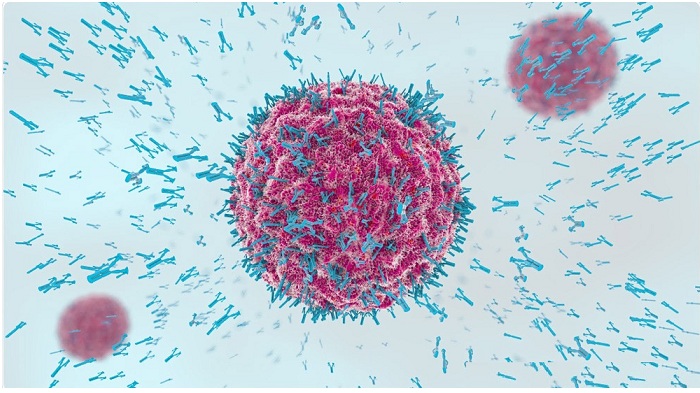
Centivax has signed a strategic collaboration with the US Naval Medical Research Center (NMRC) to conduct Phase I clinical development of its SARS-CoV-2 antibody, Centi-B9.

Centi-B9 is designed as a broad-spectrum therapeutic and prophylactic for administration through injections. It is also expected to act as an adjunct to vaccines to ensure broad protection.

The antibody is engineered to neutralise the emergent Covid-19 mutated variants and showed broad-spectrum reactivity against 99.5% of all variants in the US.

It also demonstrated reactivity against more than 98% of Covid-19 variants seen worldwide which includes UK B.1.1.7, South African B.1.351, Brazilian P.1, New York B.1.526 and California B.1.429 strains.

Bioengineered for greater stability, reduced viscosity high concentration (250mg/ml) delivery, the antibody facilitates a prophylactic or therapeutic dose that can be administrated in a non-hospital setting via a single injection.

In addition, Centi-B9 was engineered using Xencor Xtend technology for improved safety and half-life.

Centivax CEO Dr David Gangemi said: “Our highly concentrated, thermostable, neutralising antibody fits the needs of the Navy, and DOD in general, in that it can be administered intramuscularly to warfighters in cramped quarters or austere environments to boost and extend protection already afforded by vaccination.

“Our antibody is highly effective against over 98% of the currently circulating variants and is a good fit for use in prolonged deployments when prophylaxis and/or post-exposure treatment is needed.”

As part of the collaboration, Centivax and NMRC will each provide a principal investigator for the clinical study.

NMRC will hold the Phase I clinical trial centre for intramuscular and subcutaneous administration of Centi-B9 and offer protocol development and medical management support.

Furthermore, the Henry Jackson Foundation is offering $4.2m non-dilutive funding for the trial.

The Phase I trial, which will validate Centi-B9’s safety and pharmacokinetics in healthy subjects, is anticipated to start next month.

These Phase I studies will facilitate a Phase II/III adaptive trial later this year.

The Phase II/III trial will analyse the antibody’s efficacy in various patient populations, such as hospitalised Covid-19 patients, pre-hospitalised individuals with the infection, post-exposure prophylaxis as well as pre-exposure prophylaxis.

Centivax intends to submit an application to obtain Emergency Use Authorization (EUA) during the interim analysis of the trial.

Latest stories

Related stories

Predictive Analytics in Labs: Driving Smarter Decisions in Pharma

The application of statistical algorithms and machine learning techniques to historical research data is enabling scientists to anticipate experimental outcomes and identify emerging patterns with unprecedented accuracy. By moving from a retrospective view of data to a forward-looking perspective, research facilities can optimize their strategies and focus their resources on the most promising therapeutic avenues.

IoT Applications Enhancing Laboratory Operational Efficiency

The integration of internet-connected sensors and smart devices is fundamentally reshaping how research facilities monitor their environment and manage their instrumentation. By providing a constant stream of real-time data, these technological advancements allow for a more granular level of control over laboratory operations, ensuring that the delicate conditions required for high-stakes pharmaceutical research are maintained with absolute precision.

Optimizing Pharma Workflows with Integrated Lab Software Solutions

The modern laboratory environment requires a unified approach to data management and process control to remain competitive. By bridging the gap between disparate instruments and legacy databases, research facilities can eliminate operational silos and create a high-speed environment where innovation is no longer hindered by fragmented digital infrastructure.

Advanced Robotics Driving Pharmaceutical Lab Efficiency

The implementation of high-speed robotic systems and automated handling technologies is fundamentally altering the productivity of modern research facilities. By taking over repetitive physical tasks and operating with sub-millimeter precision, these mechanical innovators are allowing scientific staff to redirect their cognitive energy toward complex analysis and the development of breakthrough therapies.

Subscribe

- Never miss a story with notifications

- Gain full access to our premium content

- Browse free from any location or device.

Media Packs

Expand Your Reach With Our Customized Solutions Empowering Your Campaigns To Maximize Your Reach & Drive Real Results!

– Access theMedia Pack Now

– Book a Conference Call

Leave Message for Us to Get Back

Translate »