









Achema middle east

Cancer drug screening process saves discovery time and limits use of mice

Note* - All images used are for editorial and illustrative purposes only and may not originate from the original news provider or associated company.

Subscribe

- Never miss a story with notifications

- Gain full access to our premium content

- Browse free from any location or device.

Media Packs

Expand Your Reach With Our Customized Solutions Empowering Your Campaigns To Maximize Your Reach & Drive Real Results!

– Access the Media Pack Now

– Book a Conference Call

Leave Message for Us to Get Back

Related stories

Specialized Laboratory Equipment Requirements for Biologics and Biosimilar Development

The development of complex biological molecules requires a specialized toolkit distinct from traditional small-molecule chemistry. This article details the critical laboratory equipment—from advanced bioreactors to high-resolution characterization tools—that enables the precise engineering and rigorous analysis required for successful biologics and biosimilar innovation.

Next-Generation Laboratory Equipment Redefining Drug Discovery Workflows

Advanced technologies such as AI-integrated high-throughput screening platforms and automated assay systems are fundamentally transforming early-stage pharmaceutical research. These innovations address critical bottlenecks in productivity and data quality, enabling research teams to accelerate timeline-to-candidate selection while enhancing the predictive accuracy of drug discovery campaigns.

Redefining Success Metrics in Pharma Portfolio Management

Shift from traditional R&D metrics focused on milestone completion and budget adherence to outcome-based, value-focused metrics that measure strategic impact, learning velocity, and long-term portfolio health while aligning organizational behavior with strategic objectives.
- Advertisement -

A method of testing drugs thatprompt the immune system to attack and destroy cancer cells has been developed which can speed up drug discovering andreducethe unnecessary use of mice in drug screening programmes.

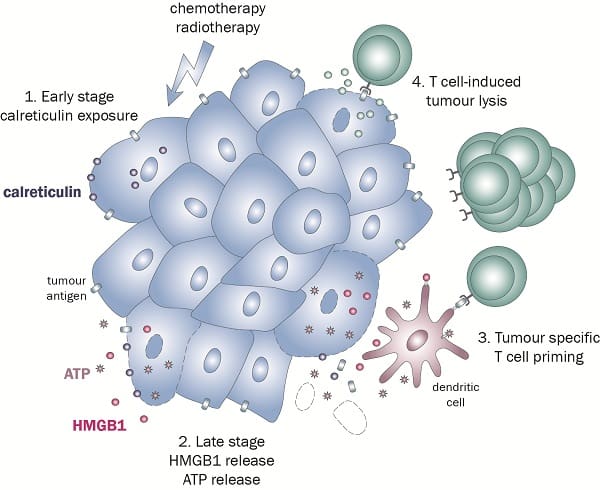
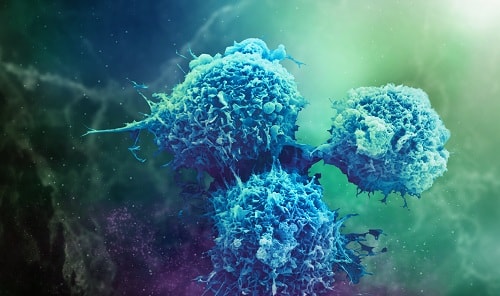
Certain cancer drugs help the body’s immune system identify and kill tumour cells through a process known as ‘immunogenic cell death’ (ICD). This effectively works by allowing apatient’s own dying cancer cells to act as a vaccine that promotes an immune response against the tumour cells. However, ICD only occurs when the immune system is alerted to a dying cell via special signals sent out by the cell.

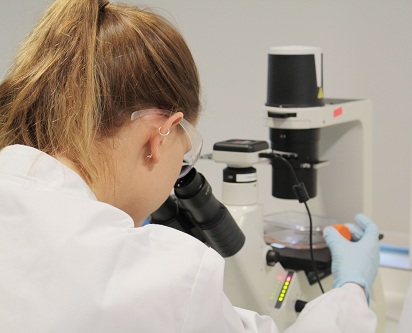
UK-based contract research organisation KWS BioTest has created a test that searches for these signals in order to determine whether or not a drug is able to combat cancer through ICD.
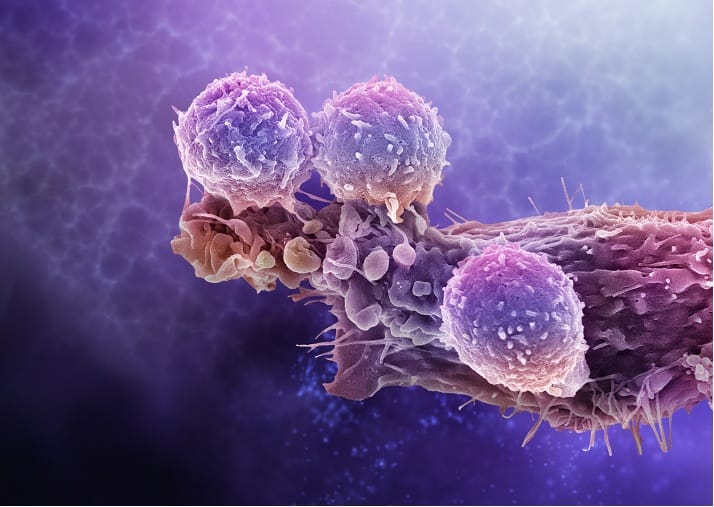
Over the last few decades, immunotherapy has become a hot topic in the world of cancer research. The idea that the immune system can be harnessed to combat the spread of tumour cells has ushered in a conceptual revolution resulting in the development and licensing of therapeutic agents based around this theory. Further research has also shown that many of the current therapies used in a clinical setting already use this mechanism to combat malignant cells.
The most reliable way to evaluate a compound’s ability to trigger ICD involves exposing malignant cells to the test molecule in a laboratory.These treated tumourcells are then used to inoculate mice which later have live cancer cells introduced into their systems. If no tumours develop, the compound has successfully triggered ICD and the recipient mice will have developed immunity against the cancer cells.
However, this type of testing is not practical when large numbers of drugs are being screened.

The experts at KWS BioTest have developed a test that registers the presence of signals sent by the dying cell — these signals are known as damage-associated molecular patterns (DAMPs). Three of these DAMPs have long been recognised for their vital role in ICD. These are:

  • Calreticulin (CRT), which is exposed on the cell surface
  • ATP,which is the secreted from the cell
  • B1 (HMGB1), a passively released high mobility group protein

By using these surrogate markers, compounds can be pre-screened before progressing to the next stage of the drug development process.
Professor Neil A. Williams, CSO at KWS BioTest, commented: “The recognition that some conventional and new cancer therapies can enhance recognition of cancer cells by the immune system points toward their use in combination with immunotherapies and heralds the possibility of improved outcomes for patients.

The assays, now validated at KWS, offer the potential to predict which drugs might work in this way, reducing the numbers of animals required in research and speeding up the development of new human treatments.”
Company: KWS BioTest


KWS BioTest, a leading contract research organization (CRO) specializing in in vitro and in vivo discovery testing services for immuno-oncology and inflammatory and infectious diseases. The addition of KWS BioTest enhances Charles River’s discovery expertise, with complementary offerings that provide our clients with additional tools in the active therapeutic research areas of oncology and immunology.

Send Enquiry for this story

By submitting this form you agree to allow www.worldpharmatoday.com to contact you regarding your enquiry.
See our Privacy Policy to learn more.

Latest stories

Related stories

Specialized Laboratory Equipment Requirements for Biologics and Biosimilar Development

The development of complex biological molecules requires a specialized toolkit distinct from traditional small-molecule chemistry. This article details the critical laboratory equipment—from advanced bioreactors to high-resolution characterization tools—that enables the precise engineering and rigorous analysis required for successful biologics and biosimilar innovation.

Next-Generation Laboratory Equipment Redefining Drug Discovery Workflows

Advanced technologies such as AI-integrated high-throughput screening platforms and automated assay systems are fundamentally transforming early-stage pharmaceutical research. These innovations address critical bottlenecks in productivity and data quality, enabling research teams to accelerate timeline-to-candidate selection while enhancing the predictive accuracy of drug discovery campaigns.

Redefining Success Metrics in Pharma Portfolio Management

Shift from traditional R&D metrics focused on milestone completion and budget adherence to outcome-based, value-focused metrics that measure strategic impact, learning velocity, and long-term portfolio health while aligning organizational behavior with strategic objectives.

Smarter Resource Planning for Complex Pharma Development Portfolios

Align limited resources with complex pharmaceutical portfolios through capacity forecasting, skills-based planning, and dynamic resource reallocation, improving execution outcomes without increasing costs or overburdening teams.

Subscribe

- Never miss a story with notifications

- Gain full access to our premium content

- Browse free from any location or device.

Media Packs

Expand Your Reach With Our Customized Solutions Empowering Your Campaigns To Maximize Your Reach & Drive Real Results!

– Access theMedia Pack Now

– Book a Conference Call

Leave Message for Us to Get Back

Translate »