









The modern pharmaceutical laboratory is no longer a place of manual pipetting and hand-labeled tubes. Instead, it is becoming a sophisticated hub of mechanical precision, driven by the widespread adoption of robotics in pharmaceutical labs. This shift is not merely about replacing human labor with machines; it is about elevating the entire research process to a new level of efficiency, accuracy, and scale. As the complexity of drug discovery grows, the role of advanced robotics has moved from being a specialized tool to a fundamental requirement for any organization looking to remain competitive in a global market.
The Evolution of Automation in Scientific Research
The history of robotics in pharmaceutical labs began with simple, single-task machines designed to automate the most repetitive parts of the workflow, such as plate washing or sample dispensing. While these early systems provided a boost to productivity, they were often inflexible and difficult to integrate. Today, we have entered the era of the “smart” robot—highly sophisticated, multi-axis systems that can be programmed to perform a vast array of tasks with sub-millimeter precision. These modern robots are the backbone of the contemporary laboratory, providing the physical infrastructure needed to support high-throughput drug research.
Precision and Accuracy in Sample Handling
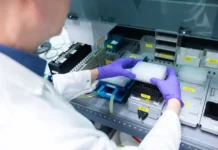
In the world of biochemistry, small differences in volume or timing can lead to massive discrepancies in results. Robotics in pharmaceutical labs address this challenge by providing a level of precision that is simply unattainable by human hands. Automated liquid handling systems can dispense volumes as small as a few nanoliters with perfect consistency across thousands of wells. This precision is vital for miniaturizing assays, which allows researchers to conserve precious reagents and biological samples while still generating high-quality data. By reducing the “noise” introduced by manual variability, robotics ensure that the signals identified in drug research are real and reproducible.
The Power of High-Throughput Screening
Perhaps the most visible application of robotics in pharmaceutical labs is in high-throughput screening (HTS). HTS involves testing large libraries of chemical compounds against a biological target to identify those with therapeutic potential. Without robotics, this process would take years of manual labor. Modern robotic workstations can process hundreds of plates per day, working through the night without a break. This 24/7 operational capability is a major driver of pharma efficiency, allowing companies to screen millions of compounds in a fraction of the time it once took. The speed provided by these systems is a critical factor in shortening the early stages of drug development.
Enhancing Productivity and Safety Through Robotics
Beyond the obvious gains in throughput, the implementation of robotics in pharmaceutical labs provides significant benefits in terms of researcher productivity and safety. By offloading the “drudgery” of the bench to machines, scientists are free to focus on the higher-level cognitive tasks that drive innovation, such as experimental design, data interpretation, and strategic planning. This shift in focus is essential for a more creative and responsive research culture where the human element is leveraged for its greatest strengths intuition and problem-solving.
Managing Hazardous Materials and Repetitive Strain
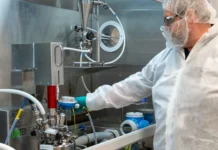
Laboratories are often environments where hazardous chemicals or biological agents are handled. Robotics in pharmaceutical labs can be used to perform these dangerous tasks, providing a physical barrier between the researcher and the hazard. Furthermore, the repetitive nature of manual pipetting and sample handling can lead to musculoskeletal injuries over time. By automating these tasks, organizations are not only improving their pharma efficiency but also investing in the long-term health and well-being of their staff. This focus on safety and ergonomics is a key component of a modern, responsible research organization.
Creating Fully Autonomous Experimental Loops
The next frontier for robotics in pharmaceutical labs is the development of fully autonomous experimental loops. In this model, a robotic system is integrated with real-time data analysis software. The system executes an experiment, analyzes the results, and then uses that information to design and execute the next set of tests. This “closed-loop” approach removes the delays inherent in human decision-making and allows for the rapid optimization of experimental parameters. By creating an environment where the hardware and software work in perfect harmony, pharmaceutical companies can reach a definitive “go/no-go” decision on a drug candidate much faster than ever before.
Integrating Robotics into the Digital Lab Ecosystem
For robotics in pharmaceutical labs to reach their full potential, they must be seamlessly integrated into the laboratory’s broader digital ecosystem. This involves connecting the robotic hardware to Laboratory Information Management Systems (LIMS) and Electronic Lab Notebooks (ELN). When a robot performs a task, it should automatically update the digital record, capturing every detail of the process, from the lot number of the reagents to the exact time of the execution. This level of smart lab technology integration ensures that the data generated is fully traceable and meets the strict requirements of regulatory bodies.
Overcoming the Barriers to Robot Adoption
Despite the clear benefits, the transition to a robotic laboratory is not without its challenges. The initial capital investment is significant, and the requirement for specialized personnel to program and maintain these systems is high. Furthermore, many laboratories have legacy processes that were designed for manual work and must be re-engineered to suit an automated environment. However, the long-term return on investment is found in the reduced cost per data point and the increased probability of clinical success. For most pharmaceutical companies, the question is no longer whether to adopt robotics in pharmaceutical labs, but how quickly they can do so.
The Role of Collaborative Robots (Cobots)
A recent trend in lab robotics is the rise of collaborative robots, or “cobots.” Unlike traditional industrial robots that operate behind safety cages, cobots are designed to work safely alongside human researchers. They are typically smaller, more flexible, and easier to program, making them an ideal entry point for labs that are just beginning their automation journey. Cobots can assist with specific tasks such as loading a centrifuge or labeling tubes while the scientist performs the more complex parts of the experiment. This hybrid approach to drug research allows for a more gradual and cost-effective transition to a fully automated laboratory.
Conclusion
The integration of advanced robotics in pharmaceutical labs is a transformative development that is redefining the limits of scientific productivity. By providing unprecedented levels of precision, throughput, and safety, these mechanical systems are the engine of modern drug discovery. As the technology continues to evolve and the cost of entry decreases, we will see robotics move into every corner of the laboratory, from the largest screening centers to the smallest research startups. The future of medicine depends on our ability to innovate at scale, and advanced robotics are the tools that will make that possible, ensuring a faster and more efficient path to the next generation of life-saving therapies.