








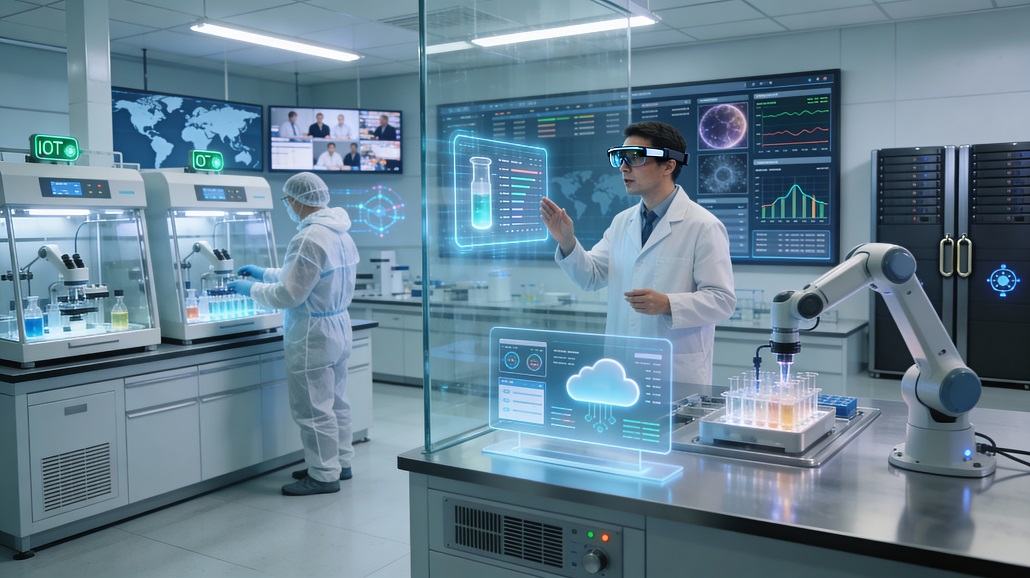
The journey of a new drug from the bench to the bedside is a long, expensive, and high-risk endeavor. To mitigate these challenges, the pharmaceutical industry is increasingly looking toward smart lab technologies in drug development to provide a more stable and predictable research environment. These technologies, which include everything from Internet of Things (IoT) sensors to advanced data integration platforms, are moving the laboratory from a static workspace to an active, intelligent participant in the scientific process. The result is a more efficient research engine that is better equipped to handle the complexities of modern biology.
The Rise of the Interconnected Laboratory
At the heart of lab innovation is the concept of connectivity. In a traditional setting, lab instruments operated as isolated islands of data. Today, smart lab technologies in drug development are bridging these gaps, allowing for a continuous flow of information between different stages of the research cycle. When an incubator can “talk” to a liquid handler, and both are synchronized with a cloud-based analytics platform, the potential for error is significantly reduced. This interconnectedness is the foundation of lab digitalization, providing a level of visibility that was previously impossible.
Real-Time Monitoring and Environmental Control
Many biological processes are incredibly sensitive to environmental fluctuations. A slight change in temperature, humidity, or even light can drastically alter the outcome of an experiment. Smart labs solve this problem by deploying arrays of IoT sensors that monitor these variables in real-time. If a sensor detects a deviation, the system can automatically adjust the HVAC settings or send an alert to a researcher’s smartphone. This proactive approach to drug development ensures that the experimental conditions remain within the required parameters, protecting months of work from being invalidated by a single mechanical failure.
Enhancing Lab Innovation with Wearable Devices
The human element of the lab is also being transformed by smart lab technologies in drug development. Wearable devices, such as smart glasses or voice-activated assistants, are allowing researchers to interact with their data and instruments without taking their hands off the bench. This hands-free approach not only improves safety and hygiene but also allows for more fluid data entry. A scientist can dictate their observations directly into an electronic lab notebook, ensuring that every detail is captured in the moment. These innovations are a key component of the modern pharmaceutical research landscape.
Driving Efficiency Through Lab Digitalization
The true power of smart lab technologies in drug development lies in their ability to turn massive volumes of data into actionable knowledge. Lab digitalization involves more than just getting rid of paper; it’s about creating a unified digital twin of the entire laboratory operation. This allows researchers to run simulations and “what-if” scenarios to optimize their workflows before they ever pick up a pipette. By identifying potential bottlenecks or resource conflicts in a virtual environment, organizations can ensure that their physical operations are as lean and effective as possible.
Integrating Disparate Data Streams
One of the biggest challenges in pharmaceutical research is the sheer diversity of data types generated. From high-resolution imaging to mass spectrometry results, keeping everything organized is a Herculean task. Smart lab technologies in drug development excel at data integration, providing a single point of truth for all experimental information. By tagging every piece of data with its associated metadata such as the specific instrument used, the batch number of the reagents, and the environmental conditions labs can create a rich, searchable database that fuels future discovery.
The Impact on Research Accuracy and Reproducibility
The “reproducibility crisis” has long plagued the scientific community, with many published results proving difficult to replicate in different settings. Smart labs address this issue by automating the recording of experimental protocols and results. When every step is executed and logged by a machine, the potential for human error or undocumented variation is eliminated. This high level of research accuracy is a primary benefit of smart lab technologies in drug development, providing the solid evidence base required for regulatory approval and clinical success.
Overcoming the Challenges of Implementation
While the benefits are clear, the path to a fully “smart” lab is not without obstacles. The integration of legacy equipment with new digital platforms can be technically difficult and requires a robust IT infrastructure. Furthermore, the volume of data generated by these systems necessitates advanced cybersecurity measures to protect intellectual property. Organizations must be prepared to invest in both technology and talent to successfully navigate the complexities of lab digitalization and ensure that their drug development programs remain at the cutting edge.
Scaling Innovation Across Global Facilities
For large pharmaceutical companies, the challenge is often how to scale these innovations across multiple global sites. Smart lab technologies in drug development must be implemented in a way that allows for consistency while also accommodating local regulatory requirements. This requires a centralized strategy for lab innovation that provides clear guidelines for technology adoption and data management. When successful, this global connectivity allows researchers in different time zones to collaborate seamlessly, further accelerating the pace of pharmaceutical research.
The Future Landscape of Smart Laboratories
As we look toward the next decade, the evolution of smart lab technologies in drug development will continue to push the boundaries of science. We will likely see the rise of fully autonomous labs where AI and robotics work together to design and execute experiments with minimal human oversight. These “dark labs” will be able to operate around the clock, continuously iterating on molecular designs until a successful candidate is found. The role of the scientist will shift even further toward high-level strategy and ethical oversight, supported by a world-class digital and mechanical infrastructure.
In conclusion, the revolution brought about by smart lab technologies in drug development is fundamentally changing how we approach the creation of new medicines. By embracing lab innovation and the principles of lab digitalization, the pharmaceutical industry is building a more resilient, accurate, and efficient future. The ability to monitor, integrate, and analyze data in real-time is not just a technological advantage; it is a vital necessity for solving the complex health challenges of the 21st century.