









Close
CDMO Safety Testing 2026
Novotech

AI Rising Impact On Bio – Pharma Supply Chain Management

Note* - All images used are for editorial and illustrative purposes only and may not originate from the original news provider or associated company.

Subscribe

- Never miss a story with notifications

- Gain full access to our premium content

- Browse free from any location or device.

Media Packs

Expand Your Reach With Our Customized Solutions Empowering Your Campaigns To Maximize Your Reach & Drive Real Results!

– Access the Media Pack Now

– Book a Conference Call

Leave Message for Us to Get Back

Related stories

Smart Thermal Packaging Enhancing Drug Stability Systems

Maintaining the stability of sensitive pharmaceutical compounds requires more than just standard insulation. Smart thermal packaging integrates advanced temperature control and real-time tracking to create a secure distribution environment. By ensuring that drugs remain within strict thermal parameters throughout their journey, these systems protect the efficacy of medications and enhance the reliability of pharmaceutical distribution networks worldwide.

Real Time Visibility Enhancing Pharma Transport Efficiency

Achieving optimal efficiency in pharmaceutical transport requires an uncompromising focus on transparency. Real-time visibility provides the necessary tools for connected tracking and thermal monitoring, ensuring that drug distribution systems remain secure and effective. By providing continuous oversight of the supply chain, these technologies allow for immediate intervention and data-driven optimization, protecting the integrity of life-saving medications throughout their entire journey.

AI-Driven Cold Chains Transforming Pharma Supply Systems

The integration of artificial intelligence into cold chain management is reshaping the pharmaceutical supply landscape. AI-driven cold chains utilize predictive visibility and intelligent thermal control to optimize logistics operations across global networks. By anticipating risks and automating complex decisions, these systems ensure the integrity of temperature-sensitive medications, significantly enhancing the reliability and efficiency of pharmaceutical distribution on a global scale.
- Advertisement -

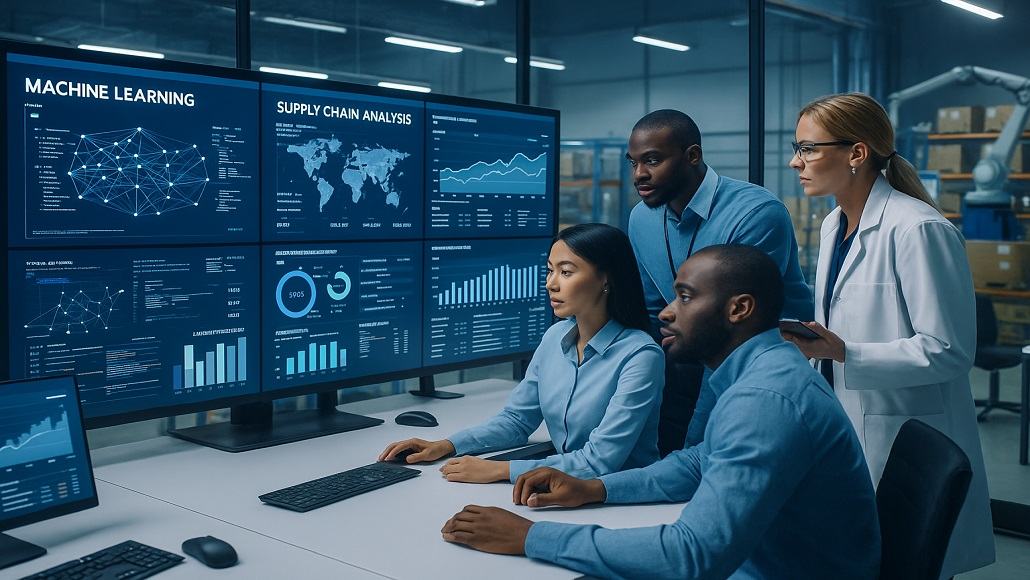
The Drug, Chemical, & Associated Technologies Association- DCAT has recently published a research by DCAT Research & Benchmarking on the growing significance of Artificial Intelligence in Supply Chain Management.

It is true that the biotechnology and pharmaceutical industries are making significant progress in using artificial intelligence (AI) in some important areas, particularly in the field of drug development. Nevertheless, the extent to which the industry has considered supply chain management remains uncertain.

Due to the important implications of AI for enterprises in the bio/pharma supply chain, the DCAT Research & Benchmarking Committee aimed to assess the use of AI in supply chain management.

In order to provide clarity on this kind of progress, DCAT proceeded to carry out an online survey consisting of 20 content-related questions and other demographic questions. In all, 41 firms participated in the study. The division consisted of 29 suppliers and 12 bio/pharmaceutical firms.

The main aim of the study was to:

  • Comprehend the current state of artificial intelligence (AI) in supply chain management specifically in the bio/pharma industry.
  • Assess the challenges that arise while using the technology in the bio/pharma industry.
  • Understand the obstacles that prevent adoption if they are not being implemented or attempted.
  • Facilitate the assessment of how the implementation of artificial intelligence (AI) would impact the collaboration between bio and pharma businesses, as well as their relationship with suppliers.

The research yielded many significant discoveries, including the following:

  • Common Applications of Artificial Intelligence in Supply Chain Management
  • Among responders actively using AI in supply chain management, demand forecasting, logistics, and inventory management are the most often encountered use cases. Several firms are now undertaking projects in supply chain risk management.

Challenges in the context of adoption

It is important to note that non-user responses indicate that the adoption of supply chain AI applications is hindered primarily by a lack of understanding of their benefits and implications, as well as a lack of expertise to initiate pilot projects.

The strategic importance of artificial intelligence

According to the study findings, organizations who are currently using AI in supply chain management are doing it as part of their corporate dedication to technology.

A majority of organizations (over 80%) now using AI for supply chain management perceive it to be very important in achieving their corporate strategy goals. In contrast, just a small percentage (20%) of companies that do not employ AI share this perspective.

Challenges in using artificial intelligence applications in supply chain management

The primary challenges in implementing supply chain AI applications are the availability of data and ensuring confidentiality. It is important to remember that the majority of AI users are supplying their apps with a mixture of internal and external data.

Without a doubt, it is predicted that those who do not adopt will encounter a comparable set of issues should they eventually decide to adopt. Both GXP compliance and acceptability by regulatory authorities are areas of concern.

What are the applications of AI systems?

The majority of AI users use the system to identify issues and opportunities, and provide recommendations for appropriate actions. However, it is important to note that none of these users are empowering the systems to act autonomously.

The majority of AI users use the system to detect both issues and opportunities, and to provide recommendations for necessary actions. However, none of them enable systems to operate autonomously.

Machine learning programs are widely used, but only a small percentage, as low as 20%, have expertise with generative AI.

The majority of customers are using suppliers to get software and support, while just 30% are actively developing their own in-house skills.

What will be the effect of AI on suppliers?

Late adopters must now prepare in order to effectively react to their clients who are using AI-based technologies. According to the survey findings, over 50% of respondents with AI experience expressed the expectation that their suppliers would provide more data about their operations. This would require suppliers to invest more in their information technology. Interactions with AI-driven technologies will enhance person-to-person connections.

World Pharma Today brings together the global pharmaceutical industry — from R&D leaders and regulatory affairs professionals to manufacturers and distribution executives — through trusted editorial, market intelligence, and digital engagement.

Our 2026 Media Pack offers integrated solutions to reach your audience:

  • Magazine & Digital Editions Showcase your brand within premium pharmaceutical industry coverage read by executives and decision - makers worldwide.
  • Industry Insights & Reports Align with data - driven analysis, trend reports, and regional roundups across the global pharmaceutical and life sciences value chain.
  • Brand Authority & Credibility Position your company as a thought leader through expert commentary, interviews, and special features.

Latest stories

Related stories

Smart Thermal Packaging Enhancing Drug Stability Systems

Maintaining the stability of sensitive pharmaceutical compounds requires more than just standard insulation. Smart thermal packaging integrates advanced temperature control and real-time tracking to create a secure distribution environment. By ensuring that drugs remain within strict thermal parameters throughout their journey, these systems protect the efficacy of medications and enhance the reliability of pharmaceutical distribution networks worldwide.

Real Time Visibility Enhancing Pharma Transport Efficiency

Achieving optimal efficiency in pharmaceutical transport requires an uncompromising focus on transparency. Real-time visibility provides the necessary tools for connected tracking and thermal monitoring, ensuring that drug distribution systems remain secure and effective. By providing continuous oversight of the supply chain, these technologies allow for immediate intervention and data-driven optimization, protecting the integrity of life-saving medications throughout their entire journey.

AI-Driven Cold Chains Transforming Pharma Supply Systems

The integration of artificial intelligence into cold chain management is reshaping the pharmaceutical supply landscape. AI-driven cold chains utilize predictive visibility and intelligent thermal control to optimize logistics operations across global networks. By anticipating risks and automating complex decisions, these systems ensure the integrity of temperature-sensitive medications, significantly enhancing the reliability and efficiency of pharmaceutical distribution on a global scale.

Cold Chain Intelligence Enhancing Pharma Logistics Safety

Global pharmaceutical logistics faces unprecedented challenges in maintaining product integrity during transit. Cold chain intelligence offers a sophisticated solution by integrating predictive monitoring and thermal assurance into a connected supply chain. This approach ensures that life-saving medications and vaccines reach their destination without compromising safety or efficacy, marking a significant evolution in healthcare distribution.

Subscribe

- Never miss a story with notifications

- Gain full access to our premium content

- Browse free from any location or device.

Media Packs

Expand Your Reach With Our Customized Solutions Empowering Your Campaigns To Maximize Your Reach & Drive Real Results!

– Access theMedia Pack Now

– Book a Conference Call

Leave Message for Us to Get Back

Translate »